Avalanche Service Styria

Wednesday 31 December 2025

Published 31 Dec 2025, 07:36:00


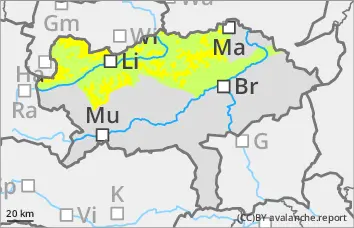
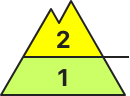
Danger level

1900m
Avalanche Problem
Wind slab
1900m


Beware of fresh wind slab

There is a moderate avalanche risk above 1900 metres. With new fallen snow and stormy north-westerly winds, prone-to-triggering snowdrift accumulations have formed. Especially behind broad ridges and ridgelines as well as in gullies and bowls, these can be triggered by individuals, usually as small slab avalanches. The avalanche prone locations are easily recognisable if visibility is good. Often, some of the snow has covered over the empty areas, so beware of the risk of injury.

Snowpack

Up to 15 cm of new fallen snow fell on a crust can form on an old snowpack in some places with strong winds. In many places, fresh snowdrift accumulations cover soft layers in the transition to the old snow surface. The connection between wind slab and persistent weak layer is poor. On the shady slopes, weak layers of faceted crystals can be found in the old snow foundation. The composition and thickness of the snow cover, snowpack varies greatly in a small area. There is often insufficient old snowpack.

Tendency

On the evening of the 31st and on New Year's Eve, some new fallen snow falls in the congested areas. On New Year's Day, the weather calms down slightly and it becomes a little milder in all areas. Fresh wind slab remains the main problem.
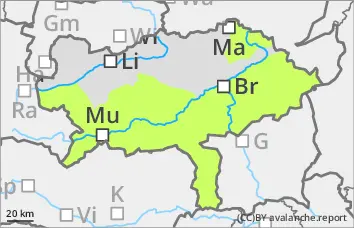
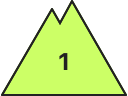
Danger level

1900m
Avalanche Problem
Wind slab
1900m


Beware of prone to triggering snow packs

The avalanche risk is generally low. Stormy north-westerly winds and some new fallen snow have created isolated fresh snowdrift accumulations at higher altitudes, which can be triggered as small slab avalanches by even a small additional load. This is particularly the case behind exposed ridges and ridgelines as well as in gullies and bowls. The avalanche prone locations are generally easy to recognise. In most cases, the risk of entrainment and injury outweighs the risk of burial.

Snowpack

Fresh wind slab was deposited on a crust can form and often inhomogeneous old snowpack under the influence of strong winds. In many places, a built-up transformed surface or surface hoar is covered. The connection between the drift snow layer and the persistent weak layer is poor. The nature and thickness of the snow cover, snowpack varies greatly in a small area. There is often insufficient old snowpack.

Tendency

On the evening of the 31st and on New Year's Eve, some new fallen snow will fall in the northern congestion areas. On New Year's Day, it will be a touch milder with less wind at all altitudes. Areas prone to triggering drifting snow will remain the main problem for the time being.