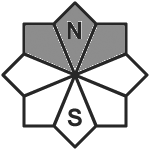
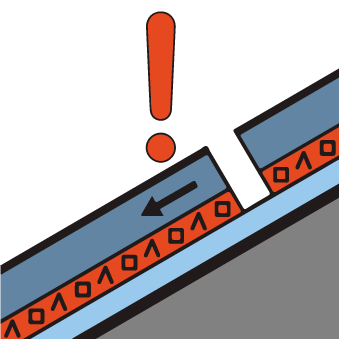
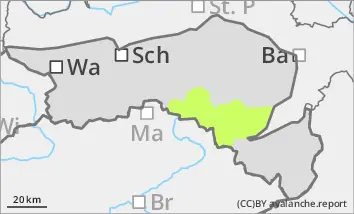
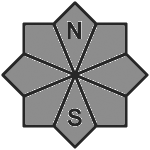
In the high altitudes, take into account the persistent weak layer problem in the northern sector.
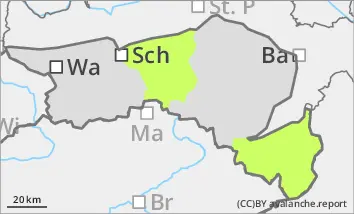
The avalanche risk is low. At high altitudes above the tree line, there is still a persistent weak layer problem in the northern sector, especially in shady gullies and bowls. Small to medium-sized slab avalanches can occur in a few places under heavy additional load. Avalanche prone locations are mainly in the transition from little to more snow. Small wet loose snow slides are still possible in isolated areas, but most areas are already unloaded. Small gliding avalanches may also occur on steep grassy slopes.
Snowpack
Due to the very mild weather phase, the snow surface is quickly soft and moist in the morning. The melt-freeze crust can last longer in shady high altitudes. The old snowpack here is unfavourably structured and weakened in places with crusts and embedded faceted crystals. There is little snow below 1500 metres. On steep grassy slopes and forest embankments with larger snow reserves, the entire snowpack can start gliding snow.
Tendency
From Thursday, high pressure will prevail and temperatures will remain very mild. The air will become significantly drier at higher altitudes. The avalanche risk remains low.
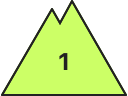
Danger level
Little snow, the snow is falling.
The avalanche risk is low. Small loose snow slides from slopes that have not yet been unloaded cannot be completely ruled out, but most areas have already been unloaded.
Snowpack
Due to the very mild weather, the snowpack is damp and wet up to high altitudes. Only on northern slopes was a melt-freeze crust able to form in places. The faceted crystals, which have long weakened the foundation of the snowpack in shady gullies, have been largely transformed by rain and melting. There is usually only a little snow up to the summit regions.
Tendency
From Thursday, high pressure will prevail and temperatures will remain very mild. The avalanche risk remains low.
Danger level
Avalanche Problem
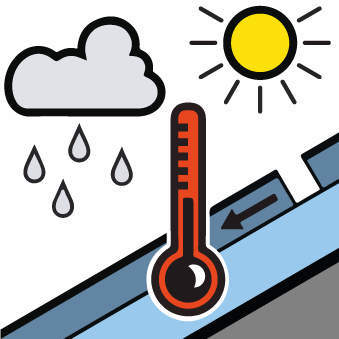
Wet snow
Note isolated loose snow slides due to rain and danger of falling.
The avalanche risk is low. Wet loose snow slides are still possible in isolated cases from undischarged gullies and bowls due to rain. At higher altitudes, there is an increased risk of falling in the entrance areas to steep gullies due to the icy and hard snow surface.
Snowpack
Due to the very mild weather phase, the snow surface is quickly soft and moist in sunny locations in the morning. In shady locations, the melt-freeze crust can last longer.
At higher altitudes, the snow surface is often hard and sometimes icy due to wind and rain. There are still considerable amounts of wind slabs in the gullies and bowls, but these are usually well consolidated. There is little snow below 1500 metres.
Tendency
From Thursday, high pressure will prevail and temperatures will remain very mild. The air will become significantly drier at higher altitudes. The avalanche risk remains low.