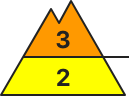
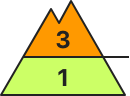
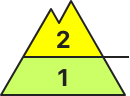
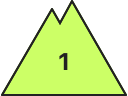
Wet naturally triggered avalanches from all altitudes! Despite the good weather, tours are only possible to a very limited extent!
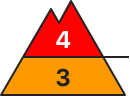
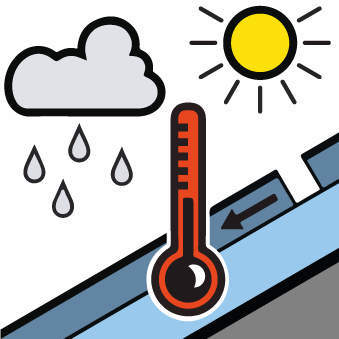
The avalanche danger is assessed as high (level 4) from 1800 metres. Large amounts of new and wind slab snow (up to 70 cm in the north) have been deposited in the last 24 hours. With the rapid rise in temperatures on Wednesday morning, naturally triggered wet avalanches are to be expected from all aspects. The avalanches can tear through to the ground. Large and occasionally very large avalanches are possible. Spontaneous wet snow avalanches are to be expected at lower elevations and gliding avalanches on steep meadow slopes. Exposed transportation routes are also affected.
Snowpack
There has been 30 to 70 cm of new fallen snow in the last 24 hours. The largest amounts have fallen between the Dachstein, Totem Gebirge and Hochschwab. But there was also some new fallen snow in the Niedere Tauern. The snowfall level was between 1000 m and 1300 m. Stormy winds led to extensive drifts. The snow is damp or wet at low and medium altitudes. At high altitudes, the connection between the new fallen snow and the old snowpack is poor. With the rapid rise in temperature, the snow is becoming wet and heavy right up to the summits.
Tendency
The avalanche danger is decreasing. Naturally triggered avalanches are still possible on Thursday. It remains very mild in the mountains!
Danger level
2000m
Avalanche Problem
Persistent weak layer
2000m
Wet snow
Naturally triggered avalanches still expected
Weak old snowpack: reinforced likelihood of triggering due to strong solar radiation
Large amounts of fresh and older snow and drifts blanket a weak old snowpack. Due to strong solar radiation, likelihood of dry-snow and wet-snow avalanches triggering is increasing again. Naturally triggered avalanches can be expected on sun-exposed slopes at all altitudes. Avalanches can still be triggered by one single winter sports enthusiast, particularly in little-skied terrain on west. north and east-facing slopes. Danger zones increase with ascending altitude, occur widespread in terrain near to and distant from ridgelines. Caution urged in transitions from shallow to deep snow, for example, at entries into gullies and bowls. Remote triggerings are possible. Avalanches can be large-sized and plummet over flattish passages. As a result of renewed rainfall and the snowpack becoming ever wetter, wet slab avalanches can be expected at low and intermediate altitudes. If these fracture to deeper down layers of the snowpack, they can in isolated cases grow to large size. On steep grass-covered slopes, glide-snow avalanches can trigger. Zones with glide cracks should under all circumstances be avoided.
Snowpack
Above about 2000m there was about 20cm of fresh snow registered in northern regions, up to 10cm in southern regions, accompanied by strong-velocity winds. Below that altitude: a thoroughly wet snowpack due to rainfall. In transition zones to dry snow, melt-freeze crusts form during the nocturnal hours. Fresh and older snowdrift accumulations are poorly bonded with the old snowpack. Weak layers are widely prevalent in the lower part of the snowpack. The extraordinary avalanche activity last week confirms just how prone to triggering the weak layer is, this persists in starting zones which have not yet discharged, apart from heavily-skied slopes.
Tendency
Avalanche danger remains tense. Naturally triggered dry-snow avalanches are diminishing in number, wet-snow avalanches persist because of solar radiation and higher temperatures. The situation for winter sports enthusiasts remains very treacherous in little-skied terrain.
Danger level
1500m
Avalanche Problem
New snow
1500m
Wet snow
2000m
Avalanches release themselves.
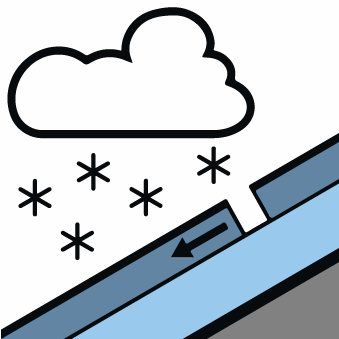
The avalanche risk is high above 1500 metres and considerable below that. The main problem is new fallen snow. Avalanches release themselves and can also become large on snowy slopes at higher altitudes. Self-triggering slab and loose snow avalanches are to be expected at higher altitudes, especially on sunny slopes.
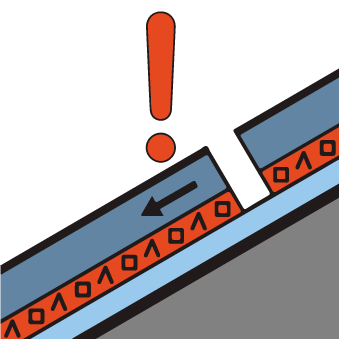
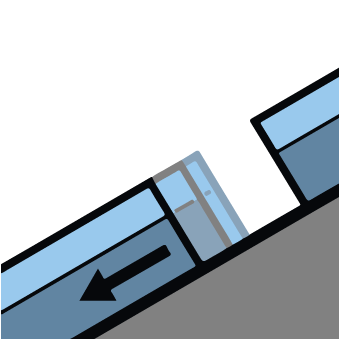
Wet snow is also a problem. Many wet avalanches occur at medium altitudes. Gliding avalanches are triggered on steep slopes with smooth ground such as rock slabs, meadows or in deciduous forests. Loose snow avalanches occur on extremely steep terrain.
Avalanches can hit exposed infrastructure.
Snowpack
Up to one metre of new fallen snow has fallen in the past 24 hours. At higher altitudes, it lies on a prone-to-triggering old snowpack with embedded graupel, old surface hoar and faceted crystals. Mild temperatures and solar radiation destabilise the snowpack. At medium altitudes, the old snowpack is often damp, below 1500 metres it is completely soaked.
Tendency
The avalanche danger is slowly decreasing in calm, high-pressure weather.
Danger level
treeline
Avalanche Problem
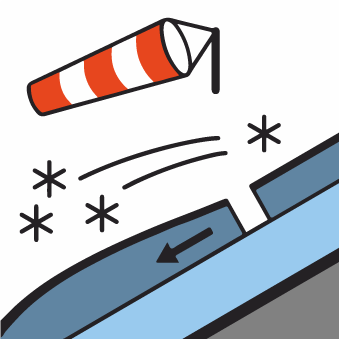
Wind slab
Treeline
Persistent weak layer
Treeline
Wet snow
2200m
High prone to triggering in wind slabs
The avalanche risk is high above the tree line (level 4) and considerable below. Naturally triggered avalanches are still possible due to heat and radiation input on the fresh new or wind slab. In addition, especially medium, but sometimes also large slab avalanches can easily be triggered by individuals in many places (even from a distance). All aspects are affected, but increasingly north and east-facing steep terrain. Danger areas are not easy to recognise everywhere, which is why caution and a defensive choice of route is still advised. This applies in particular in the area of the tree line and in forest aisles. In mid-altitudes, spontaneous wet loose snow and gliding avalanches are possible on the sunny slopes, in low altitudes also in the northern sector. In individual cases, the entire snowpack can slide down very steep, unstructured terrain and affect exposed transportation routes.
Snowpack
It snowed much more than expected. Locally up to 80 cm in the north and up to 30 cm in the south, mostly heavy new or wind slab snow lies on top of several more thick layers of wind-blown new fallen snow from the last few days. Especially at the beginning, snow fell with less wind and at colder temperatures, which is why soft layers are also embedded. These overlay even older wind slab snow, which in turn lies on an unfavourable base of faceted crystals and deep rime. Fractures primarily occur between the last packets of drift snow, but can also break through to the old snow foundation, which is usually completely transformed. At low and medium altitudes, the snowpack is at least soaked through by rain, especially in the north.
Tendency
Precipitation will set in again, with rain falling at times up to around 2000 metres on Tuesday. Above that, 20 to 40 cm will fall. The avalanche situation remains tense.
Danger level
1800m
Avalanche Problem
Wind slab
1800m
Wet snow
1800m
Avalanche prone locations due to easily triggered wind slabs and naturally triggered avalanches!
The avalanche danger is mainly categorised as considerable, in the higher altitudes partly still as high. Fresh, extensive and older snowdrift accumulations are prone to triggering. The triggering of slab avalanches is possible even with low additional loads. There are avalanche prone locations in steep terrain, in all aspects, adjacent to ridgelines as well as distant from ridgelines at terrain transitions and in transition areas from more to less snow. With the strong incoming radiation and the marked warming during the daytime changes, spontaneous slab avalanches, including wet snow avalanches, are to be expected at higher elevations. In general, avalanches can be medium to large.
Snowpack
There was a large increase in fresh snow on Tuesday. Depending on the region and altitude, there were 30 to 50 and locally even more. Stormy winds caused extensive drifting. The snowfall level was between 1000 and 1400 metres. The extensive drift snow packs of the last few days contain weak layers and lie on a weak foundation. At low and medium elevations, the snowpack is moist to wet. At higher elevations, the snowpack is beginning to settle with the rapid rise in temperatures and is becoming increasingly wet and heavy.
Tendency
Gradual decrease in avalanche danger in the coming days.
Danger level
2000m
Avalanche Problem
New snow
2000m
New snow
2000m
Wet snow
2000m
Slab avalanches are easy to trigger!
The avalanche risk is high above 2000 metres and considerable below that. The main problem at this altitude is the large amount of new fallen snow in recent days. Slab avalanches can be triggered by even a small additional load and can become large at higher altitudes. Especially in the sun, avalanches can also release themselves at high altitudes.
Wet avalanches are to be expected at medium altitudes in all aspects. Gliding avalanches occur on steep slopes with smooth surfaces such as rock slabs, meadows or in deciduous forests. Loose snow avalanches are more likely to occur on extremely steep, sun-exposed terrain.
Snowpack
Fresh wind slab snow lies on top of the already thick wind slab packs of the last few days. At higher altitudes, these often lie on graupel, old surface hoar or faceted crystals. Mild temperatures and sunlight destabilise the snowpack. At medium altitudes, the snowpack is often damp, below 1500 metres it is completely soaked.
Tendency
The avalanche danger is slowly decreasing in calm, high-pressure weather.
Danger level
treeline
Avalanche Problem
Wind slab
Treeline
Persistent weak layer
Treeline
Wet snow
2200m
Highly prone to triggering wind slab snow at the top, spontaneous wet snow avalanches at the bottom
The avalanche risk is considerable. Naturally triggered avalanches are still possible due to heat and radiation entering the fresh new or wind slab snow. In addition, especially medium, but sometimes also large slab avalanches can easily be triggered by individuals in some places (even from a distance). All aspects are affected, but increasingly north and east-facing steep terrain. Danger areas are not easy to recognise everywhere, which is why caution and a defensive choice of route is still advised. This applies in particular in the area of the tree line and in forest aisles. In mid-altitudes, spontaneous wet loose snow and gliding avalanches are possible on the sunny slopes, in low altitudes also in the northern sector. In individual cases, the entire snowpack can slide down very steep, unstructured terrain and affect exposed transportation routes.
Snowpack
Up to half a metre of fresh new or wind slab snow lies on top of several more thick layers of wind-blown new fallen snow from the last few days. Especially at the beginning, snow fell with less wind and at colder temperatures, which is why soft layers are also embedded. These overlay somewhat older wind slab snow, which in turn lies on an unfavourable base of faceted crystals and deep rime. In wind-protected areas, some surface hoar has also been snowed in. Up to around 1800 metres, the snowpack was soaked by heavy rain. Fractures primarily occur between the last snow packs, but can also penetrate through to the old snow foundation, which is usually completely transformed. At low and medium altitudes, heat and rainfall put a strain on the snowpack.
Tendency
Precipitation will set in again, with rain falling at times up to around 2000 metres on Tuesday. Above that, 20 to 40 cm will fall. The avalanche situation remains tense.
Danger level
Avalanche Problem
Wet snow
Wind slab
1800m
Temperature rise! Wet naturally triggered avalanches!
The avalanche danger is assessed as considerable. Large amounts of new and wind slab snow (up to 40 cm) have been deposited in the last 24 hours. With the rapid rise in temperatures on Wednesday morning, naturally triggered wet avalanches are to be expected from all aspects. The avalanches can tear through to the ground. Spontaneous wet snow avalanches are to be expected at lower elevations and gliding avalanches on steep meadow slopes. Exposed transportation routes are also affected.
Snowpack
There has been 10 to 40 cm of new fallen snow in the last 24 hours. The snowfall level was between 1000 m and 1300 m. Stormy winds led to extensive drifts. The snow is damp or wet at low and medium altitudes. At high altitudes, the connection between the new fallen snow and the old snowpack is poor. With the rapid rise in temperature, the snow is becoming wet and heavy right up to the summits.
Tendency
Under the influence of high pressure, it will remain quite sunny, extremely mild and windless at high altitudes. The risk of avalanches decreases slightly.
Danger level
1800m
Avalanche Problem
Wet snow
1800m
Wind slab
Treeline
Gliding snow
1800m
Wet snow problem at the bottom, wind slab problem at the top
The avalanche danger is predominantly categorised as considerable. Due to some intense snowfall and wind, there will be additional wind slab avalanches in the higher elevations. The triggering of medium to rarely large slab avalanches is possible to likely on some steep slopes due to low additional loads. Due to the local old snow problem, the snowpack can tear through to deeper layers. Above the tree line, medium to sometimes large spontaneous slab avalanches are possible. Spontaneous wet snow avalanches are to be expected below the snowfall level due to heavy rainfall.
Snowpack
In the last 24 hours, up to 40 cm of new fallen snow, the largest amounts in the Ybbstal Alps, fell with strongly changing snowfall levels. Stormy winds led to extensive drifting. The connection between the drift snow layer and the old snowpack is often insufficient. Prone to triggering weak layers in the form of snow deposits of varying hardness also exist in the bound layer in places. At shady high altitudes, the old snowpack is unfavourably structured in places with crusts and embedded faceted crystals. At medium altitudes, the snow is moist or wet. Warming and incoming radiation lead to soaking, decreasing firmness and destabilisation up to higher altitudes. The snowpack can start to glide snow on steep grass and forest slopes.
Tendency
The avalanche situation remains tense.
Danger level
1800m
Avalanche Problem
Wind slab
1800m
Wet snow
1800m
Considerable avalanche danger!
The avalanche risk is predominantly categorised as considerable. Fresh, extensive and older snowdrift accumulations are prone to triggering. The triggering of slab avalanches is possible even with low additional loads. There are avalanche prone locations in steep terrain, in all aspects, adjacent to ridgelines as well as distant from ridgelines at terrain transitions and in transition areas from more to less snow. With the strong warming during the daytime changes, spontaneous slab avalanches, including wet snow avalanches, are to be expected at higher elevations. In general, avalanches will be medium to rare in size.
Snowpack
There was a large increase in fresh snow on Tuesday. Depending on the region and altitude, there were 30 to 50 and locally even more. Stormy winds caused extensive drifting. The snowfall level was between 1000 and 1400 metres. The extensive drift snow packs of the last few days contain weak layers and lie on a weak foundation. At low and medium elevations, the snowpack is moist to wet. At higher elevations, the snowpack is beginning to settle with the rapid rise in temperatures and is becoming increasingly wet and heavy.
Tendency
The avalanche danger will slowly decrease over the next few days.
Danger level
treeline
Avalanche Problem
Wind slab
Treeline
Wet snow
Wet snow problem at the bottom, wind slab problem at the top
The avalanche danger is predominantly categorised as considerable. Due to some intense snowfall and wind, there will be additional wind slab avalanches in the higher elevations. The triggering of medium to rarely large slab avalanches is possible to likely on some steep slopes due to low additional loads. Due to the local old snow problem, the snowpack can tear through to deeper layers. Above the tree line, medium to sometimes large spontaneous slab avalanches are possible. Spontaneous wet snow avalanches are to be expected below the snowfall level due to heavy rainfall.
Snowpack
In the last 24 hours, up to 30 cm of new fallen snow fell with a strongly changing snowfall level. Stormy winds led to extensive drifting. The connection between the drift snow layer and the old snowpack is often insufficient. There are also prone to triggering weak layers in the bound layer in the form of soft snow deposits. At shady high altitudes, the old snowpack is unfavourably structured in places with crusts and embedded faceted crystals. At medium altitudes, the snow is moist or wet. Warming and incoming radiation lead to soaking, decreasing firmness and destabilisation up to higher altitudes. The snowpack can start to glide snow on steep grass and forest slopes.
Tendency
The avalanche situation remains tense.
Danger level
1500m
Avalanche Problem
Wet snow
1500m
Wet snow
1500m
Wind slab
1800m
Wet snow problem in all locations.
The avalanche risk is considerable above 1500 metres and moderate below that. The main problem is wet snow. Gliding avalanches detach themselves on steep slopes with smooth ground such as on mountain meadows, in gappy deciduous forest or on rock slabs. Avoid staying in areas below glide cracks. Wet loose snow avalanches detach themselves, especially on south-facing, very steep, extreme terrain.
Attention should also be paid to wind slabs above 1800 metres. Medium-sized slab avalanches can be triggered on steep slopes of all aspects by low additional loads.
Snowpack
Fresh wind slab snow lies on top of the already thick wind slab packs of the last few days. In places, these lie on graupel or old surface hoar. Mild temperatures and sunshine are destabilising the snowpack. Above 1800 m, weak layers of faceted crystals can be found on shady slopes at the base of the snowpack. At medium altitudes, the snowpack is often damp, below 1500 m it is completely soaked.
Tendency
The avalanche danger is slowly decreasing in calm, high-pressure weather.
Danger level
treeline
Avalanche Problem
Wind slab
Treeline
Persistent weak layer
Treeline
Wet snow
Highly prone to triggering windslab snow on poor old snowpack
The avalanche risk is considerable from the tree line upwards and moderate below. At low and medium altitudes, warmth and rainfall put a strain on the snowpack, while fresh wind slab is formed at higher altitudes. Medium to large slab avalanches can be triggered by individuals in some places. Danger areas are located at the transition from little to more snow and generally next to blown-off areas as well as in the entrance areas to gullies and bowls filled with wind slabs. Caution should also be exercised at the edge of forests and in forest aisles. At low and medium elevations, small, wet loose snow and gliding avalanches are to be expected.
Snowpack
Around 20 - 30 cm of heavy new fallen snow lies on top of the previously moistened snowpack. At high altitudes, there is an inhomogeneous and prone to triggering sequence of drifting snow layers underneath due to changing wind speeds. Where present, the old snow foundation has been completely transformed. Fractures are possible mainly between the last layers of drift snow, but deeper-lying faceted layers in the persistent weak layer or the coarse-grained base of deep rime are also affected. At low elevations, the snowpack is completely soaked and in some places isothermal conditions are reached.
Tendency
Heavy precipitation sets in again, with intense rain at times up to around 2000 metres on Tuesday. Above that, there is heavy new fallen snow of 30 to 60 cm (mainly Steinberge/Hochkönig/Tennengebirge). The avalanche situation worsens again.
Danger level
treeline
Avalanche Problem
Wind slab
Treeline
Persistent weak layer
Treeline
Wet snow
2200m
Highly prone to triggering windslab snow on poor old snowpack
The avalanche risk is considerable from the tree line upwards and moderate below. At low and medium altitudes, heat and rainfall put a strain on the snowpack. Medium to large slab avalanches can be triggered in some places by a single person. Danger areas are located at the transition from little to more snow and generally next to blown-off areas as well as in the entrance areas to gullies and bowls filled with wind slab. Caution should also be exercised at the edge of forests and in forest aisles. At low and medium elevations, mainly small, wet loose snow and gliding avalanches are to be expected spontaneously. Exposed transportation routes may be affected in isolated cases.
Snowpack
There is some heavy new fallen snow on top of the previously moistened snowpack. At higher altitudes, there is an inhomogeneous and prone to triggering sequence of drifting snow layers underneath due to changing wind speeds. Where present, the old snow foundation has been completely transformed. Fractures are possible mainly between the last layers of drift snow, but deeper-lying faceted layers in the persistent weak layer or the coarse-grained base of deep rime are also affected. At low elevations, the snowpack is completely soaked and in some places isothermal conditions are reached.
Tendency
Heavy precipitation sets in again, with intense rain at times up to around 2000 metres on Tuesday. Above that, there is heavy new fallen snow of 30 to 60 cm (mainly Steinberge/Hochkönig/Tennengebirge). The avalanche situation worsens again.
EARLIER Danger level
2500m
Avalanche Problem
Wet snow
2500m
Wind slab
Treeline
Persistent weak layer
1700m
LATER Danger level
Avalanche Problem
Wet snow
Wind slab
Treeline
Persistent weak layer
1700m
As the weather warms up, the danger of wet snow avalanches has increased. Blowing snow in the high alpine regions!
The main danger will be wet snow avalanches and gliding avalanches. As the weather warms up during the day, the danger of triggering, especially on sunny slopes, will increase significantly.
However, there are still many places in the high alpine regions with blown snow where a small load can trigger a major avalanche. Weak layers in the snowpack are also a problem. If the load exceeds the load-bearing capacity of the deeper Weak layers, a deep and large avalanche can be triggered. There are many such weak layers, especially on axis above the forest.
Snowpack
dp.1: deep persistent weak layer dp.10: springtime scenario
The old snow cover is made up of layers of bonded snow that are already somewhat compacted, and which are mostly well connected to each other. Deep below the surface, several weak layers of faceted snow crystals and coarse grains occur in the old snow cover.
This base was covered by 50 to 80 cm of new fallen snow during the last snowfall in the high alpine regions, which has already begun to settle to some extent. The warmer temperatures and sunshine have led to the formation of a more or less distinct Crust. The snow is drying out during the day and freezing at night. The snowpack is also melting in the mid-mountains.
Tendency
The weather will continue to be quite clear and warm. Typical spring conditions are expected over the next few days. The snowpack will frost overnight in very dry conditions and will become much thinner during the day, due to the influence of the sun, up to the highest peaks.
Danger level
Avalanche Problem
Wet snow
Wet snow problems at lower altitudes. Occasional prone to triggering wind slab in the higher elevations!
The avalanche risk is moderate (level 2). Spontaneous wet snow avalanches and smaller gliding avalanches can occur in steep slope zones, including forest slopes or on embankments. Due to persistent stormy north-westerly winds, isolated fresh drift snow packs are prone to triggering. Especially in the north-east to south-east sectors, slab avalanches can be triggered in a few places by individual winter sports enthusiasts.
Snowpack
In many locations, the snowpack was soaked by rain and often dissolved completely. With a highly variable snowfall level, some new fallen snow fell at higher altitudes, which became increasingly moistened and lost firmness during the day.
Existing fresh snow packs are only occasionally prone to triggering (on shady slopes) and settle during the daytime changes.
Tendency
The avalanche situation remains tense.
Danger level
Avalanche Problem
Wet snow
Gliding snow
Persistent weak layer
1800m
Rainfall leading to wet-snow avalanches
Due to recent rainfall and now, intensive solar radiation, wet-snow medium-sized avalanches can still be expected in very steep terrain. Wherever there is lots of snow on the ground, these releases can grow to large size. On steep grass-covered slopes, glide-snow avalanches can occur. Zones with glide cracks on the surface should under all circumstances be avoided. Particularly on very steep shady slopes above 1800m, avalanches can fracture down to deeper-down layers inside the snowpack and then grow to large size.
Snowpack
The snowpack is thoroughly moist or wet, in places melt-freeze crusts are forming. Only above 1800m on shady slopes are there still weak layers in some places in the lowermost part of the snowpack.
Tendency
Avalanche danger will gradually diminish due to tranquil high-pressure weather
Danger level
1500m
Avalanche Problem
Wind slab
1500m
Wet snow
Treeline
Wet snow
Treeline
Prone to triggering wind slab snow in the higher elevations! Beginning of wet snow problems at lower altitudes.
The avalanche danger is predominantly categorised as considerable. Due to some intense snowfall and wind, there will be additional wind slab avalanches in the higher elevations. The triggering of medium to rarely large slab avalanches is possible to likely on some steep slopes due to low additional loads. Due to the local old snow problem, the snowpack can tear through to deeper layers. Above the tree line, medium to sometimes large spontaneous slab avalanches are possible. Spontaneous wet snow avalanches are to be expected below the snowfall level due to heavy rainfall.
Snowpack
Between 10 and 20 cm of new fallen snow has fallen in the last 24 hours. Precipitation centred on the Wechsel region. The snow will quickly become wet on Wednesday up to the summit regions.
Tendency
The avalanche situation remains tense.
Danger level
1300m
Avalanche Problem
Wet snow
1300m
Gliding snow
1300m
Wet naturally triggered avalanches!
The avalanche danger is rated as moderate above 1300 metres. Wet, naturally triggered avalanches can break loose at any time due to the rapid rise in temperature. Gliding avalanches from grassy slopes are also expected.
Snowpack
Between 10 and 20 cm of new fallen snow has fallen in the last 24 hours. Precipitation centred on the Wechsel region. The snow will quickly become wet on Wednesday up to the summit regions.
Tendency
The avalanche danger is decreasing. It remains mild!
Danger level
1300m
Avalanche Problem
Wet snow
1300m
Gliding snow
1300m
Minor wet snow avalanches possible due to thawing
The snowpack of the last snowfall has become unstable as the weather warms up. The danger of wet snow avalanches has increased, especially on extreme terrain. On grassy slopes, gliding avalanches will be possible. This only applies to the highest peaks where there is some more snow.
Snowpack
dp.4: cold following warm / warm following cold
As the weather warms up, much of the snow from the last snowfall has been cleared away. The snow line is at around 1200 m. At higher altitudes, the snow of the last snowfall has become much heavier and is being transformed more quickly.
Tendency
Typical spring conditions are expected over the next few days.
The snowpack will freeze overnight, but during the day, with sunshine and high temperatures, the snow will change and melt more quickly.
Danger level
800m
Avalanche Problem
Wet snow
800m
Wet snow avalanche possible due to thawing
The snowpack of the last snowfall has become unstable as it warms up. The danger of wet snow avalanches has increased, especially on extreme terrain. On grassy slopes, gliding avalanches will be possible.
Snowpack
dp.4: cold following warm / warm following cold
As the weather warms up, the snowpack from the last snowfall is rapidly melting.
Tendency
Typical spring conditions are expected over the next few days.
The snowpack will freeze overnight, but during the day, with sunshine and high temperatures, the snow will change and melt more quickly.
Danger level
Avalanche Problem
Wet snow
Wet snow problem with rain
The avalanche risk is moderate (level 2). Spontaneous wet snow avalanches and smaller gliding avalanches can occur in steep slope zones, including forest slopes or on embankments. Due to persistent stormy north-westerly winds, isolated fresh drift snow packs are prone to triggering. Especially in the north-east to south-east sectors, slab avalanches can be triggered in a few places by individual winter sports enthusiasts.
Snowpack
With increasing moisture penetration, the snowpack loses stability at lower elevations and can also start to glide snow on steep grass and forest slopes. The connection between fresh snow packs and the old snowpack is sometimes insufficient. In shady high altitudes, the old snowpack with faceted crystals is unfavourably structured in places.
Tendency
With the influence of high pressure and a strong rise in temperatures on Wednesday, the wet snow problem will continue! The avalanche situation remains tense.