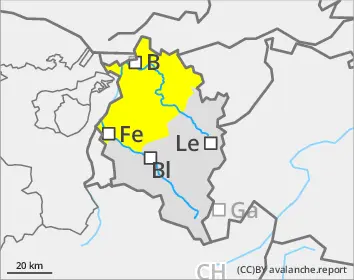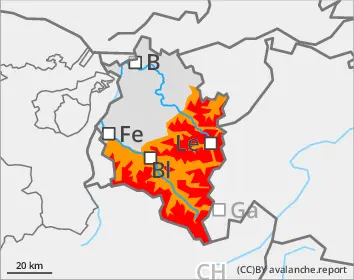
Danger level
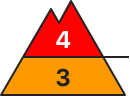 | 2000m |
|  |
|  | ||||
|  |  |


Naturally triggered avalanches still expected
Weak old snowpack: reinforced likelihood of triggering due to strong solar radiation
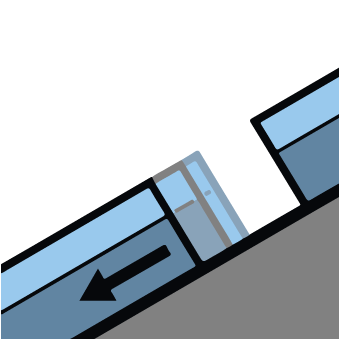
Large amounts of fresh and older snow and drifts blanket a weak old snowpack. Due to strong solar radiation, likelihood of dry-snow and wet-snow avalanches triggering is increasing again. Naturally triggered avalanches can be expected on sun-exposed slopes at all altitudes. Avalanches can still be triggered by one single winter sports enthusiast, particularly in little-skied terrain on west. north and east-facing slopes. Danger zones increase with ascending altitude, occur widespread in terrain near to and distant from ridgelines. Caution urged in transitions from shallow to deep snow, for example, at entries into gullies and bowls. Remote triggerings are possible. Avalanches can be large-sized and plummet over flattish passages. As a result of renewed rainfall and the snowpack becoming ever wetter, wet slab avalanches can be expected at low and intermediate altitudes. If these fracture to deeper down layers of the snowpack, they can in isolated cases grow to large size. On steep grass-covered slopes, glide-snow avalanches can trigger. Zones with glide cracks should under all circumstances be avoided.
Snowpack
Above about 2000m there was about 20cm of fresh snow registered in northern regions, up to 10cm in southern regions, accompanied by strong-velocity winds. Below that altitude: a thoroughly wet snowpack due to rainfall. In transition zones to dry snow, melt-freeze crusts form during the nocturnal hours. Fresh and older snowdrift accumulations are poorly bonded with the old snowpack. Weak layers are widely prevalent in the lower part of the snowpack. The extraordinary avalanche activity last week confirms just how prone to triggering the weak layer is, this persists in starting zones which have not yet discharged, apart from heavily-skied slopes.
Tendency
Avalanche danger remains tense. Naturally triggered dry-snow avalanches are diminishing in number, wet-snow avalanches persist because of solar radiation and higher temperatures. The situation for winter sports enthusiasts remains very treacherous in little-skied terrain.