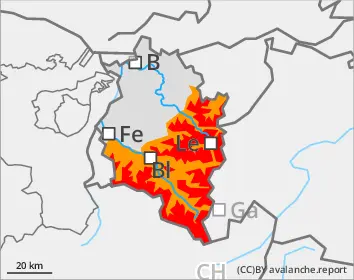
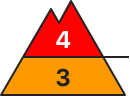
Large amounts of fresh snow and drifts blanket a weak old snowpack. Avalanches can easily be triggered by one single winter sports enthusiast in all aspects, and then grow to large size. Danger zones are numerous, occur also near the timberline. For activities outside secured zones, conditions are extremely dangerous. Remote triggerings and naturally triggered avalanches continue to be anticipated. Particularly in starting zones which have not yet discharged, they can in isolated cases be very large-sized and plummet down to low altitude zones. Exposed transportation routes can be placed at risk. Rain impact at low and intermediate altitudes will lead to the snowpack softening up and thus, to increased frequency of naturally triggered avalanches.
Snowpack
Less than 10cm of fresh snow is anticipated, accompaned by strong-velocity winds. The large amounts of fresh snow from the last few days have been repeatedly transported in varying directions, generating far-reaching snowdrift accumulations. These are often blanketed over and difficult to recognize. Bonding to the generally weak snowpack is weak. Several large and very large sized avalanche releases due to artificial triggerings, remote triggerings and provoked by winter sports enthusiasts confirm just how trigger-sensitive the snowpack is. At low and intermediate altitudes the snowpack is softening due to rainfall.
Tendency
Avalanche danger is gradually diminishing, but the overall situation for winter sports enthusiasts remains extremely treacherous.
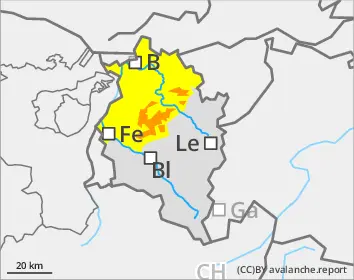
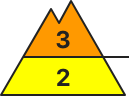
Danger level
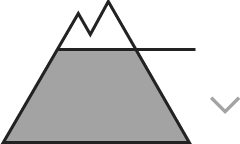
1800m
Avalanche Problem
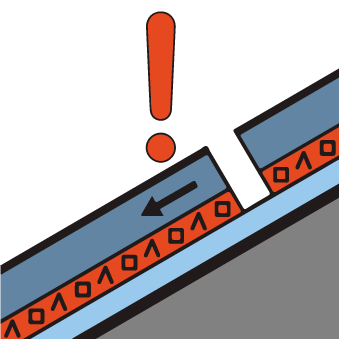
Persistent weak layer
1800m
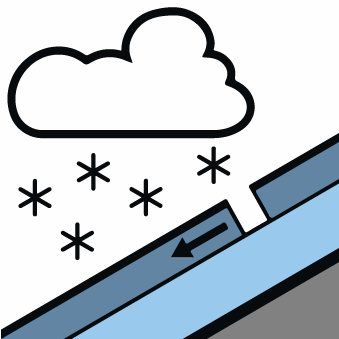
New snow
1800m
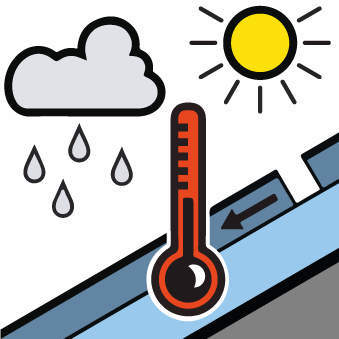
Wet snow
1800m
Danger of slab avalanches at high altitudes, wet loose-snow avalanches at lower avalanches
Avalanches can be triggered by one single winter sports enthusiast. Danger zones occur on steep slopes in all aspects, behind drops in the landscape and in wind-loaded gullies and bowls. Frequency and spread of avalanche prone locations increase with ascending altitude. Whumpf noises and fractures which appear when treading upon the snowpack are alarm signals. Activities in outlying terrain demand cautious assessment of the terrain and careful evaluation of the dangers. The inexperienced should not leave secured ski runs. Rain impact is leading to a softening of the snowpack at low and intermediate altitudes; this can lead to naturally triggered, small-to-medium sized avalanches. Zones with glide cracks should under all circumstances be avoided.
Snowpack
Less than 10cm of fresh snow is anticipated, accompaned by strong-velocity winds. The large amounts of fresh snow from the last few days have been repeatedly transported in varying directions, generating far-reaching snowdrift accumulations. These are often blanketed over and difficult to recognize. Bonding to the generally weak snowpack is weak. Several large and very large sized avalanche releases due to artificial triggerings, remote triggerings and provoked by winter sports enthusiasts confirm just how trigger-sensitive the snowpack is. At low and intermediate altitudes the snowpack is softening due to rainfall.
Tendency
The situation for winter sports enthusiasts persists.