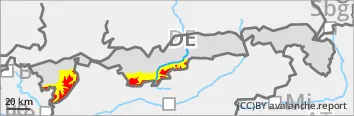
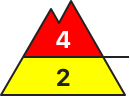
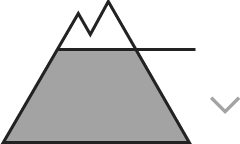
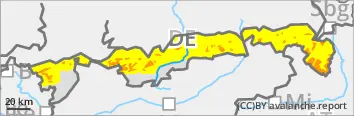
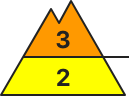
The avalanche risk is high above 1600 metres and moderate below that. The main problem is new fallen snow. Where the snow is bonded by the wind and in the area of older snowdrift accumulations, it can easily be triggered by individuals as slab avalanches or detach itself. Avalanche prone locations are adjacent to ridgelines and distant from ridgelines on steep slopes of all aspects, behind slope discontinuities, in gullies and bowls and sometimes also in forest aisles and clearings. They increase in number and extent with altitude. In addition, the new fallen snow can detach itself from the rock-interspersed steep terrain as a loose snow avalanche. They can become large, especially when avalanches break through to deeper weak layers in the old snowpack.
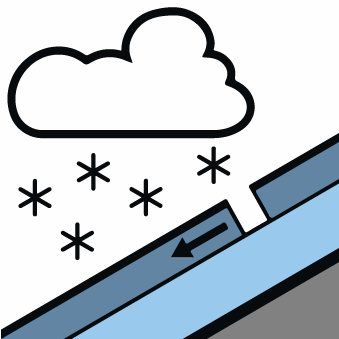
On very steep slopes with smooth ground, individual gliding avalanches are possible.
Snowpack
There is often soft new fallen snow on top of large snowdrift accumulations that are prone to triggering, lying on soft layers of snow, graupel or surface hoar. During the day, fresh wind slabs also form. In the upper part of the old snowpack, layers prone to triggering are embedded in thin surface crusts in places. Above 1800 m, there are deeper weak layers of faceted crystals in the snowpack on shady slopes. The snow depths vary greatly across the terrain due to the strong winds.
Tendency
The avalanche situation remains tense.
Danger level
1600m
Avalanche Problem
New snow
1600m
New snow
1600m
Persistent weak layer
1800m
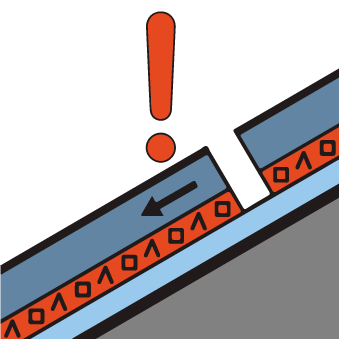
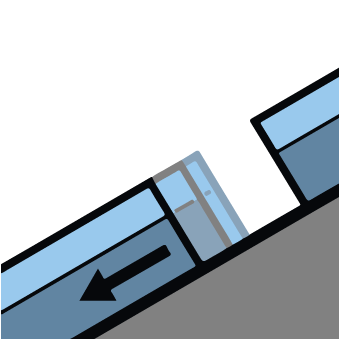
Gliding snow
2000m
Avoid prone to triggering wind slab!
The avalanche risk is considerable above 1600 metres and moderate below that. The main problem is new fallen snow. Where the snow is bonded by the wind and in the area of older snowdrift accumulations, slab avalanches can be triggered with little additional load or detach themselves. Avalanche prone locations are difficult to recognise. They are located adjacent to ridgelines and distant from ridgelines in steep slopes of all aspects, behind slope discontinuities and in gullies and bowls, sometimes also in forest aisles and clearings. Cracks when stepping on the snowpack are a sign of danger. In addition, the soft new fallen snow can detach itself from the steep terrain interspersed with rocks. The avalanche prone locations increase in number and size with altitude. Avalanches reach medium size.
Above 1800 metres, avalanches on very steep shady slopes can also occasionally tear through to deeper weak layers in the old snowpack.
Individual gliding avalanches are possible on very steep slopes with smooth ground.
Snowpack
Loose new fallen snow often covers extensive snowdrift accumulations that are prone to triggering and lie on soft layers of snow, graupel or surface hoar. During the day, additional fresh wind slab forms. In the upper part of the old snowpack, layers prone to triggering are embedded in thin surface crusts in places. Above 1800 m, there are some deeper weak layers of faceted crystals in the snowpack on shady slopes. The snow depths vary greatly across the terrain due to the strong winds.