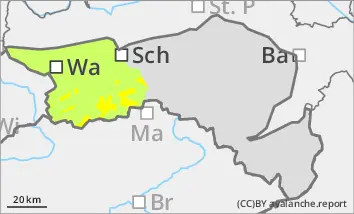
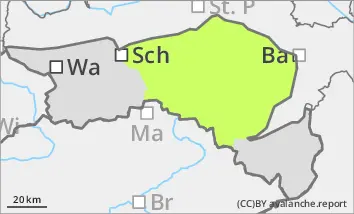
Pay attention to fresh, prone to triggering wind slab.
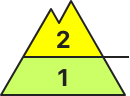
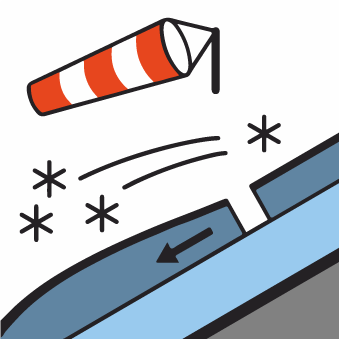
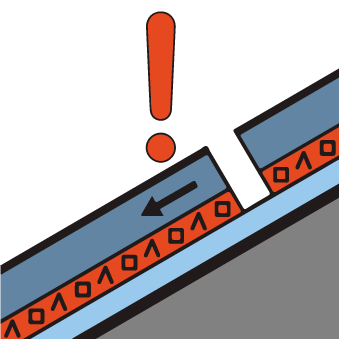
Above the tree line, there is still a moderate avalanche risk (level 2). The strong westerly wind is transporting the soft new fallen snow and forming fresh snowdrift accumulations, especially in the north to east to south aspects, adjacent to ridgelines and in steep gullies and bowls. These can be triggered by individual winter sports enthusiasts as slab avalanches, especially in the transition from a little to a lot of snow. There is still a persistent weak layer problem on shady slopes at high altitudes. Avalanches can occasionally tear through angular weak layers, but usually remain small.
Snowpack
Above around 1000 metres there is about 10 cm of new fallen snow, which was transported by strong north-westerly winds. Fresh drift snow packs are lying on decomposed snow or older drift snow layers and are prone to triggering in places. Underneath, the old snowpack is unfavourably structured in places with crusts and faceted crystals. There are weak layers both at the transitions to the wind slab and within the old snowpack.
Tendency
The avalanche danger remains the same.
In the night to Monday, strong to stormy westerly winds will develop with the passage of a warm front. On Monday, it will snow intermittently in the morning and the clouds will soften at times in the afternoon. In the evening and on Tuesday night, a north-westerly weather pattern sets in, leading to more snowfall.
Danger level
1500m
Avalanche Problem
Wind slab
1500m
Low avalanche danger, watch out for fresh pillows of wind drifted snow at high altitudes.
At high altitudes, there are sometimes considerable snowdrift accumulations in steep gullies and bowls. These are prone to triggering, especially in the transition from a little to a lot of snow. Tearing through weak layers of old snow is possible, but avalanches remain small. The risk of tearing and falling outweighs the risk of burial. Hardness or icy surfaces can be covered by little new fallen snow and be difficult to recognise.
Snowpack
The snow conditions are below average for mid-February. At high altitudes, there is a considerable amount of wind slab snow in places in gullies and bowls. The small amount of new fallen snow from the last few days has also been transported. The snow thickness is decreasing rapidly in areas distant from ridgelines. Above 1500 m, thin pillows of wind drifted snow can be found in northern and eastern exposures, while windward areas are often icy and snow-poor. Below 1500 m, a thin snowpack has formed on mostly bare ground.
Tendency
The avalanche risk remains low.
The clouds will thicken in the night to Tuesday. A north-westerly current will lead to new fallen snow under the influence of strong winds, with the most snow again falling in the Ybbstal Alps. In the morning, precipitation-free phases will predominate and sunny clear spells will occur on the eastern edge of the Alps. Later, the next snow and sleet showers will spread from the west.