Freshly generated snowdrifts atop unfavorable old snowpack
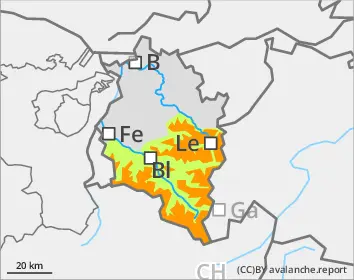
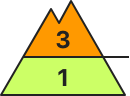
Snowdrift accumulations are prone to triggering, can easily be triggered even by one single person, especially on shady slopes. Avalanche danger rapidly increases with ascending altitude above the treeline, above 1800m the danger is considerable. Avalanche prone locations occur in steep terrain near to and distant from ridgelines, behind drops in the terrain, in wind-loaded gullies and bowls. Marked weak layers in the old snow can be unleashed by winter sports enthusiasts particularly on steep, little skied-on slopes. Danger zones are not visible. A defensive route selection is imperative. Superficially triggered avalanches can fracture down to deeper layers inside the snowpack and grow to medium size. Whumpf noises and fractures appearing on the snowpack surface are alarm signals.
Snowpack
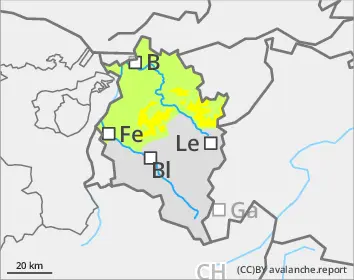
As a result of fresh snow and storm-strength winds yesterday, trigger-sensitive snowdrift accumulations were generated. The surface in wind-exposed terrain shows marked effects of wind: ridges and crests are windblown, bare of snow, gullies and bowls are often filled to the brim with drifts. In the classic foehn-exposed zones, more snowdrifts were generated today. Fresh snow and drifts often lie deposited on top of a melt-freeze encrusted snowpack or atop surface hoar. Particularly on high-altitude shady slopes the snowpack frequently has strikingly weak layers. Numerous small-to-medium sized releases by winter sports enthusiasts confirmed today how prone to triggering the snowpack is.
Tendency
Snowdrifts deposited on the weak old snowpack remain prone to triggering
Danger level
1800m
Avalanche Problem
Persistent weak layer
1800m
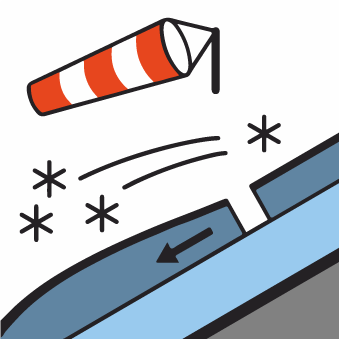
Wind slab
Treeline
Beware fresh snowdrift accumulations, they can easily be triggered
Snowdrift accumulations are prone to triggering, can easily be triggered even by one single person, especially on shady slopes. Avalanche danger rapidly increases with ascending altitude above the treeline, above 1800m the danger is considerable. Avalanche prone locations occur in steep terrain near to and distant from ridgelines, behind drops in the terrain, in wind-loaded gullies and bowls. Marked weak layers in the old snow can be unleashed by winter sports enthusiasts particularly on steep, little skied-on slopes. Danger zones are not visible. A defensive route selection is imperative. Superficially triggered avalanches can fracture down to deeper layers inside the snowpack and grow to medium size.
Snowpack
As a result of fresh snow and storm-strength winds yesterday, trigger-sensitive snowdrift accumulations were generated. The surface in wind-exposed terrain shows marked effects of wind: ridges and crests are windblown, bare of snow, gullies and bowls are often filled to the brim with drifts. In the classic foehn-exposed zones, more snowdrifts were generated today. Fresh snow and drifts often lie deposited on top of a melt-freeze encrusted snowpack or atop surface hoar. Particularly on high-altitude shady slopes the snowpack frequently has strikingly weak layers. Numerous small-to-medium sized releases by winter sports enthusiasts confirmed today how prone to triggering the snowpack is.