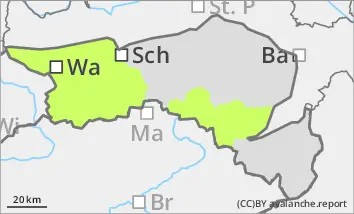
Low avalanche danger, fresh wind slab in the high altitudes
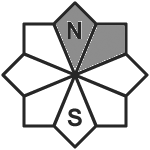
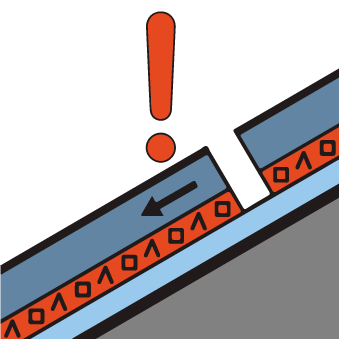
The avalanche risk is low. Fresh, thin pillows of wind drifted snow lie in aspects from north-east to south-east, particularly adjacent to ridgelines, in the entrance areas of steep gullies and bowls and behind terrain edges. Individual winter sports enthusiasts can trigger small slab avalanches. There is a persistent weak layer problem on shady slopes at high altitudes - avalanches can occasionally tear through the old snow, but remain small. The risk of being swept away, falling and injury outweighs the risk of burial. Hardness or icy surfaces can be covered by little snow and be difficult to recognise.
Snowpack
There is still little snow. A few centimetres of new fallen snow have fallen above around 1500 metres. While around 10 cm of snow has accumulated in the Ybbstal Alps, hardly any new fallen snow has fallen from Schneeberg to Rax. The new fallen snow was transported by strong winds in exposed areas and deposited as thin pillows of wind drifted snow on a wet or crusted can form snow surface up to the summit areas. In the higher elevations, angular snow crystals are still weakening the stability on shady slopes.
Tendency
The avalanche risk remains unchanged for the time being. During the night to Sunday, temperatures will drop and there will be some snow showers, which will mainly affect the Ybbstal and Türnitz Alps. There will also be some new fallen snow in the Gutenstein Alps and hardly any snow in the Rax-Schneeberg area. On Sunday it will be stormy in exposed areas, the snow showers will subside during the day. It will be much colder.