Danger level
 | 2000m |
|  |
|  |
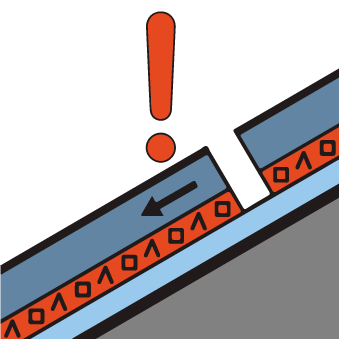

Spacing distances, maintaining distances minimise the risk.
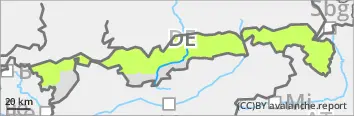
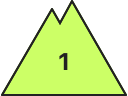
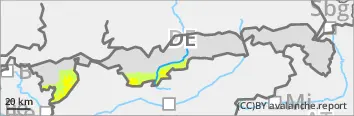
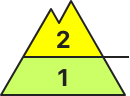
The avalanche risk is moderate above 2000 metres and low below. The main problem is a persistent weak layer. Slab avalanches can be triggered in particular with large additional loads. Avalanche prone locations are located particularly at the transition from little to much snow in steep terrain with aspects from north-west to north to east as well as at the entrance to gullies and bowls. They increase in number and size with altitude. Avalanches can reach medium size at high altitudes.
Snowpack
At medium elevations, a melt-freeze crust forms at night, which softens on the sunny slopes during the daytime changes. At higher elevations, a few centimetres of new fallen snow cover a compact old snowpack. In places, prone-to-triggering weak layers of faceted crystals can be found underneath deeper-lying snow covers. The base of the snowpack often consists of large-grained, crumbly snow. On the south side, the ground is increasingly pitting.
Tendency
The avalanche danger is slowly decreasing.