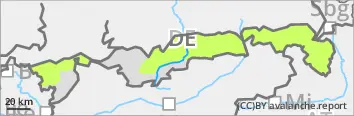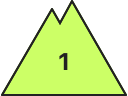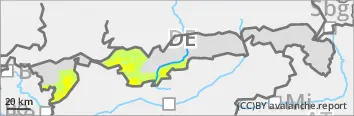
Danger level
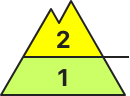 | 1800m |
|  |
|  | ||||
|  | |
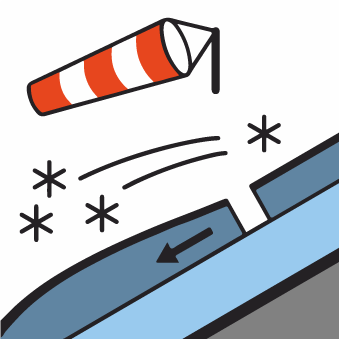
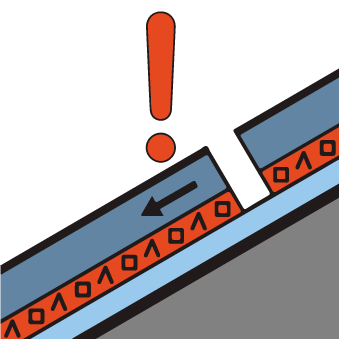

Carefully assess wind slab with increasing height.
The avalanche risk is moderate above 1800 metres and low below that. The main problem is wind slab avalanches. Slab avalanches can be triggered by small additional loads in steep terrain adjacent to ridgelines in the north-west to north to east aspect as well as in gullies and bowls. Avalanches can reach medium size in the Allgäu and when deeper weak layers in the persistent weak layer are disturbed.
Snowpack
On a small scale, windslab snow lies partly on soft snow at high altitudes, otherwise on variously crusted can form snow surfaces. A weak layer of angular snow crystals has formed underneath these layers of harsh snow. In the middle layers, this layer slowly stabilises with mild temperatures and a lack of outgoing longwave radiation. The base of the snowpack often consists of gritty floating snow. There is little to no snow on the south side.
Tendency
Slight increase in avalanche danger with new fallen snow and wind.