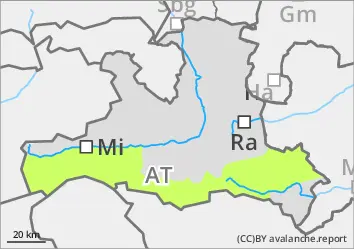
Individual sliding snow avalanches, isolated danger spots in old snow
The risk of avalanches is low, the risk of falling is higher than the risk of burial.
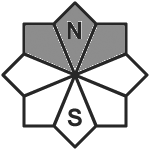
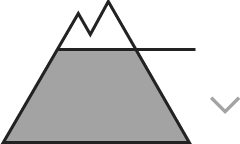
Occasionally, a snow slab can be triggered by a single winter sports enthusiast above 2500 metres. The avalanches usually remain small. The main danger spots are on extremely steep, shady slopes.
Small, spontaneous sliding snow avalanches are possible from very steep, not yet unloaded grass mat terrain.
Snowpack
The surface is dominated by (fractured) hardpack or crusts, some of which soften during the day. From around 2500 m, there are angular crystals within the snowpack near the crusts, which can occasionally serve as a weak layer. Below this, the snow cover is stable and is most likely to slide off the ground. Overall, there is very little snow, and on the sunny side, it is bare far up.
Tendency
Little change.
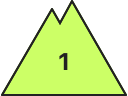
Danger level
Avalanche Problem
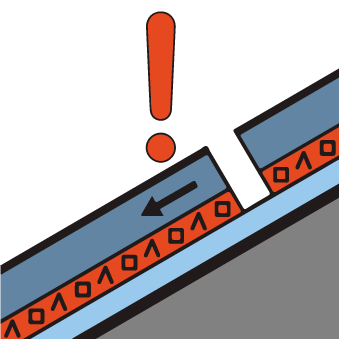
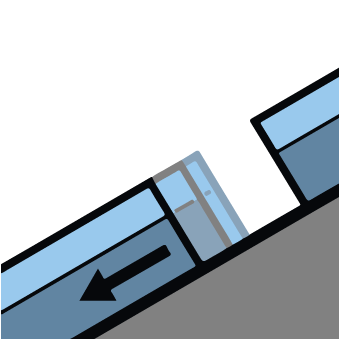
Gliding snow
Falls and stones are the main danger.
The avalanche danger is low. Small, spontaneous sliding snow avalanches are possible from very steep, as yet undischarged grass mat terrain.
Snowpack
There is often little snow, low elevations are widely covered in snow. The snow surface is hardened and softens during the day at medium altitudes and also at high altitudes on the sunny side. Inside, the snow cover is moist to wet up to high altitudes. In shady, high and high alpine locations, there are still isolated weak layers of angular crystals in the snowpack.