Main dangers: persistent weak layer and gliding snow
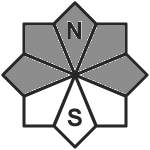
Slab avalanches can be triggered in places by large additional loading. Caution urged on high-altitude, very steep shady slopes. In addition, older snowdrift accumulations are in isolated cases still prone to triggering on steep shady slopes, in isolated cases triggerable by winter sports enthusiasts, but generally small-sized As a result of daytime rise in temperatures, mostly small wet loose-snow avalanches are possible. Glide-snow avalanches continue to slide away naturally on steep smooth-ground slopes.
Snowpack
Up to high altitudes, the snowpack has been weakened by rain impact. Nocturnal outgoing radiation effects are dampened somewhat by high-altitude cloudbanks, the snowpack can thus consolidate only at superficial levels. During the course of the day the snowpack softens up particularly on sunny slopes and at low altitudes, and the danger of wet-snow avalanches again increases somewhat. Older snowdrift accumulations have been generatedf atop an unfavorable old snowpack surface, particularly at high altitudes on shady slopes. Also at high altitudes, mostly on shady slopes, faceted intermediate layers occur inside the snowpack.
Tendency
Due to persistent weak layer problem, avalanche situation improving only gradually
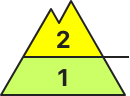
Danger level
Avalanche Problem
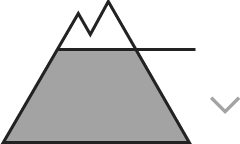
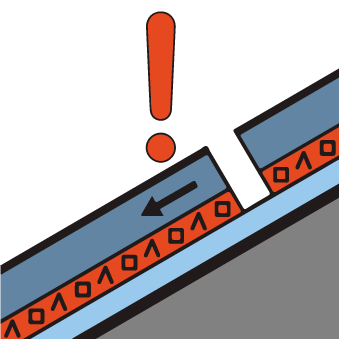
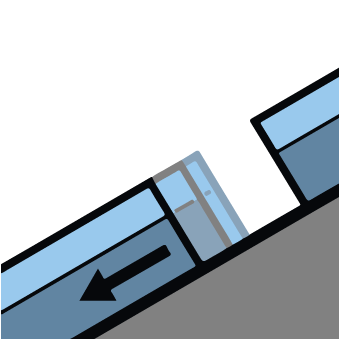
Gliding snow
Gliding snow and wet loose-snow slides during daytime hours
As a result of daytime warming, mostly small-sized wet loose-snow avalanches are possible. Glide-snow avalanches continue to glide away naturally on steep, smooth slopes. Due to the shallow snow depths, avalanches remain predominantly small-sized.
Snowpack
Up to high altitudes the snowpack has been weakened by rain impact. The nocturnal outgoing radiation is slightly dampened due to high-altitude cloudbanks, thus, the snowpack can consolidate only at superficial levels. During the course of the day, it softens up and the danger of wet-snow avalanches again increases somewhat.
Tendency
Little change is expected, avalanche danger remains low