South sides are free of snow up to high altitudes.
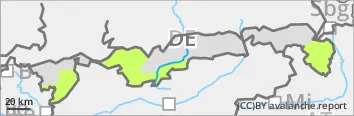
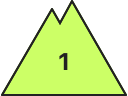
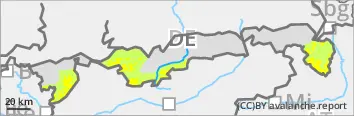
The avalanche risk rises to moderate during the day changes above 1800 m, otherwise it is low. Wet snow is problematic. Gliding avalanches can occur on very steep slopes with a smooth surface, such as meadow slopes or rock slabs. If the melt-freeze crust is softened in the sun, wet loose snow avalanches can detach themselves in extremely steep terrain. Avalanches occasionally reach medium size.
Snowpack
With outgoing longwave radiation overnight, a stable melt-freeze crust forms on the surface, which softens again during the daytime changes in the sun. In many places, the snowpack is soaked through to the higher elevations and consists mainly of snowmelt. On north-facing slopes at higher altitudes, there are still layers of faceted crystals deep in the snowpack. There is hardly any snow below 1500 metres, the southern slopes are largely bare.
Tendency
No change for the time being.
Danger level
Avalanche Problem
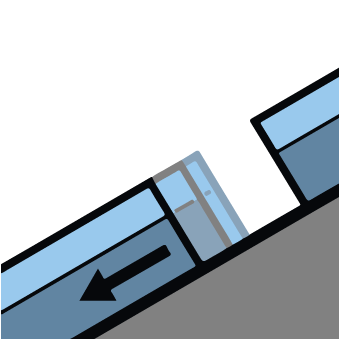
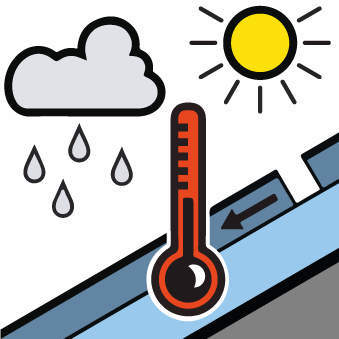
Gliding snow
The foothills of the Alps are snow-free in many places.
The avalanche risk is low. Occasionally, small gliding avalanches can detach themselves on very steep slopes with smooth ground.
Snowpack
At night, a stable melt-freeze crust forms, which softens again during the day in the sun. Otherwise, the remaining snowpack is patchy, soaked and consists mainly of snowmelt. The southern sides are largely free of snow except for individual snow fields in areas adjacent to the ridgeline, crest or summit.