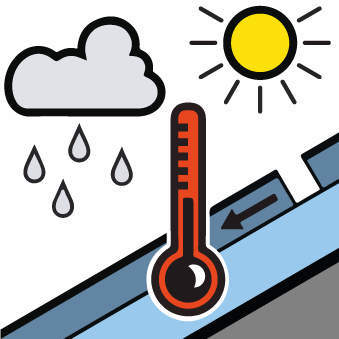
Rainfall weakens the snowpack, new fallen snow high above
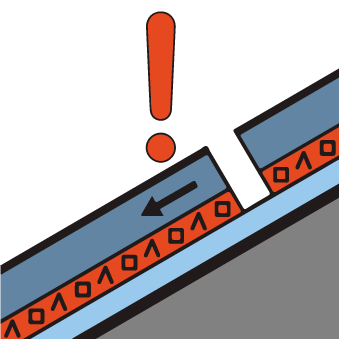
The avalanche risk is already considerable below around 2500 metres in the morning. Wet slab avalanches and loose snow avalanches are to be expected on slopes that have not yet been discharged with rain. This applies to those aspects where there is still a lot of snow. The avalanches can occur spontaneously or be triggered by people. They can become large when wet snow collects and tears through the persistent weak layer in some places. Caution should also be exercised in the open run-out areas of trenches. There are isolated signs of sliding snow activity.
In a few places above 2400 m, weak layers can also be disturbed directly in the persistent weak layer, especially on west, north and east-facing slopes, and also south-facing slopes in the high Alps. Snow slabs in persistent weak layers remain predominantly medium sized. The avalanche prone locations are difficult to recognise.
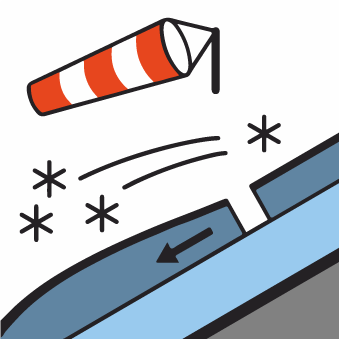
Strong southerly foehn winds deposited small pillows of wind drifted snow in high gullies and bowls on Monday, which are locally covered with new fallen snow and are difficult to recognise.
Snowpack
It is slightly colder than before. Despite this, the snowpack has difficulty cooling down overnight and is already softened in the morning. Beneath it lies well-settled snow from the last periods of precipitation, but softer layers are embedded, especially at higher altitudes, which allow breaks near the surface. On shady slopes from around 2400 metres, there are still weak layers of angular forms and deep rime in the old snowpack close to the ground. The snowpack becomes moist to wet up to high altitudes during daytime changes at the latest. Low and sunny slopes are covered in snow.
Tendency
The wet snow problem remains.
Danger level
2400m
Avalanche Problem
Wet snow
2400m
Persistent weak layer
2400m
Limited visibility, heightened wet-snow danger
Danger of wet-snow avalanches is heightened even as of early morning in all aspects below 2400m. Naturally triggered avalanches are possible, avalanches can also be triggered by persons and grow to large size, also sweep along great amounts of wet snow in their plummet path and then extend to very long runout zones. In high alpine regions, small ridgeline snowdrift accumulations are still prone to triggering. In addition, winter sports enthusiasts can in places on high-altitude shady slopes trigger near-surface weak layers. Such danger zones are impossible to recognize. Atop the hardened snowpack surface, there is danger of being forced to take a fall on steep slopes.
Snowpack
Following starkly reduced outgoing radiation and mild temperatures, the snowpack is hardly freezing at night. Above 2200m about 5cm of fresh snow is expected, below that altitude as intermittent rainfall. At 1800-2400m the snowpack, even on north-facing slopes, is thoroughly wet and ground-level layers of rotten snow are prone to triggering. In high-altitude, steep and shady terrain, there are unfavorable intermediate layers in the uppermost metre of the snowpack which in places are prone to triggering. A thick mid-section of compact layers blankets the deep hoar and faceted crystals at the base of the snowpack.
Tendency
Slight high-pressure front conditions, increasingly pleasant conditions, milder temperatures. Starkly reduced nocturnal outgoing radiation continues.
Danger level
Avalanche Problem
Wet snow
Persistent weak layer
2200m
Rain weakens the snowpack
The avalanche risk is moderate. Wet loose snow and slab avalanches are already possible in the morning on slopes that have not yet been unloaded. This is the case in those aspects where snow still covers the entire area. Avalanches can occur spontaneously or be triggered by winter sports. They usually remain medium in size, but with the accumulation of wet snow and tearing through to weak layers close to the ground, large avalanches are possible in exceptional cases. Caution should also be exercised in the apery run-out areas of ditches. There are isolated signs of sliding snow activity.
In a few places above 2200 m in the extended northern sector, weak layers can still be disturbed directly in the persistent weak layer and lead to medium-sized slab avalanches if there is a large additional load.
Snowpack
It is slightly colder than before. Despite this, the snowpack has difficulty cooling down overnight and is already softened in the morning. Underneath is well-settled snow from the last periods of precipitation. On shady slopes from around 2200 metres, there are still weak layers of angular forms and deep rime in the old snowpack close to the ground. The snowpack becomes moist to wet up to high altitudes during daytime changes at the latest. Low and sunny slopes are covered in snow.
Tendency
The wet snow problem remains.
Danger level
Avalanche Problem
Wet snow
Wet-snow danger in very steep terrain where there is still lots of snow
Wet loose-snow avalanches can trigger naturally in extremely steep terrain as a result of the rain showers. Also persons can trigger wet-snow avalanches in very steep terrain. Danger zones generally occur only in summit zones of the Bregenzerwald mountains. Avalanches generally remain medium-sized. On steep, smooth-ground slopes with lots of snow which have not yet discharged, glide-snow avalanches can trigger in all aspects.
Snowpack
Due to reduced nocturnal longwave outgoing radiation and ongoing mild temperatures, the snowpack does not freeze at night. At all altitudes the snowpack is thoroughly wet.
Tendency
Slight high-pressure front conditions, increasingly pleasant conditions, milder temperatures. Slopes continue to become bare of snow.
Danger level
Avalanche Problem
Wet snow
Persistent weak layer
2200m
Moderate avalanche danger, wet snow problem all day long!
The avalanche risk is moderate. In a few places, small to medium-sized, wet loose snow and slab avalanches can be triggered by themselves or by slight additional load throughout the day from terrain that has not yet been discharged. In a few extremely steep, shaded areas above 2200 m, small to medium-sized dry slab avalanches can still be triggered.
Snowpack
During the night, the snowpack can hardly consolidate and remains isothermal and soft up to high altitudes. The soaking can reactivate old weak layers in the persistent weak layer, especially on the north side. In all aspects, the soaked snowpack can lose its stability or begin to glide on smooth ground. At low altitude and on the sunny slopes, the snow cover is developing rapidly.
Tendency
The weather will remain unsettled on Wednesday and Thursday. After that, it will become milder and more stable for a few days. The avalanche risk will hardly change.
Danger level
Avalanche Problem
Wet snow
Persistent weak layer
2200m
Watch out for wet snow problems - all day!
The avalanche risk is predominantly moderate at altitudes where there is still a sufficiently thick snowpack. Medium wet snow avalanches triggered spontaneously or occasionally by people are possible at any time from steep terrain that has not yet been discharged in all aspects up to higher altitudes. Only high alpine and on shady slopes could individual slab avalanches be triggered in very steep terrain by large additional loads.
Snowpack
The snow surface can hardly firmness overnight. Short rain showers at night and during the day bring further moisture. There are only a few centimetres of new fallen snow high up in the Alps. The snowpack is wet up to high altitudes in the centre, otherwise it is damp and therefore unstable. Only high up and on shady slopes can there still be isolated weak layers in the old snowpack. Low and sunny slopes in the middle are bare.
Tendency
No significant change in the avalanche risk.
Danger level
2200m
Avalanche Problem
Wet snow
2200m
Wind slab
2200m
Persistent weak layer
1800m
Rain thaw below 2200 m, small unstable snowdrift accumulations of new fallen snow above 2200 m.
The old snow cover is mostly well connected and generally stable.
Rainfall below 2200 m will cause a decrease in the snowpack stability. Where rainwater reaches the cut layers, natural wet snow avalanches may be triggered.
Above 2200 m, fresh snowdrift accumulations will be possible to trigger small slab avalanches of bonded snow at low loads.
Snowpack
dp.10: springtime scenario
In an old snow cover, the snow layers are mostly well connected. More or less deep below the surface, there are several weak layers of shreds and discontinuous grains, which are more frequent on slopes at the axis.
On a cloudy night, the surface of the snowpack will not freeze.
On Tuesday, rain will soften the upper layers of the snowpack below an altitude of about 2200 m. Where the rain reaches the thinned layers, slightly deeper and larger wet snow avalanches may be triggered. Above 2200 m, snow will fall with moderate E-W winds, with small snowdrift accumulations forming in leeward positions, only slowly merging with the old base.
Tendency
Wednesday will be cloudy and dry. Winds and air temperature will be similar to Tuesday. Thursday may see more sunshine. The danger of avalanches will decrease slightly on Wednesday.
Danger level
1500m
Avalanche Problem
Wet snow
1500m
Wet snow
1500m
At lower altitudes (below 1500 m), the glacier is also advancing northwards.
The avalanche risk is moderate above 1500 metres and low below that. Wet snow is the problem. Wet loose snow and slab avalanches are to be expected above all at high altitudes where there is still a lot of snow. In extremely steep terrain in all aspects of the slope, they detach themselves; on very steep slopes, they can be triggered by individuals. On steep slopes with smooth ground, such as on meadow slopes, in patchy mountain forests or on smooth rock slabs, wet gliding avalanches occur. Avalanches usually remain small to medium.
Snowpack
The snowpack is soaked up to high altitudes. At higher altitudes, there are a few centimetres of soft, moist snow on a largely stable and, on shady slopes in particular, still thick old snowpack. In places, layers of faceted crystals have been preserved deeper in the snowpack at high altitudes exposed to the north. On the south side, the ground is already bare again above the tree line.
Tendency
The risk of avalanches at medium altitudes will continue to decrease as the snow continues to disappear.
Danger level
Avalanche Problem
Wet snow
Small wet-snow slides possible
Due to rainfall, wet loose-snow avalanches can trigger naturally in extremely steep terrain where there is still snow on the ground. Avalanches will be mostly small-sized.
Snowpack
South-facing slopes are frequently bare of snow. Where there’s a snowpack on the ground, it’s thoroughly wet.
Tendency
The slopes will continue to become bare of snow.
Danger level
Avalanche Problem
Wet snow
Be aware of the local wet snow problem!
The avalanche risk is predominantly low. At altitudes and on slopes with a sufficiently thick snowpack, localised wet snow avalanches are possible during the day in all aspects from undischarged areas, some of which can reach medium size.
Snowpack
The snow surface can hardly firmness overnight. Short rain showers at night and during the day bring further moisture penetration. The snowpack is wet up to high altitudes in the centre, otherwise damp and therefore unstable. Only high up and on shady slopes can there still be isolated weak layers in the old snowpack. Low and sunny slopes in the middle are bare.
Tendency
No significant change.
Danger level
Avalanche Problem
Wet snow
Low avalanche danger, occasional small wet snow slides possible
The avalanche risk is low. Small wet snow slides can occur occasionally in all aspects, especially from multiple starting zones that have not yet been fully discharged. The risk of entrainment in the fall terrain outweighs the risk of burial.
Snowpack
The thin, mostly isothermal snow cover cannot consolidate overnight and is sometimes soaked further by a little rain. There is only a little snow left and the sunny slopes are mostly already snowed out.
Tendency
The weather will remain unsettled on Wednesday and Thursday. After that, it will become milder and more stable for a few days. The avalanche risk remains low.
Danger level
Avalanche Problem
Wet snow
Small wet snow avalanches in snowy places
The avalanche risk is low. Small wet snow slides can spontaneously occur from slopes that have not yet been unloaded on those aspects where there is still snow. Wet snow slides triggered by winter sports increase the risk of entrainment in the fall terrain.
Snowpack
The outgoing longwave radiation at night is poor and the snow cover remains largely isothermal due to rain and heat. In places, you can still find small pillows of wind drifted snow adjacent to ridgelines, but most of the terrain is already tapped out.
Tendency
Gradual reduction of the avalanche risk due to melting and raining away of the remaining snow.
Danger level
Avalanche Problem
Wet snow
Increasing snow cover also on the north side
The avalanche risk is low. Wet snow is the problem. In extremely steep terrain, loose snow avalanches can occasionally come loose. Wet gliding avalanches can occur on steep slopes with smooth ground that have not yet been discharged. Avalanche activity is limited to terrain on shady slopes where there is still snow. Wet avalanches usually remain small.
Snowpack
The remaining snowpack is completely soaked, the meltwater runoff hardly decreases even overnight. The southern sides are largely snowed out.