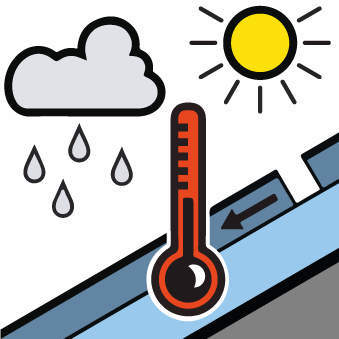
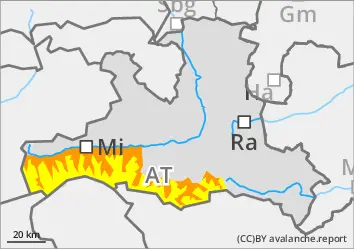
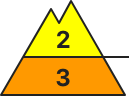
The avalanche risk is moderate in the morning and rises rapidly to level 3 "considerable" as the snowpack softens below around 2800 metres. Wet slab avalanches and loose snow avalanches are possible on slopes that have not yet been discharged in all aspects. The avalanches can occur spontaneously or be triggered by individuals. They usually remain medium in size, but can also become large in some places as wet snow accumulates and tears through the persistent weak layer.
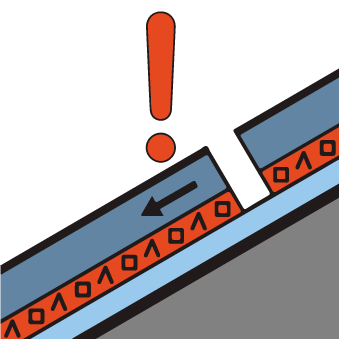
In a few places above 2200 m, weak layers can also be disturbed directly in the old snow, especially on west, north and east-facing slopes, as well as south-facing slopes in the high Alps. Snow slabs in the persistent weak layer can be medium in size, and large if they break through into the floating snow near the ground. The avalanche prone locations are difficult to recognise.
Small, fresh pillows of wind drifted snow can be disturbed in high, blown-in gullies and generally at the transition from little to much snow, especially adjacent to ridgelines.
Snowpack
The outgoing longwave radiation at night is poor, only a thin melt cover forms locally, which softens quickly. Beneath a few centimetres of wind-treated new fallen snow lies well-settled snow from the last periods of precipitation, but softer layers are embedded, especially at altitude, which allow fractures near the surface. On shady slopes from around 2200 metres, there are still prone to triggering weak layers of angular shapes and deep rime in the old snowpack close to the ground. At medium altitudes, rain has soaked the snowpack and the moisture remains inside overnight. Low altitudes are often already snowed out.
Tendency
The wet snow problem remains.
EARLIER Danger level
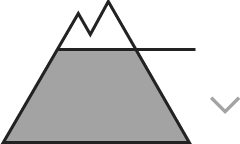
2200m
Avalanche Problem
Wet snow
2200m
Persistent weak layer
2200m
LATER Danger level
Avalanche Problem
Wet snow
Persistent weak layer
2200m
Wet snow activates the persistent weak layer problem
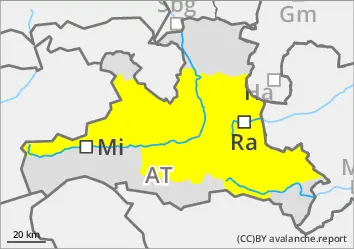
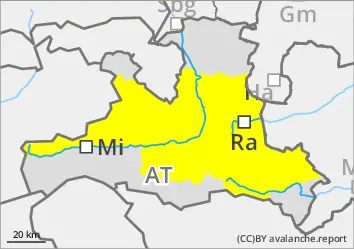
The avalanche risk is moderate. Wet loose snow and slab avalanches are possible quickly on slopes that have not yet been discharged in all aspects and altitudes. The avalanches can occur spontaneously or be triggered by winter sports. They usually remain medium in size, but with the accumulation of wet snow and tearing through to weak layers close to the ground, large avalanches are conceivable in exceptional cases.
In a few places above 2200 m in the extended northern sector, weak layers can still be disturbed directly in the persistent weak layer by individuals, and the snow slabs can reach medium size.
Small, fresh pillows of wind drifted snow can be disturbed in high, blown-in gullies and generally at the transition from little to much snow, especially adjacent to ridgelines.
Snowpack
The outgoing longwave radiation at night is poor, only a thin melt cover forms locally, which softens quickly. There is well-settled snow from the last periods of precipitation underneath some new or wind slab snow, but softer layers are embedded, especially at higher altitudes, which enable near-surface fractures. On shady slopes from around 2200 metres, there are still prone to triggering weak layers of angular forms and deep rime in the old snowpack close to the ground. At medium altitudes, rain has soaked the snowpack and the moisture remains inside overnight. Low altitudes are often already snowed out.
Tendency
The wet snow problem remains.
Danger level
Avalanche Problem
Wet snow
Small wet snow avalanches in snowy places
The avalanche risk is low. Small, spontaneous wet snow slides can occur from slopes that have not yet been discharged in all aspects. Wet snow slides triggered by winter sports increase the risk of entrainment in the fall terrain.
Snowpack
The outgoing longwave radiation at night is poor and the snow cover remains largely moistened to isothermal due to the warmth. In places, you can still find small pillows of wind drifted snow adjacent to ridgelines, but most of the terrain is already tapped out.
Tendency
Slow reduction in avalanche danger due to melting of the remaining snow.