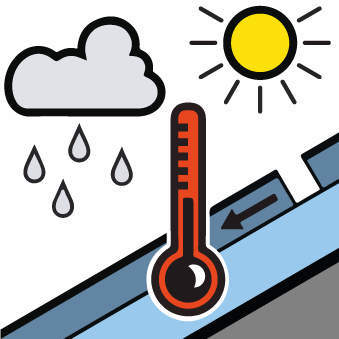
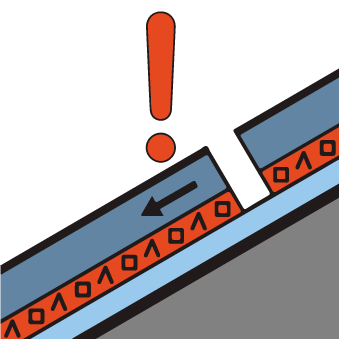
The avalanche risk is considerable. Wet snow is the main problem. In all aspects, wet loose snow and slab avalanches can detach themselves, especially on extremely steep terrain. Gliding avalanches can occur on steep slopes with smooth ground. Avalanche run-out areas must be recognised and avoided. Exposed traffic and hiking trails can be hit.
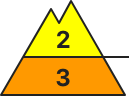
Attention must also be paid to persistent weak layers at high altitudes. On very steep slopes with aspects from north-west to north to east, dry slab avalanches can be triggered by low additional loads. They reach medium size.
Snowpack
Overnight, the soaking of the snowpack is also progressing on the north side. The new and drift snow packs of the past two weeks often contain grey peel deposits and at higher elevations, especially on shady slopes, are partly on thin weak layers in the area of crusts. The snowpack base is still dry at high altitudes and often consists of faceted crystals, further down it is usually moist or wet.
Tendency
Transition to spring conditions with a daily increase in avalanche danger.
Danger level
Avalanche Problem
Wet snow
Persistent weak layer
2200m
Wind slab
1800m
Starting in early morning: considerable avalanche danger
The snowpack is weak up to high altitudes, partly due to lack of nocturnal shortwave outgoing radiation, partly due to rainfall and mild temperatures. In very steep terrain in all aspects, wet slides and avalanches can be expected. These releases can grow to large size. On steep snow-covered grassy slopes, glide-snow avalanches are possible. Caution below glide cracks in the surface of the snowpack. In addition, medium-sized avalanches can be triggered in older snowdrifts, as well as on high-altitude shady slopes in the weak old snow, by winter sports enthusiasts.
Snowpack
The old snowpack us weak up to over 2000m already in the early morning hours. During the daytime, mild temperatures and solar radiation make the snowpack wetter, rapidly leading to a further loss of firmness. Above the timberline, older snowdrift accumulations are frequently prone to triggering. On steep, shady high-altitude slopes, the old snowpack often has unfavorable intermediate layers and a poorly-structured fundament.
Tendency
Daytime rise in avalanche danger
EARLIER Danger level
2200m
Avalanche Problem
Persistent weak layer
2200m
Wet snow
2500m
LATER Danger level
2500m
Avalanche Problem
Wet snow
2500m
Persistent weak layer
2200m
Wet avalanches are already expected in the morning.
The avalanche danger increases from moderate to considerable during the daytime changes below 2500 metres.
Small and medium, damp and wet loose snow avalanches and snow slabs are to be expected in all aspects below around 2500 metres. Wet avalanches can also be triggered by winter sports enthusiasts.
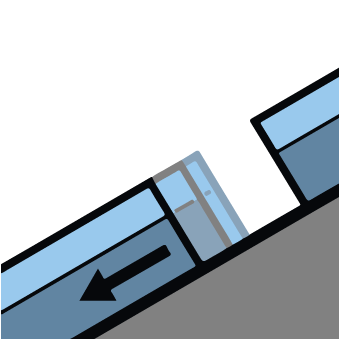
A few small gliding avalanches are to be expected on typical slopes.
In a few places above 2200 m, snow slabs can also be triggered in persistent weak layers, especially on west-, north- and east-facing slopes, and also on the south side in the high Alps. Avalanche prone locations are difficult to recognise.
Snowpack
The snow on the surface is often sticky to wet from early in the morning, and the snow is also moistened on the north side up to around 2600 metres. Pure sunny slopes are (almost) isothermal up to high altitudes and moist right down to the ground. At high altitudes on shady slopes, the old snowpack contains angular forms and deep rime. Fractures are most likely to occur on one of the uppermost crusts and only rarely in the floating snow close to the ground. In some cases, the snow also glides off the ground.
Tendency
A spring situation with melt-freeze crust in the morning and firn during the daytime changes. On shady slopes, the persistent weak layer problem remains.
Danger level
Avalanche Problem
Wet snow
Moderate avalanche danger: Spontaneous wet snow avalanches are still possible!
The avalanche danger is assessed as moderate. Wet slab avalanches can be triggered even under low additional load. Spontaneous wet snow avalanches are also possible with rain. The avalanches are usually small. They can also be medium-sized in steep gullies and bowls. Wechten breaks can trigger naturally triggered avalanches.
Snowpack
Due to the cooling, the firmness of the snowpack at higher altitudes increases again somewhat. At medium altitudes, the snowpack remains moist, at low altitudes it is wet. With the arrival of rain, weak layers between the consolidated windslab snow and the old snowpack in the northern sectors may become prone to triggering again. In the Rax-Schneeberg area, there is little snow below 1400 metres.
Tendency
Sunny mountain weather will prevail again on Tuesday. The north-westerly wind blows noticeably. The avalanche danger changes only slightly.
Danger level
Avalanche Problem
Wet snow
Persistent weak layer
2000m
Avalanches reach small and medium size.
The avalanche risk is moderate. Wet snow is the main problem. In all aspects, wet loose snow and slab avalanches can detach themselves, especially on extremely steep terrain. Gliding avalanches can occur on steep slopes with smooth ground. Avalanche run-out areas must be recognised and avoided.
In addition, pay attention to persistent weak layers at high altitudes. On very steep slopes with aspects from north-west to north to east, dry slab avalanches can be triggered by low additional loads. They reach medium size.
Snowpack
Overnight, the soaking of the snowpack is also progressing on the north side. The new and drift snow packs of the past two weeks often contain grey peel deposits and at higher elevations, especially on shady slopes, are partly on thin weak layers in the area of crusts. The snowpack base is still dry at high altitudes and often consists of faceted crystals, further down it is usually moist or wet.
Tendency
Transition to spring conditions with a daily increase in avalanche danger. The south-facing slopes are thawing out again at medium altitudes.
EARLIER Danger level
2200m
Avalanche Problem
Persistent weak layer
2200m
Wet snow
LATER Danger level
Avalanche Problem
Wet snow
Persistent weak layer
2200m
Wet avalanches are already expected in the morning.
The avalanche risk is moderate.
Small and medium-sized wet loose snow avalanches and snow slabs can be expected in all aspects, especially in the morning rain or afternoon sunshine. Wet avalanches can also be triggered by winter sports enthusiasts.
Small gliding avalanches are to be expected on typical slopes.
In a few places above 2200 metres, snow slabs can also be triggered in the extended northern sector in weak persistent weak layers.
Snowpack
The snow on the surface is often sticky to wet from early in the morning. Pure sunny slopes are (almost) isothermal up to high altitudes and moist right down to the ground. At high altitudes on shady slopes, the old snowpack has angular shapes and deep rime. Breakage or sliding of the snow is most likely to occur on one of the uppermost crusts and only rarely in the floating snow close to the ground. In a few places, the snow also glides off the ground.
Tendency
It's a classic spring situation with melt-freeze crust and firn.
EARLIER Danger level
Avalanche Problem
Wet snow
Persistent weak layer
2000m
LATER Danger level
Avalanche Problem
Wet snow
Persistent weak layer
2000m
Strong increase in avalanche danger already in the morning!
Spontaneous wet snow avalanches to be expected!
The avalanche danger is generally categorised as "moderate", but increases slightly during the course of the day. Spontaneous avalanche activity increases with the sunlight from midday. Medium-sized and occasionally large wet loose snow and slab avalanches are to be expected in particular on the sunny slopes. Gliding avalanches are also to be expected on the sunny slopes. In extremely steep, shady areas above 2000 m, small to medium-sized slab avalanches can also be triggered in isolated cases (persistent weak layer problem).
Snowpack
The snowpack is damp or wet in all layers and can start to glide on slippery ground. In addition to loose snow avalanches, spontaneous, wet slab avalanches can also be expected, as liquid water in the snowpack can reactivate former weak layers in the persistent weak layer. Only in very shady areas above 2000 m does the snowpack still have cold reserves and some weak layers in the persistent weak layer.
Tendency
Sunny mountain weather will prevail again on Tuesday. The north-westerly wind blows noticeably. The avalanche danger changes only slightly.
EARLIER Danger level
1800m
Avalanche Problem
Persistent weak layer
1800m
Wet snow
LATER Danger level
Avalanche Problem
Wet snow
Persistent weak layer
1800m
Watch out for spontaneous wet snow avalanches!
The avalanche risk is moderate across the board. Depending on the amount of snow present, small to medium spontaneous wet snow avalanches are to be expected on steep terrain (more so when it rains in the morning or when the sun shines in the afternoon) and individual gliding avalanches are possible on steep, smooth ground. Older snowdrift accumulations can still be triggered in isolated cases at higher elevations under additional load. Steep slopes, filled-in steep bowls and gullies must be observed in this regard.
Snowpack
The snowpack is settled, can consolidate on the surface overnight due to significantly falling temperatures at higher altitudes, but is damp to wet on the inside depending on altitude and aspect. Light rain in the morning and sunshine in the afternoon lead to further moisture input and decreasing firmness of the snowpack. Only at higher altitudes and in isolated cases are there localised weak layers and in very high northern areas the snow base, fundament (persistent weak layer problem) is occasionally weakened.
Tendency
No significant change in the avalanche risk.
Danger level
Avalanche Problem
Wet snow
Main danger: wet-snow avalanches
The snowpack is weak, partly due to lack of nocturnal shortwave outgoing radiation, partly due to rainfall and mild temperatures. In very steep terrain in all aspects, wet slides and avalanches can be expected. On steep snow-covered grassy slopes, glide-snow avalanches are possible. Caution below glide cracks in the surface of the snowpack.
Snowpack
The old snowpack is weak up to over 2000m already in the early morning. During the daytime, mild temperatures and solar radiation lead to the snowpack becoming still wetter and rapidly forfeiting its firmness.
Tendency
Main danger: wet-snow avalanches
EARLIER Danger level
1800m
Avalanche Problem
Wind slab
1800m
Persistent weak layer
1800m
LATER Danger level
1800m
Avalanche Problem
Wind slab
1800m
Persistent weak layer
1800m
Wet snow
Blown snow
New fallen snow and blowing snow are the main dangers. The snowpack stability is reduced, especially on slopes and in ravines, where the snow thickness is greater due to snow accumulations.
In addition to new fallen snow, weak layers in the snowpack deeper in the snowpack can be a local problem. These weak layers are more common in the axis above the forest. In particular, a medium-sized avalanche can be triggered by a large load exceeding the load-bearing capacity of these layers.
Snowpack
dp.4: cold following warm / warm following cold
The last snowfall was accompanied by a strong northerly wind, which blew the snow down to the old base in many places and created snowdrift accumulations in the leeward areas. In some places, these are on top of a layer of Graupel, which is a potentially dangerous Weak layer. Locally, the layers of Graupel are 5-10 cm thick, possibly more.
In the old snow cover, the snow layers are mostly well interconnected. Deep below the surface, several weak layers of shreds and sheared grains occur, which are more frequent on axial slopes.
Tendency
The avalanche danger will remain similar, with a few more spontaneously triggered wet snow avalanches expected during the middle of the day and afternoon on Monday.
Tuesday will be sunny and warm.
EARLIER Danger level
Avalanche Problem
Wet snow
Persistent weak layer
2000m
LATER Danger level
Avalanche Problem
Wet snow
Persistent weak layer
2000m
Increase in avalanche danger already in the morning!
Spontaneous wet snow avalanches to be expected!
The avalanche danger increases from low to moderate during the course of the day. Spontaneous avalanche activity increases during the day with the sunshine. Small to medium-sized wet loose snow and slab avalanches are to be expected in particular on sunny slopes. In extremely steep, shady areas above 2000 m, small to medium-sized slab avalanches can also be triggered very occasionally (persistent weak layer problem).
Snowpack
The snowpack is damp or wet in all areas and can start to glide on slippery surfaces. Only in very shady areas above 2000 metres does the snowpack still have cold reserves and in some cases weak layers in the persistent weak layer. In general, there is little snow and lower altitudes are increasingly thinning out.
Tendency
Sunny mountain weather will prevail again on Tuesday. The north-westerly wind blows noticeably. The avalanche danger changes only slightly.
Danger level
treeline
Avalanche Problem
Wind slab
Treeline
Blown snow
The main danger is from blowing snow. Snowpack stability is reduced, especially on slopes and in ravines, where the snow thickness is greater due to snow drifts.
Snowpack
dp.4: cold following warm / warm following cold
The last snowfall brought strong northerly winds, which blew the snow above the snow line down to the old snow base or to the ground in many places, and built up snowdrift accumulations on the leeward slopes. In some places, these have built up on a layer of parachuted graupel, which is a potentially dangerous Weak layer. Locally, the layers of Graupel are 5-10 cm thick, possibly more.
Tendency
The danger of avalanches will remain similar.
EARLIER Danger level
LATER Danger level
Avalanche Problem
Wet snow
During the daytime changes, wet avalanches are more likely to be triggered.
Avalanche conditions are usually favourable in the morning after a clear night. During the daytime changes, the propensity to trigger wet avalanches increases, especially on extremely steep sunny slopes. Wet avalanches can mainly come from multiple starting zones that have not yet been fully discharged. These are usually small but can easily be triggered by individual winter sports enthusiasts. Tours should be ended in good time.
Snowpack
The outgoing longwave radiation at night is sometimes quite good. The snow surface freezes and softens quickly. Sun and warmth lead to increasing soaking of the snowpack during the day changes.
Shady slopes with little snow above around 1800 m: The lower part of the snowpack is faceted.
Tendency
Little change.
EARLIER Danger level
Avalanche Problem
Wet snow
LATER Danger level
Avalanche Problem
Wet snow
Few small wet avalanches.
The avalanche risk is low.
With a little rain, small, wet loose snow avalanches are to be expected. Gliding avalanches may also occur occasionally.
Snowpack
The snowpack is damp to wet. The snow cover is thinning rapidly.
Tendency
Little change.
Danger level
Avalanche Problem
Wet snow
Gliding snow
Spontaneous wet snow or gliding sluffs are occasionally possible.
The avalanche risk is low. Due to the mild temperatures, spontaneous wet snow and gliding sluffs are still possible in a few places. The avalanches remain mostly small.
Snowpack
Due to the rain on Saturday and the marked rise in temperature on Sunday, the snowpack is wet on the sunny side, mostly up to summit level. On shady slopes, the snowpack is wet. The snowpack will remain wet or moist due to rainfall on Monday. There is little snow below 1000 metres.
Tendency
Sunny mountain weather will prevail again on Tuesday. The north-westerly wind blows noticeably. The avalanche danger remains low.
EARLIER Danger level
Avalanche Problem
Wet snow
Persistent weak layer
2000m
LATER Danger level
Avalanche Problem
Wet snow
Persistent weak layer
2000m
Low avalanche danger, but watch out for spontaneous wet snow slides!
The avalanche danger is assessed as "low". Nevertheless, small, wet loose snow slides and occasional small gliding avalanches are to be expected (wet snow problem). In extremely steep, shady areas above 2000 m, small to medium-sized slab avalanches can still be triggered very occasionally (persistent weak layer problem).
Snowpack
The thin snowpack will be damp or wet in all areas and may start to glide on a smooth surface. Only in very shady areas above 2000 metres does the snowpack still have small cold reserves and occasional weak layers in the persistent weak layer. In general, there is very little snow and lower altitudes are becoming increasingly thin.
Tendency
Sunny mountain weather will prevail again on Tuesday. The north-westerly wind blows noticeably. The avalanche danger remains low.