Potential avalanche prone locations are covered in snow and difficult to recognise.
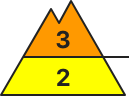
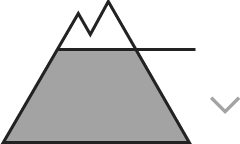
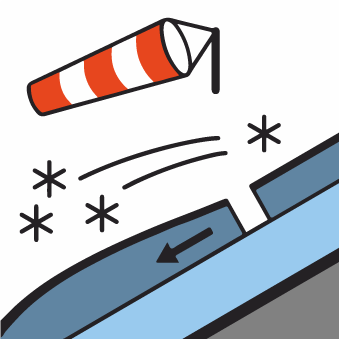
The avalanche risk is considerable above 2000 metres and moderate below that. The main problem is wind slab avalanches. Slab avalanches can be triggered in some places by small additional loads and can occasionally become large. The avalanche prone locations are mainly in steep terrain adjacent to ridgelines, below terrain edges and in gullies and bowls. They increase in number and size with altitude.
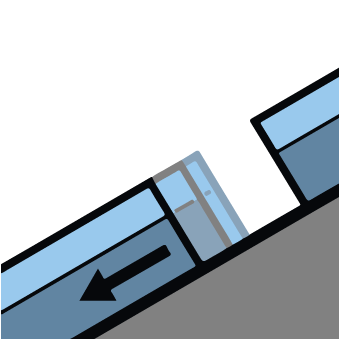
On very steep slopes with smooth ground, such as on meadows and in sparse mountain forests, medium-sized gliding avalanches can detach themselves.
When exposed to sunlight, small loose snow avalanches detach from extremely steep areas.
Snowpack
Extensive snowdrift accumulations from the last few days lie on soft layers and graupel. In an altitude band from approx. 1500 m to 2000 m, there is a melt-freeze crust underneath last week's fresh snow pack on the shady slopes, under which faceted crystals have formed. Some of these are still prone to triggering. Deep-lying layers of faceted crystals at the base of the snowpack can hardly be disturbed. At ground level, the snow is often wet at medium altitudes. The surface snow becomes wet in the sun.
Tendency
The wet snow problem comes to the fore over the Easter weekend.
Danger level
1600m
Avalanche Problem
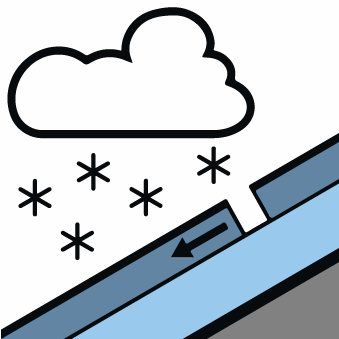
New snow
1600m
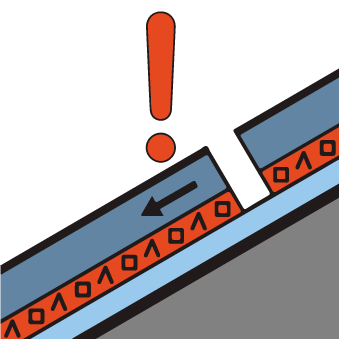
Gliding snow
Predominantly good backcountry touring conditions
Slab avalanches can be triggered by large additional loading and grow to medium size. Danger zones occur in steep ridgeline terrain, behind sharp drops in the landscape, in wind-loaded gullies and bowls. In very steep terrain, loose-snow avalanches are possible due to solar radiation and daytime warming. On steep grass-covered slopes, gliding snow activity is gradually increasing.
Snowpack
The fresh snow and drifts from recent days have been able to settle somewhat and increasingly consolidate. Also the latest snowdrift accumulations are stabilized. The old snowpack is generally well consolidated and compact.
Tendency
On Easter Weekend, danger of wet-snow avalanches will increase through significant daytime rise in temperatures.
Danger level
1800m
Avalanche Problem
New snow
1800m
Gliding snow
2000m
Persistent weak layer
2200m
Generally good backcountry touring conditions
Slab avalanches can be triggered by large additional loading and grow to medium size. Danger zones occur in steep ridgeline terrain, behind sharp drops in the landscape, in wind-loaded gullies and bowls. Particularly on high-altitude west, north and east-facing slopes, avaalnches can fracture in the weak layers in the uppermost part of the snowpack and grow to medium size. In very steep terrain, loose-snow avalanches are possible due to solar radiation and daytime warming. On steep grass-covered slopes, gliding snow activity is gradually increasing.
Snowpack
The fresh snow and drifts from recent days have been able to settle somewhat and increasingly consolidate. Particularly in high altitude ridgeline and pass areas, small fresh and older snowdrift accumulations are still prone to triggering. The mid-part of the snowpack consists widespread of well consolidated, compact layers which on shady high-altitude slopes blanket a poorly structured old snow fundament.
Tendency
On Easter Weekend, danger of wet-snow avalanches will increase through significant daytime rise in temperatures.
Danger level
1800m
Avalanche Problem
Persistent weak layer
1800m
Wet snow
Moderate avalanche danger at high altitudes!
The avalanche danger is rated as "moderate" above 1800 metres. Avalanche prone locations are older snowdrift accumulations, which can be triggered as slab avalanches, especially in shady areas of the high altitudes, due to large additional loads, occasionally also due to small additional loads. Mainly medium-sized avalanches are expected.
Small wet snow slides and occasional gliding avalanches are to be expected on sunny slopes.
Snowpack
The wind slab of the past few days has settled and is hardly prone to triggering. However, a weak layer has formed in the transition to the mostly stable old snow foundation in shady high areas. On the sunny slopes, the snowpack is becoming moist and can begin to glide snow on a smooth surface.
Tendency
On Saturday, a weak disturbance from the north will once again cause overcast skies and the temperature will rise significantly. The wet and sliding snow problems will increase.
Danger level
1800m
Avalanche Problem
Wind slab
1800m
Persistent weak layer
1800m
Blown snow
New fallen snow and blowing snow are the main dangers. The snowpack stability is reduced, especially on slopes and in ravines, where the snow thickness is greater due to snow accumulations.
In addition to new fallen snow, weak layers in the snowpack deeper in the snowpack can be a local problem. These weak layers are more common in the axis above the forest. In particular, a medium-sized avalanche can be triggered by a large load exceeding the load-bearing capacity of these layers.
Snowpack
dp.4: cold following warm / warm following cold
The last snowfall was accompanied by a strong northerly wind, which blew the snow down to the old base in many places and created snowdrift accumulations in the leeward areas. In some places, these are on top of a layer of Graupel, which is a potentially dangerous Weak layer. Locally, the layers of Graupel are 5-10 cm thick, possibly more.
In the old snow cover, the snow layers are mostly well interconnected. Deep below the surface, several weak layers of faceted snow crystals and sheared grains occur, which are more frequent on axial slopes.
Tendency
Saturday and Sunday will be sunny and even warmer.
The avalanche risk will remain similar, with the possibility of some small to medium wet snow avalanches on prominent Sunny slopes over the weekend.
Danger level
treeline
Avalanche Problem
Wind slab
Treeline
Gliding snow
Wind slab is covered by soft snow and prone to triggering.
The avalanche risk is moderate above the tree line and low below it. The main problem is wind slab. Small to medium slab avalanches can still be triggered in a few places with little additional load. The avalanche prone locations are mainly above the tree line in steep terrain adjacent to ridgelines, below terrain edges and in gullies and bowls. They are difficult to recognise.
On very steep slopes with smooth ground, such as meadows, smaller gliding avalanches can release themselves.
In sunlight, small loose snow avalanches can detach themselves from extremely steep areas.
Snowpack
Wind slab lies on soft layers and graupel in all aspects. In an altitude band from approx. 1500 m to 2000 m, there is a melt-freeze crust underneath last week's fresh snow pack on the shady slopes, under which faceted crystals have formed. Some of these are still prone to triggering. The snowpack base is compact and largely stable. Deep-lying layers of faceted crystals at the base of the snowpack at higher elevations can hardly be disturbed. The snow on the ground is often wet. The surface snow becomes wet in the sun.
Tendency
The wet snow problem comes to the fore over the Easter weekend.
Danger level
2000m
Avalanche Problem
Persistent weak layer
2000m
Wind slab
Treeline
Combined old and wind slab problem
The avalanche risk is moderate from the sparse high forest upwards. In some places, avalanches can be triggered by even a small additional load in the persistent weak layer and can reach medium size. Be careful at the transition from little to lots of snow.
Even partially covered and difficult to recognise snowdrift accumulations can be disturbed by individuals in some places. Superficial avalanches remain small, but tear through to the upper part of the persistent weak layer relatively easily and then become medium sized. All aspects and both adjacent to ridgelines and steep terrain far from ridges are affected. Caution is also required on and below cornices.
On isolated typical slopes, sliding snow activity may set in, and loose snow activity may also set in during longer windows of sunshine.
Snowpack
At higher, wind-calm locations, there is an average of half a metre of new and drift snow from the last week, while exposed locations are heavily blown and snowdrift accumulations are correspondingly thick. The snow came to rest on a thin melt-freeze crust from the weekend, in the vicinity of which faceted crystals are forming. At high altitudes on the shady slopes, angular forms and deep rime (also in combination with crusts) can be found even deeper in the old snowpack. Fractures are most likely to occur within the no longer quite fresh snowdrift accumulations, increasingly also on the uppermost crust, and only occasionally in the deep rime.
Tendency
On Saturday, changeable weather and similar avalanche risk.
Danger level
treeline
Avalanche Problem
Wind slab
Treeline
Persistent weak layer
2000m
Note the persistent weak layer
The avalanche risk is moderate from the sparse high forest upwards. In a few places, avalanches can still be triggered by a small additional load in the persistent weak layer and reach medium size. Be careful at the transition from a little to a lot of snow.
Even mostly easily recognisable snowdrift accumulations can be disturbed by individuals in some places. Superficial avalanches remain small, but can reach medium size if they break through to the upper part of the persistent weak layer. Caution is also advised on and below cornices.
Snowpack
The snow surface is variable and characterised by storms. Drift snow packs are usually easily recognisable, but the unfavourable old snowpack underneath is not. Breaks are possible between the drift snow layers and at the transition to the persistent weak layer. The old snowpack is particularly weakened on western, northern and eastern slopes above around 2000 metres due to layers of faceted crystals and deep frost as well as a foundation of floating snow close to the ground.
Tendency
On Saturday, changeable weather and similar avalanche risk.
Danger level
2000m
Avalanche Problem
Persistent weak layer
2000m
Wind slab
Treeline
Combined old and wind slab problem
The avalanche risk is moderate from the sparse high forest upwards. In some places, avalanches can be triggered by even a small additional load in the persistent weak layer and can reach medium size. Be careful at the transition from lots of snow to little snow.
The drift snow accumulations, some of which are difficult to recognise, are relatively well placed. However, if they are disturbed at one of the few trigger points, avalanches can break through into the persistent weak layer and then become medium sized. Caution is also advised on and below cornices.
On isolated typical slopes, sliding snow activity can set in, and loose snow activity can also occur during longer sun windows.
Snowpack
At higher, windless locations, there is an average of 40 cm of new and drift snow from the last week, while exposed locations are heavily blown and snowdrift accumulations are correspondingly thick. The snow came to rest on a thin melt-freeze crust from the weekend, in the vicinity of which faceted crystals are forming. At high altitudes on the shady slopes, angular forms and deep rime (also in combination with crusts) can be found even deeper in the old snowpack. Fractures are most likely to occur within the no longer quite fresh snowdrift accumulations, increasingly also on the uppermost crust, and only occasionally in the deep rime.
Tendency
On Saturday, changeable weather and similar avalanche risk.
Danger level
1800m
Avalanche Problem
Persistent weak layer
1800m
Wet snow
Moderate avalanche danger at high altitudes!
The avalanche danger is rated as "moderate" above 1800 metres. Avalanche prone locations are older snowdrift accumulations, which can be triggered as slab avalanches, especially in shady areas of the high altitudes, due to large additional loads, but occasionally also due to small additional loads. Mainly medium-sized avalanches are expected, but they can also become large in isolated cases. Small wet snow slides and occasional gliding avalanches are to be expected on the sunny slopes.
Snowpack
The thick snowdrift accumulations of the past few days have settled and are hardly prone to triggering. However, a weak layer has formed at higher elevations in the transition to the largely stable old snow foundation. On the sunny slopes, the snowpack is becoming moist and can start to glide on a smooth surface.
Tendency
On Saturday, a weak disturbance north of the main Alpine ridge will once again cause dense clouds and light precipitation, with temperatures rising significantly. The wet and sliding snow problems will increase.
Danger level
1500m
Avalanche Problem
Persistent weak layer
1500m
Wet snow
Moderate avalanche danger increasing with altitude
The avalanche risk is moderate at higher altitudes (level 2).
The snow that fell last week and was deposited in gullies and bowls by strong winds has already settled a little. In some places, however, this lies on a weak layer on the edge of the old snow foundation. In steep terrain on shady slopes, individual people can trigger medium-sized slab avalanches.
Avalanche prone locations are mainly in gullies, bowls and behind terrain edges as well as down into forest aisles. These are often difficult to recognise as they are covered by wind slab. The snow depths are sometimes considerable and the potential for burial should not be underestimated. The avalanche prone locations increase with altitude.
As temperatures rise during the day, wet and gliding sluffs are also possible on slopes exposed to the sun.
Snowpack
In the past week, snow has repeatedly fallen in combination with strong to stormy winds. The new fallen snow was transported intensively and formed drift snow packs. Exposed areas are often heavily blown down.
The fresh drift and new fallen snow is poorly bonded to the old snowpack in some places.
In shady high altitudes, faceted crystals or floating snow are still present in the persistent weak layer in places, but these are currently hardly prone to triggering and do not pose a significant avalanche problem.
Tendency
The avalanche danger will remain the same for the time being. However, the avalanche situation is expected to change as temperatures rise towards the weekend. On Saturday, a weak disturbance will once again bring thick clouds and light precipitation. Easter Sunday will bring mostly sunny and very mild weather.
Danger level
treeline
Avalanche Problem
Wind slab
Treeline
Persistent weak layer
2000m
Moderate avalanche danger!
The avalanche risk is mostly moderate above the tree line. However, some of the snowdrift accumulations that have formed in the past few days must be taken into account. In many aspects, medium slab avalanches can still be triggered on steep slopes, in filled steep bowls and gullies, sometimes with a small additional load. If layers in persistent weak layers (transition from little to more snow) are addressed, slab avalanches can occasionally become large. In sunny steep terrain, individual naturally triggered avalanches are possible.
Snowpack
The snowpack has slowly settled and the wind slab is binding better with the old snowpack, but may still contain weak layers. There are a few more centimetres of new fallen snow, covering the older wind slab that is prone to triggering. In the very high north-facing and on shady slopes, the snow base, fundament (persistent weak layer problem) is partly weakened.
Tendency
Little change.
Danger level
Low avalanche danger, but avoid fresh pillows of wind drifted snow!
The avalanche danger is assessed as "low". Nevertheless, isolated pillows of wind drifted snow can be triggered as small slab avalanches.
Avalanche prone locations are mainly found in gullies, bowls and behind terrain edges down to forest aisles.
As temperatures rise during the day, wet and gliding sluffs are also possible on slopes exposed to the sun.
Snowpack
There were repeated snowfalls on the Hochwechsel and in the Bucklige Welt in the last week in conjunction with mostly strong to stormy winds. The new fallen snow was transported intensively and deposited as wind slab, especially in forest aisles and at higher altitudes.
Where there is an old snowpack, the drift snow packs are deposited on it and can slide off. In addition, fractures within the drift snow layers are also possible in isolated cases.
Tendency
The avalanche danger will remain the same for the time being. However, the avalanche situation is expected to change as temperatures rise towards the weekend. On Saturday, a weak disturbance will once again bring thick clouds and light precipitation. Easter Sunday will bring mostly sunny and very mild weather.
Danger level
1800m
Avalanche Problem
Persistent weak layer
1800m
Wet snow
Low avalanche danger, but watch out for isolated avalanche prone locations in shady high areas and wet snow slides on sunny slopes!
The avalanche danger is assessed as "low". Nevertheless, there are isolated avalanche prone locations in shady areas at high altitudes where small slab avalanches can be triggered. On the sunny slopes, small wet snow slides and occasional gliding avalanches are to be expected.
Snowpack
Older pillows of wind drifted snow have settled and are hardly prone to triggering. However, a weak layer has formed in the transition to the largely stable old snow foundation in shady high areas. On the sunny slopes, the snowpack becomes moist and can begin to glide snow on a smooth surface.
Tendency
On Saturday, a weak disturbance from the north will once again cause overcast skies and the temperature will rise significantly. The wet and sliding snow problems will increase.
Danger level
Low avalanche danger, but avoid fresh pillows of wind drifted snow!
The avalanche danger is assessed as "low". Nevertheless, isolated pillows of wind drifted snow can be triggered as small slab avalanches.
Avalanche prone locations are mainly found in gullies, bowls and behind terrain edges down to forest aisles.
As temperatures rise during the day, wet and gliding sluffs are also possible on slopes exposed to the sun.
Snowpack
In the past week, snow has repeatedly fallen in combination with strong to stormy winds. The new fallen snow was transported intensively and formed drift snow packs.
Where there is an old snowpack, the drift snow packs are deposited on it and can slide off.
In places protected from the wind, there is up to 60 cm of snow in places above around 800 m, which has built up over the last week. Exposed locations, on the other hand, are often heavily blown off.
Tendency
The avalanche danger remains the same.
Danger level
treeline
Avalanche Problem
Wind slab
Treeline
Wet snow
Blown snow
The main danger is from blowing snow. Snowpack stability is reduced, especially on slopes and in ravines, where the snow thickness is greater due to snow drifts.
Snowpack
dp.4: cold following warm / warm following cold
The last snowfall brought strong northerly winds, which blew the snow above the snow line down to the old snow base or to the ground in many places, and built up snowdrift accumulations on the leeward slopes. In some places, these have built up on a layer of parachuted Graupel, which is a potentially dangerous Weak layer. Locally, the layers of Graupel are 5-10 cm thick, possibly more.
Tendency
The danger of avalanches will remain similar.
Saturday and Sunday will be sunny and slightly warmer each day. Winds will die down.