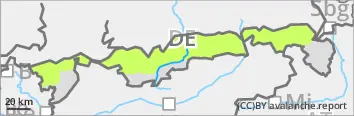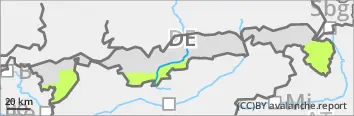
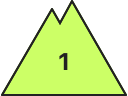
Danger level
 | 2000m |
|  |
|  | ||||
|  |  |
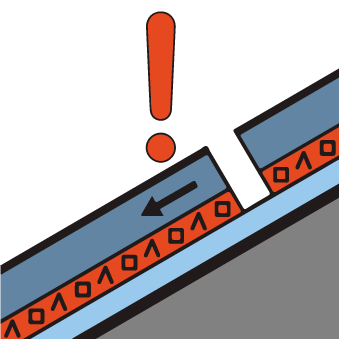

Persistent weak layer problem: Be careful at transitions from a little to a lot of snow.
The avalanche risk is low. Persistent weak layers are the main problem. The few avalanche prone locations are mainly in the northern aspects of the high altitudes on very steep slopes and at the entrance to gullies and bowls. Slab avalanches can be triggered with a large additional load and can reach medium size. With the sunlight, individual, smaller loose snow avalanches also release themselves from the rocky steep terrain. At medium altitudes, individual small to medium-sized gliding avalanches are possible on slopes with a smooth surface.
Snowpack
In shady high altitudes, layers of faceted crystals can be found deep under a compact snowpack and in some places close to the surface under a thin melt-freeze crust. In the Allgäu in particular, there are a few centimetres of mostly slightly damp new fallen snow on the melt-freeze crust. Where the snow is still dry, it can be transported by the wind. Otherwise, the new fallen snow is well bonded to the old snow surface. It loses its bond with the sunlight. At medium altitudes, the snowpack is wet towards the ground. There is hardly any snow at low altitudes.
Tendency
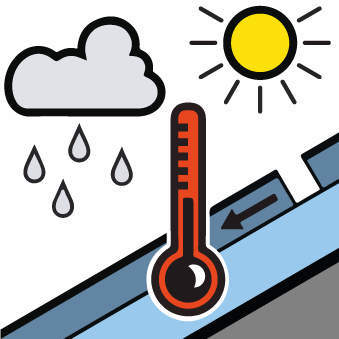
Changeable weather can lead to a slight increase in avalanche danger.