The avalanche risk is moderate. In a few places, especially in the aspects from west to north to east, medium and occasionally large dry slab avalanches can be triggered by individuals. Danger areas are difficult to recognise. Take particular care at the transitions from little to more snow.
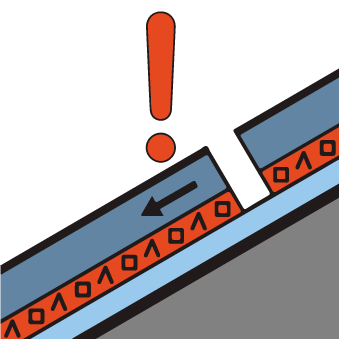
Occasional wet snow avalanches triggered by individuals are possible on sunny slopes, usually early in the morning, but at the latest as the snowpack softens during daytime changes. These usually remain medium-sized at most. The likelihood of gliding avalanches is somewhat increased.
Snowpack
The snowpack is only able to radiate to a very limited extent in some areas and there is hardly any snow crust capable of bearing loads, especially towards the main Alpine ridge. In shady high altitudes, soft, faceted snow can often still be found on the surface. Below this lies a mostly well-set sequence of compact drift snow layers. The connection at the transition to the old snow foundation, which consists mainly of deep rime, is still poor. The deep and sunny middle layers are largely snowed out.
Tendency
No significant change in the avalanche danger despite the cold front on Thursday.
Danger level
1900m
Avalanche Problem
Persistent weak layer
1900m
Weak layers persist deep in the snowpack
The problem is the weak layers in the snowpack, which are deeper in the snowpack. If the load exceeds the load-bearing capacity of the deeper Weak layers, a deep and large avalanche can be triggered. There are many such weak layers, especially on axis above the forest.
Snowpack
dp.1: deep persistent weak layer
The snow has settled and, especially on the Sunny slopes, has already transformed quite well. Layers of snow have bonded together and the surface is crusty in many places. Several weak layers of faceted snow crystals and coarse grains are found deep below the surface in the old snow cover.
Tendency
It will clear up on Tuesday. Faster in the high alpine regions than in the mid mountains. There will be no major warming. The danger of avalanches will remain similar.
Danger level
1800m
Avalanche Problem
Persistent weak layer
1800m
Wet snow
2200m
Weak persistent weak layer remains the main problem, slightly increasing wet snow problem
The avalanche risk is moderate above 1800 metres and low below. There is still a persistent weak layer problem in the extended northern sector. Medium-sized slab avalanches can still be triggered by people in steep gullies and bowls. The avalanche prone locations are usually difficult to recognise and are often located in transition areas from little to much snow.
The probability of triggering wet snow avalanches from very steep east-, south- and west-facing slopes increases slightly during the daytime changes.
There is a risk of falling on the hardness of the snow surface in steep terrain.
Snowpack
The outgoing longwave radiation at night is somewhat reduced. This means that the snow surface can only consolidate slightly. On shady slopes at higher altitudes, there are still areas with a soft (faceted) snow surface, where the firmness of the layer changes depending on altitude and exposure. Below this there is an increasingly sufficiently settled and compact snowpack, the transition to the foundation consisting of deep rime (floating snow) is still poor. Medium (sunny slopes) and low altitudes are largely free of snow.
Tendency
Weak cold front influence on Thursday, but hardly any change in avalanche danger.
Danger level
2000m
Avalanche Problem
Persistent weak layer
2000m
Generally favorable conditions. Caution urged on steep shady slopes.
Isolated avalanches can still be triggered in the weak old snow by winter sports enthusiasts, particularly in little-skied backcountry terrain where the surface is not capable of bearing loads. Danger zones occur especially in spots where the snow is relatively shallow, and in transitions from shallow to deep snow. Avalanches can trigger down to deeper layers inside the snowpack and grow to large size. A cautious route selection and maintaining safety distances between tourers on ascents and descents are recommended. On hard-frozen steep slopes, the danger of sliding and falling require special caution. During the course of the day, likelihood of naturally triggered small wet-snow avalanches triggering increases somewhat on sunny, steep slopes.
Snowpack
Variably to heavily clouded nighttime skies will reduce the outgoing longwave radiation somewhat. The melt-freeze crust on sunny slopes will then be thinner and will soften earlier in the day than recently. On north-facing slopes the rain crust will extent regionally up to 2300-2500m. The mid-sedtion of the snowpack consists of well-settled, consolidated layers where shady slopes at high altitudes are blanketed over by large-sized cup-shaped crystals.
Tendency
On Thursday a cold front will bring minor amounts of fresh snow. The persistent weak layer problem on shady high-altitude slopes will persist.
Danger level
1800m
Avalanche Problem
Persistent weak layer
1800m
Wet snow
Be aware of the persistent weak layer problem!
The avalanche risk is predominantly moderate above 1800 metres. There are still avalanche prone locations on shady slopes in steep terrain. Here and at the transition from little to more snow, isolated slab avalanches can be triggered by mostly large additional loads. Individual spontaneous wet snow avalanches are possible from unloaded steep slopes.
Snowpack
The snowpack firms up a little overnight, is partly crusted can form on the surface, otherwise often damp or wet up to high altitudes. Rain showers bring additional moisture. The snow base, fundament remains high up and weakened on the shady slopes due to the kinetic metamorphism. Low and sunny slopes in the middle of the snowpack are bare.
Tendency
Little change.
Danger level
2200m
Avalanche Problem
Wet snow
2200m
Favorable conditions will continue
Avalanche danger is predominantly low. Isolated danger zones occur particularly in extremely steep terrain. Small avalanche triggerings are mostly possible in relatively shallow-snow areas and in transitions from shallow to deep snow. Beware the danger of sliding and falling on hard-frozen steep slopes. During the course of the day, likelihood of naturally triggered small-sized avalanches increases somewhat on sun-basked, very steep slopes.
Snowpack
Variably to heavily clouded nighttime skies will reduce the outgoing longwave radiation somewhat. The melt-freeze crust on sunny slopes will then be thinner and will soften earlier in the day than recently. On north-facing slopes the rain crust will extent regionally up to 2300-2500m. No further triggerings in older weak layers of the snowpack were registered in recent days at the Avalanche Warning Service.
Tendency
On Thursday a cold front will bring minor amounts of fresh snow.
Danger level
2000m
Avalanche Problem
Persistent weak layer
2000m
Note the persistent weak layer
The avalanche risk is moderate from around 2000 metres and low below that. In a few places, especially in the aspects from west to north to east, medium and in exceptional cases even large slab avalanches can be triggered by individuals. Danger areas are difficult to recognise. Take particular care at the transitions from little to more snow.
Wet snow avalanches are possible on the sunny slopes as the snowpack softens. These usually remain small, but can break through into weak layers close to the ground at high altitudes.
Snowpack
The snowpack can cool down overnight and form at least a thin melt-freeze crust. On sunny slopes, this softens during the day and the snowpack is damp or wet up to high altitudes. In shady high altitudes, soft, faceted snow can often still be found on the surface. Below this lies a predominantly well-set sequence of compact drift snow layers. The connection at the transition to the old snow foundation, which consists mainly of deep rime, is still poor. The deep and sunny middle layers are largely snowed out.
Tendency
On Wednesday, a slight deterioration in the weather with spring clouds and unproductive precipitation.
Danger level
Avalanche Problem
Wet snow
Individual avalanche prone locations
The avalanche risk is low. Wet snow is the main problem. Occasionally, small loose snow avalanches can detach themselves from the steep terrain interspersed with rocks. Smaller gliding avalanches are possible on individual, very steep slopes with smooth ground.
On very steep north-facing slopes at higher altitudes, medium slab avalanches can also be triggered in isolated cases with a large additional load. This is particularly the case at transitions from a little to a lot of snow.
Snowpack
It is mostly cloudy at night and outgoing longwave radiation is limited. The snow surface is already soft in many places in the morning. The snowpack is soaked up to high altitudes and is often wet towards the ground. Occasionally, weak layers of faceted crystals can be found deep under a compact snowpack on the shady slopes of higher summits and areas adjacent to the summit. On the south side, the ground is becoming more and more puffy right up to the summits. There is hardly any snow at low altitudes.
Tendency
No significant change in avalanche danger
Danger level
Low risk of isolated wet snow avalanches
The avalanche risk is low. Occasional small wet snow avalanches are possible on the few sunny slopes that have not yet been discharged.
In addition, small snow slabs can still be triggered in exceptional cases in the entrance areas of steep gullies on shady slopes with large additional loads. The risk of being swept away and falling on icy surfaces generally outweighs the risk of burial.
Snowpack
The snowpack is moist to wet and well settled right up to the summit areas. Only a thin melt-freeze crust forms overnight. In the higher, on shady slopes, there are still weak layers of large faceted crystals in the lower part of the snowpack, especially close to the ground. Deep and sunny middle layers are covered with snow.
Tendency
No significant change in the avalanche danger despite the cold front on Thursday.
Danger level
1800m
Avalanche Problem
Persistent weak layer
1800m
Wet snow
Persistent weak layer problem in the extended northern sector, slightly increasing wet snow problem
The avalanche risk is low. Nevertheless, there is still a persistent weak layer problem in the extended northern sector. Occasionally, mainly in very steep gullies and bowls, slab avalanches can be triggered by people. The avalanche prone locations are usually difficult to recognise and are often located in transition areas from a little to a lot of snow.
On the sunny slopes, the softened, barely stabilised snowpack can trigger small wet snow avalanches.
Snowpack
The outgoing longwave radiation and thus the consolidation of the snowpack is reduced. On shady slopes at higher elevations, there are still isolated areas with a soft (faceted) snow surface, with the firmness of the layer changing depending on altitude and exposure. Below this, there is an increasingly sufficiently settled and compact snowpack, the transition to the foundation consisting of deep rime (floating snow) is still poor. Medium and low altitudes are often free of snow.
Tendency
Danger level
Avalanche Problem
Wet snow
Isolated wet snow avalanches!
The avalanche risk is predominantly low. Sporadic spontaneous wet snow avalanches are possible from unloaded steep slopes. There are still isolated avalanche prone locations on shady slopes in steep terrain where slab avalanches can be triggered by large additional loads.
Snowpack
The snowpack firms up a little overnight, is partly crusted can form on the surface, otherwise often damp or wet up to high altitudes. Rain showers bring additional moisture. The snow base, fundament remains high up and weakened on the shady slopes due to the kinetic metamorphism. Low and sunny slopes in the middle of the snowpack are bare.
Tendency
Little change.
Danger level
1800m
Avalanche Problem
Persistent weak layer
1800m
Note the persistent weak layer
The avalanche risk is low. Medium-sized slab avalanches can still be triggered in a few hard-to-recognise places, especially in the extended northern sector above 1800 m, but usually only with a large additional load. This is in particular at the transitions from little to more snow.
On the sunny slopes, isolated wet snow avalanches are possible as the snowpack softens. These usually remain small.
Snowpack
The snowpack can cool down overnight and form at least a thin melt-freeze crust. On sunny slopes, this softens during the day and the snowpack is damp or wet up to high altitudes. In shady high altitudes, some soft, faceted snow can still be found on the surface, some of which is already crusted. Below this lies a mostly well-set sequence of compact drift snow layers. The connection at the transition to the old snow foundation, which consists mainly of deep rime, is still poor. The deep and sunny middle layers are largely snowed out.
Tendency
No significant change in the avalanche danger despite the cold front on Thursday.
Danger level
Avalanche Problem
Wet snow
Low avalanche danger. Occasional wet snow slides are possible.
The avalanche risk is low. With the arrival of rain, wet snow slides are possible in the afternoon from the few steep slopes that are not unloaded. In the high areas on shady slopes, small slab avalanches can occasionally be triggered in the old snow. In general, the risk of falling and injury clearly outweighs the risk of burial. Take care in partly icy, steep gullies.
Snowpack
A melt-freeze crust forms overnight. On sunny slopes, the snow softens quickly in the morning. In shady areas, the melt-freeze crust lasts into the afternoon. In summit areas, the snow surface is hard and partly icy due to wind and rain. In gullies and bowls, the wind slab is well stabilised. Faceted crystals are weakening the snow base, fundament in the northern sector. There is little snow below 1400 metres and below 1600 metres on sunny slopes.
Tendency
The avalanche danger remains low. On Thursday, a weak disturbance will bring a little more cloud and less sunshine. Local rain showers are possible in the afternoon. The frost line will be around 2000 metres. The wind will remain weak.
Danger level
2000m
Avalanche Problem
Persistent weak layer
2000m
Wet snow
Latent persistent weak layer problem
The avalanche risk is low. The main problem is a persistent weak layer. Avalanche prone locations are mainly in the northern aspects of the high altitudes on very steep slopes as well as in gullies and bowls. Slab avalanches can be triggered with a large additional load and can reach medium size. Be careful at transitions from little to much snow.
In addition, smaller loose snow avalanches can release themselves from steep terrain interspersed with rocks. At medium altitudes, individual small to medium-sized gliding avalanches are possible on slopes with a smooth surface.
Snowpack
On the shady slopes, weak layers of faceted crystals can be found deep under a compact, crusted can form at high altitudes. At night, it is mostly cloudy and outgoing longwave radiation is limited. There may be some localised snowfall at higher altitudes. The snow comes to rest on a thin, superficial melt-freeze crust on the north side, under which faceted crystals have formed. At medium elevations, the snow surface is already soft in many places in the morning. The snowpack is wet towards the ground. On the south side, the ground is still pitting. There is hardly any snow at low altitudes.
Tendency
Depending on the amount of new snow, the danger of dry avalanches may increase slightly.