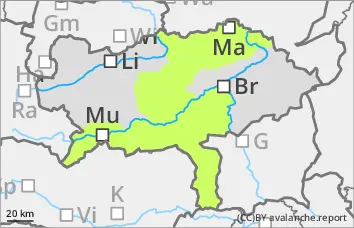
Danger level
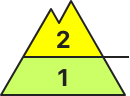 | 1800m |
|  |
|  |
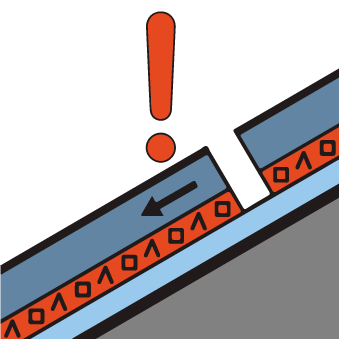

Weak persistent layer is still the main problem
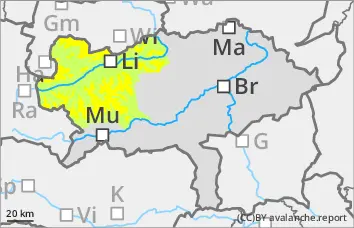
The avalanche risk is moderate above 1800 metres and low below. There is still a persistent weak layer problem in the extended northern sector. Medium-sized slab avalanches can still be triggered by people in mainly steep gullies and bowls. The avalanche prone locations are usually difficult to recognise and are often located in transition areas from little to much snow. On the sunny slopes, the softened, barely stabilised snowpack can trigger wet snow avalanches.
Snowpack
Depending on the degree of cloud cover overnight and the wind influence of the last few hours, a surface crust of varying thickness can form, which softens during the day on the sunny slopes and the snowpack becomes increasingly damp or wet. On shady slopes at higher altitudes there are still areas with a soft (faceted) snow surface, but often the layer is already hard here too. Below this, there are still responsive weak layers in the form of faceted crystals in the area of crusts or frost that is still snowed in. In addition, the foundation consisting of floating snow (deep rime) continues to weaken the snowpack (partly also on the south side). Medium (sunny slopes) and low altitudes are largely free of snow.
Tendency
Weak disturbances on Wednesday, with some precipitation in places, it will remain mild. No significant change in the avalanche risk is expected.