Be aware of the persistent weak layer problem at high altitudes!
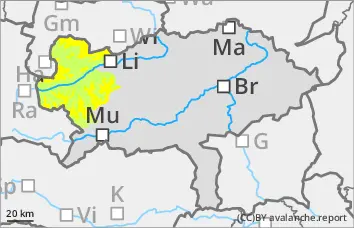
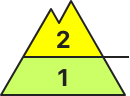
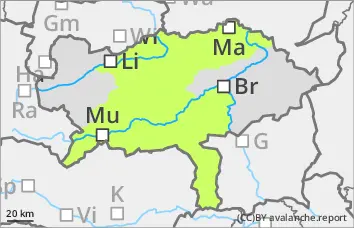
The avalanche danger is rated as moderate above 1800 metres. Wet loose snow avalanches from slopes that have not yet been discharged are still possible.
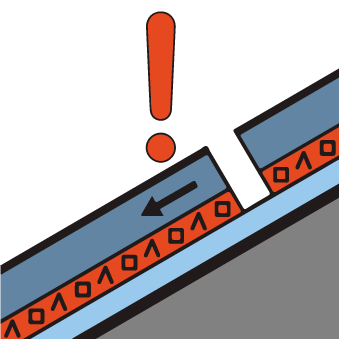
There is still a persistent weak layer problem in the northern sector: in very steep gullies and bowls on the shady slopes, triggering of dry slab avalanches is possible with large additional loads.
Snowpack
The snowpack loses firmness in the morning. The snowpack has settled. Up to the high altitudes, the snowpack became wet or moist or hard, depending on the aspect. The kinetic metamorphism (persistent weak layer problem) is still weakening the snowpack on the northern slopes of the higher elevations.
Tendency
High pressure will continue to ensure bright, sunny and dry conditions in the days that follow. At the weekend, however, Saharan dust could cause noticeable cloudiness.
Danger level
1800m
Avalanche Problem
Persistent weak layer
1800m
Persistent weak layer problem in the northern sector!
The avalanche risk is low. Wet loose snow avalanches cannot be ruled out in isolated cases on extremely steep terrain. In the Gurk and Seetal Alps, the triggering of a snow avalanche in the northern sector on extremely steep slopes cannot be ruled out.
Snowpack
The snowpack will gain some firmness during the night. In the northern sector, there is still a persistent weak layer problem in the Niedere Tauern, in the Hochschwab area but also in the Gruk and Seetal Alps above 1800 metres. Floating snow is weakening the snow layering.
Tendency
High pressure will continue to ensure bright, sunny and dry conditions in the days that follow. At the weekend, however, Saharan dust could cause noticeable clouding of the air. Avalanche risk remains the same.