High prone to triggering in wind slab, also naturally triggered avalanches
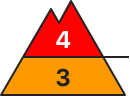
The avalanche risk is high above the tree line (4) and considerable below - a dangerous situation. Naturally triggered avalanches are possible and in many places slab avalanches can be triggered very easily (even from a distance) by individuals. In particular on north-west to north to east-facing slopes above 2000 metres, avalanches triggered on the surface can tear through to deeper layers and become large. Danger areas are not easy to recognise everywhere, which is why caution and a very defensive choice of route is advised, which also takes into account catchment areas that cannot be seen. At low and medium altitudes, spontaneous wet loose snow avalanches and gliding avalanches are possible.
Snowpack
In addition to the already heavy snowfall since the weekend, heavy new fallen snow has been added in a short time and under the influence of new winds. It overlays the older wind slab snow of the previous days, which in turn lies on an unfavourable base of faceted crystals and deep frost. In wind-protected areas, on shady slopes above about 2000 m, on sunny slopes above 2400 m, surface hoar has also been snowed in in places. Breaks occur primarily between the last snow packs, but can subsequently penetrate through to the coarse-grained old snow foundation. Current reports of large-scale whamming noises, among other things, confirm the unfavourable snow layering. At low and medium altitudes, heat and rainfall put additional strain on the snowpack.
Tendency
Further precipitation with a snowfall level around 1600 m on Monday. The situation remains precarious at the start of the week!
Danger level
1600m
Avalanche Problem
New snow
1600m
New snow
1600m
Wet snow
1800m
Large, spontaneous slab avalanches are possible at high altitudes.
The avalanche risk is high above 1600 metres and considerable below that. The main problem is new fallen snow. Avalanches can break loose in all aspects and altitudes, either by themselves or with a small additional load. There is even a risk of avalanches in steep clearings or aisles in mountain forests. From extremely steep terrain, new fallen snow is released in the form of loose snow avalanches. Avalanches can become large and penetrate as far as the flat.
Wet snow is also problematic. Due to the rainfall up to approx. 1800 m, spontaneous loose snow avalanches of medium size can be expected from very steep terrain, such as forest aisles. Gliding avalanches are also possible on very steep slopes with smooth ground.
Exposed transportation routes can be hit by avalanches.
Snowpack
With stormy winds and snowfall, the snow packs continue to grow. Potential weak layers of graupel, surface hoar or faceted crystals in the area of thin crusts can be found in the upper part of the snowpack in all aspects. Above 1800 m, there are weak layers of faceted crystals in the snowpack on the shady slopes. Up to around 1800 m, rainfall weakens the snowpack during the day changes. At medium altitudes, the snowpack base is partly wet.
Tendency
The avalanche situation remains tense.
Danger level
treeline
Avalanche Problem
New snow
Treeline
Persistent weak layer
2000m
New snow
Treeline
Wet snow
1800m
Naturally triggered avalanches still expected
Dangerous avalanche situation persists
Large amounts of fresh snow and drifts blanket a weak old snowpack. Avalanches can easily be triggered by one single winter sports enthusiast in all aspects, and then grow to large size. Danger zones are numerous, occur also near the timberline. For activities outside secured zones, conditions are extremely dangerous. Remote triggerings and naturally triggered avalanches continue to be anticipated. Particularly in starting zones which have not yet discharged, they can in isolated cases be very large-sized and plummet down to low altitude zones. Exposed transportation routes can be placed at risk. Rain impact at low and intermediate altitudes will lead to the snowpack softening up and thus, to increased frequency of naturally triggered avalanches.
Snowpack
All in all, 20-30cm of fresh snow was registered on Saturday from the warm front. The large amounts of fresh snow from the last few days have been repeatedly transported in varying directions, generating far-reaching snowdrift accumulations. These are often blanketed over and difficult to recognize. Bonding to the generally weak snowpack is weak. Several large and very large sized avalanche releases due to artificial triggerings, remote triggerings and provoked by winter sports enthusiasts confirm just how trigger-sensitive the snowpack is.
Tendency
The early part of the week will bring rising temperatures and only minor amounts of precipitation. Particularly at low and intermediate altitudes, wet-snow and glide-snow avalanches can be increasingly expected. The situation remains quite treacherous for winter sports enthusiasts.
Danger level
1600m
Avalanche Problem
New snow
1600m
Persistent weak layer
2000m
New snow
1600m
Wet snow
1800m
Naturally triggered avalanches still expected
Dangerous avalanche situation persists
Large amounts of fresh snow and drifts blanket a weak old snowpack. Avalanches can easily be triggered by one single winter sports enthusiast in all aspects, and then grow to large size. Danger zones are numerous, occur also near the timberline. For activities outside secured zones, conditions are extremely dangerous. Remote triggerings and naturally triggered avalanches continue to be anticipated. Particularly in starting zones which have not yet discharged, they can in isolated cases be very large-sized and plummet down to low altitude zones. Exposed transportation routes can be placed at risk. Rain impact at low and intermediate altitudes will lead to the snowpack softening up and thus, to increased frequency of naturally triggered avalanches.
Snowpack
All in all, 20-30cm of fresh snow was registered on Saturday from the warm front. The large amounts of fresh snow from the last few days have been repeatedly transported in varying directions, generating far-reaching snowdrift accumulations. These are often blanketed over and difficult to recognize. Bonding to the generally weak snowpack is weak. Several large and very large sized avalanche releases due to artificial triggerings, remote triggerings and provoked by winter sports enthusiasts confirm just how trigger-sensitive the snowpack is.
Tendency
The early part of the week will bring rising temperatures and only minor amounts of precipitation. Particularly at low and intermediate altitudes, wet-snow and glide-snow avalanches can be increasingly expected. The situation remains quite treacherous for winter sports enthusiasts.
Danger level
2000m
Avalanche Problem
New snow
2000m
Persistent weak layer
1800m
New snow
2000m
Wet snow
1800m
Danger of slab avalanches at high altitudes, wet loose-snow avalanches at lower avalanches
Avalanches can be triggered by one single winter sports enthusiast. Danger zones occur on steep slopes in all aspects, behind drops in the landscape and in wind-loaded gullies and bowls. Frequency and spread of avalanche prone locations increase with ascending altitude. Whumpf noises and fractures which appear when treading upon the snowpack are alarm signals. Activities in outlying terrain demand cautious assessment of the terrain and careful evaluation of the dangers. The inexperienced should not leave secured ski runs. Rain impact is leading to a softening of the snowpack at low and intermediate altitudes; this can lead to naturally triggered, small-to-medium sized avalanches. Zones with glide cracks should be avoided.
Snowpack
All in all, 20-30cm of fresh snow was registered on Saturday from the warm front. The large amounts of fresh snow from the last few days have been repeatedly transported in varying directions, generating far-reaching snowdrift accumulations. These are often blanketed over and difficult to recognize. Bonding to the generally weak snowpack is moderate-to-weak. At intermediate altitudes the snowpack is already moist.
Tendency
The early part of the week will bring rising temperatures and only minor amounts of precipitation. Particularly at low and intermediate altitudes, wet-snow and glide-snow avalanches can be increasingly expected.
Danger level
1700m
Avalanche Problem
New snow
1700m
Wind slab
Treeline
Persistent weak layer
1700m
Wet snow
1700m
New fallen snow in the high alpine regions, wet snow avalanches possible in the mid alpine regions.
On Thursday and Friday, there was heavy snow in the mountains. The snow line dropped on Friday, with heavier snowfall in the east of the Alps. Current conditions are challenging.
Moderate to strong northerly winds have built up large snowdrift accumulations on the leeward sides. More dangerous are areas of blowing snow, where a small load can trigger a major Avalanche. Weak layers in the snowpack are also a problem. If the load exceeds the load-bearing capacity of the deeper Weak layers, a deep and large avalanche can be triggered. These weak layers are particularly abundant in the axis above the forest, but cannot be ruled out elsewhere.
The mountains have warmed up and the zero isotherm will rise to an altitude of around 2500 m on Sunday afternoon and evening. In the mid-mountains, the warming will lead to wet snow avalanches, with the possibility of gliding avalanches on steeper slopes.
Snowpack
dp.1: deep persistent weak layer dp.4: cold following warm / warm following cold
The old snow cover is made up of layers of bonded snow that are already somewhat compacted and mostly well connected. Deep below the surface, the old snow cover contains several weak layers of shredded and coarse grains.
50-80 cm of New fallen snow has fallen on this base during this snowfall in the High alpine regions. The snow line was mostly between 1200 m and 1500 m on Thursday, but dropped on Friday.
Tendency
Snow and weather conditions will be similar in the coming days. Under the influence of warmer weather, snow will start to change more quickly, especially in the mid-mountains.
Danger level
treeline
Avalanche Problem
Wind slab
Treeline
Wet snow
1400m
Wind slabs are easy to trigger, naturally triggered avalanches are also possible
The avalanche risk is considerable. Medium to large slab avalanches can be triggered very easily by individuals in some places. Danger areas are located at the transition from little to more snow and generally next to blown-off areas as well as in the entrance areas to gullies and bowls filled with wind slabs. Caution should also be exercised at the edge of forests and in forest aisles. The avalanche prone locations are not always easy to recognise. In low and medium altitudes, small to medium wet loose snow avalanches and gliding avalanches are possible.
Snowpack
In addition to the already abundant new snow of the previous days, more new fallen snow will be added in a short time. This layer of fresh snow is inhomogeneous due to repeated wind influences that vary in strength. Breaks are possible mainly between the last layers of drifting snow, sometimes (especially on shady slopes protected from the wind) also on snow-covered surface hoar. At high altitudes, especially in northern and eastern aspects, bonded snow overlays a weak old snowpack of faceted crystals and deep frost. At low and medium altitudes, heat and rainfall put additional pressure on the snowpack.
Tendency
Further precipitation with a snowfall level around 1600 m on Monday. The situation remains precarious at the start of the week!
Danger level
Avalanche Problem
New snow
Wet snow
1800m
Avoid prone to triggering wind slab!
The avalanche risk is considerable. The main problem is new fallen snow. Avalanches can be triggered in all aspects and altitudes by a small additional load. There is even a risk of avalanches in steep clearings or aisles in mountain forests. From extremely steep terrain, the new fallen snow detaches itself in the form of loose snow avalanches. The avalanche prone locations increase in number and size with altitude. Avalanches reach medium size.
Wet snow is also problematic. Due to heavy rain up to approx. 1800 m, spontaneous loose snow avalanches of medium size can be expected from very steep terrain, such as forest aisles. Gliding avalanches are also possible on very steep slopes with smooth ground.
Exposed transportation routes can be hit by avalanches.
Snowpack
With stormy winds and snowfall, the snow packs continue to grow. Potential weak layers of graupel, surface hoar or faceted crystals in the area of thin crusts can be found in the upper part of the snowpack in all aspects. Above 1800 m, there are weak layers of faceted crystals in the snowpack on the shady slopes. Up to around 1800 m, rainfall weakens the snowpack during the day changes. At medium altitudes, the snowpack base is partly wet.
Tendency
The avalanche situation remains tense.
Danger level
treeline
Avalanche Problem
Wind slab
Treeline
Wet snow
Treeline
Prone to triggering wind slab snow in the higher elevations! Beginning of wet snow problems at lower altitudes.
The avalanche risk above the tree line is rated as "considerable". Stormy north-westerly winds create fresh drift snow packs in the east and south sectors, which in many places can be triggered by individual winter sports enthusiasts as medium slab avalanches. Spontaneous wet snow avalanches and smaller gliding avalanches can occur at lower altitudes.
Snowpack
Stormy north-westerly winds form fresh wind slabs. The connection between the drift snow packs and the old snowpack is not yet sufficient in places. At shady high altitudes, the old snowpack is unfavourably structured in places with crusts and embedded faceted crystals. With the arrival of rain, the snowpack at lower altitudes loses stability and can also start to glide snow on steep grassy slopes.
Tendency
The unsettled, rainy and mild north-westerly weather conditions continue at the start of the week. The drifting snow problem is easing.
Danger level
treeline
Avalanche Problem
Wind slab
Treeline
Wet snow
Treeline
Caution! Snowfall, rain in places, poor visibility and easily triggered wind slab!
The avalanche risk is still considerable above the tree line and moderate below. In all aspects, especially above the tree line, there are prone to triggering drift snow packs that have built up recently. More fresh wind slab snow is being added. Medium to rarely large slab avalanches can be triggered by even small additional loads. Steep terrain should still be avoided. Pay attention to remote triggering. Avalanche prone locations are difficult to recognise. In transitional areas with far too little snow, weak layers in the foundation (persistent weak layer problem) could be addressed. With the milder temperatures, rising snowfall level and thus rainfall, naturally triggered avalanches from the steep terrain must be taken into account.
Snowpack
There was and still is new fallen snow and at least strong winds at higher elevations. As a result, drift snow packs have built up that contain weak layers, are poorly bonded to the old snowpack and lie on a weak foundation. In the higher elevations, faceted crystals close to the ground, some of which are floating snow, are largely unchanged on the north and on shady slopes and are embedded in the old snowpack. With the milder temperatures and rain, moisture is being introduced into the snowpack below the snowfall level.
Tendency
Unstable weather again with snowfall, rain and wind. The avalanche situation remains precarious.
Danger level
treeline
Avalanche Problem
Wind slab
Treeline
Persistent weak layer
2000m
Wind slab
Treeline
Consistently avoid steep drift snow areas
The avalanche risk is considerable above the tree line and moderate below. The number and extent of avalanche prone locations increase rapidly with altitude, depending on the influence of the wind. Even a single person can trigger a medium-sized slab avalanche in some places. In particular, be careful near transitions from little to more snow and in the blown-in entrance areas to steep gullies. The fresh drift snow is usually easy to recognise and should be consistently avoided.
Snowpack
The snow surface is strongly characterised by the wind; blown-off broad ridges and crests lie close to fields of drifting snow that are prone to triggering. This bonded snow overlays soft, faceted layers, and in wind-protected, shady areas above around 2000 metres, surface hoar. Fractures occur either in soft layers near the surface or around the crust that forms the transition to the completely built-up old snow foundation.
Tendency
Little change on Monday. The wind slab problem continues to require caution and restraint.
Danger level
treeline
Avalanche Problem
Wind slab
Treeline
Wet snow
Treeline
Significant avalanche danger above the tree line! Wet snow problems at lower altitudes!
The avalanche risk is considerable above the tree line and moderate below. Avalanche prone locations are snow-covered slopes of all aspects, in particular in the east and south sectors. Particular caution is required behind terrain edges and in entrances to gullies and bowls. Medium-sized, occasionally also large slab avalanches can be triggered by individuals in many places. Sporadic, spontaneous, medium to large slab avalanches are also possible. At lower elevations, smaller spontaneous wet snow avalanches and gliding avalanches on steep meadow slopes are to be expected.
Snowpack
Wind from various directions has led to transported snow and fresh wind slabs in all aspects over the past few days. The east and south sectors are particularly affected. Weak layers are possible in the transition to persistent weak layers. The snow base, fundament is weakened by faceted crystals and floating snow. At lower elevations, the snow becomes moist due to rainfall and loses firmness. On steep meadow slopes, the snow can begin to glide snow.
Tendency
The unsettled, rainy and mild north-westerly weather conditions continue at the start of the week.
The wet snow problem is getting worse.
Danger level
1600m
Avalanche Problem
New snow
1600m
New snow
1600m
Wet snow
1600m
Danger of slab avalanches down to the treeline, wet loose-snow avalanches below there
Avalanches can be triggered even by one sole winter sports enthusiast. Danger zones occur on very steep slopes in all aspects, behind drops in the terrain and in wind-loaded gullies and bowls, particularly at the upper limits of the timberline. Rainfall and higher temperatures are softening the snowpack at low and intermediate altitudes, which can lead to naturally triggered medium-sized loose-snow avalanches. Zones where there are glide cracks on the surface should be avoided.
Snowpack
All in all, about 20cm of fresh snowfall was registered on Saturday from the warm front, falling as rain at lower altitudes. The snowpack surface at intermediate altitudes is already wet in many places.
Tendency
The early part of the week will bring rising temperatures and only minor amounts of precipitation. Particularly at low and intermediate altitudes, wet-snow and glide-snow avalanches can be increasingly expected.
Danger level
treeline
Avalanche Problem
Wind slab
Treeline
Persistent weak layer
Treeline
Wind slab
Significant avalanche danger above the tree line! Avalanche prone locations difficult to recognise!
The avalanche risk is considerable above the tree line and moderate below. Avalanche prone locations are snow-covered slopes of all aspects, in particular in the east and south sectors. Particular caution is required behind terrain edges and in entrances to gullies and bowls. Medium-sized slab avalanches can be triggered by individuals in many places.
Snowpack
Wind from various directions has led to heavy transported snow and fresh wind slabs in all aspects over the past few days. The east and south sectors are particularly affected. Weak layers are possible in the transition to persistent weak layers. The snow base, fundament is weakened by faceted crystals and floating snow. At lower elevations, the snow becomes moist and loses firmness. On steep meadow slopes, the snow can begin to glide.
Tendency
The unsettled, rainy and mild north-westerly weather conditions continue at the start of the week.
The drifting snow problem is slowly easing.
The avalanche risk is considerable above the tree line and moderate below. Avalanche prone locations are snow-covered slopes of all aspects, in particular in the east and south sectors. Particular caution is required behind terrain edges and in entrances to gullies and bowls. Medium-sized and occasionally large slab avalanches can be triggered by individuals in many places. Spontaneous wet snow avalanches can occur at lower altitudes and spontaneous gliding avalanches on steep grassy slopes.
Snowpack
Wind from various directions has led to heavy transported snow and fresh wind slabs in all aspects over the past few days. The east and south sectors are particularly affected. Weak layers are possible both within the wind slab and in the transition to persistent weak layers. Where a snow base, fundament is present, it is crusted can form and hard. At lower elevations, the snow becomes moist and loses firmness. On steep meadow slopes, the snow can begin to glide.
Tendency
The unsettled, rainy and mild north-westerly weather conditions continue at the start of the week.
The drifting snow problem is easing.
Danger level
treeline
Avalanche Problem
Wind slab
Treeline
Wet snow
Treeline
Little new fallen snow.
Beware of wind slabs above the tree line! Spontaneous wet snow slides possible at lower altitudes.
The avalanche risk is considerable above the tree line and low below. Avalanche prone locations are snow-covered slopes of all aspects, in particular in the east and south sectors. Take particular care behind terrain edges and in entrances to gullies and bowls. Medium-sized slab avalanches can be triggered by individuals in many places. At lower elevations, soft wet snow avalanches and spontaneous gliding avalanches may occur.
Snowpack
Winds from various directions have led to fresh drifts in all aspects over the past few days. The east and south sectors are particularly affected. Weak layers are possible in the transition to persistent weak layers. The snow base, fundament is weakened by faceted crystals and floating snow. At lower elevations, the snow becomes moist and loses firmness. On steep meadow slopes, the snow can begin to glide.
Tendency
The unsettled, rainy and mild north-westerly weather conditions continue at the start of the week.
The drifting snow problem is easing.
Danger level
1200m
Avalanche Problem
Wet snow
1200m
Increased amount of new snow in the highest parts of the mid-mountains, snowdrift accumulations
Minor wet snow avalanches possible due to thawing
On Thursday and Friday, precipitation occurred, with rain outside the highest peaks, soaking the snowpack. As the snowfall level was high, only the highest peaks were covered with snow.
Wet snow avalanches are possible due to the thawing, with gliding avalanches possible on steeper slopes.
Snowpack
dp.4: cold following warm / warm following cold
The old snow cover is made up of layers of bonded snow that are already somewhat compacted and mostly well connected. A depth hoar has formed at the interface between the snowpack and the ground.
Tendency
Snow and weather conditions will be similar in the coming days. Under the influence of warmer weather, the snow will start to transform more quickly.
Danger level
treeline
Avalanche Problem
Wind slab
Treeline
Wet snow
Treeline
Still prone to triggering wind slabs in gullies and bowls! Beginning of wet snow problems at lower elevations.
The avalanche danger is rated as "moderate" above the tree line. Stormy north-westerly winds create fresh drift snow packs, which in some places can be triggered by individual winter sports enthusiasts as medium slab avalanches. Spontaneous wet snow slides and smaller gliding avalanches can occur at lower elevations.
Snowpack
Stormy north-westerly winds form fresh wind slabs. The connection between the drift snow packs and the old snowpack is not yet sufficient in places. In shady high altitudes, the old snowpack is unfavourably structured in places with crusts and embedded angular crystals. As it warms up, the snowpack at lower altitudes loses stability and can start to glide snow on steep grassy slopes.
Tendency
The unsettled, rainy and mild north-westerly weather conditions continue at the start of the week. The drifting snow problem is easing.
Danger level
800m
Avalanche Problem
Gliding snow
800m
Wind slab
Treeline
Gliding avalanches are possible due to thawing
On Thursday, precipitation started to appear, with rain outside the highest peaks. On Friday night, the precipitation intensified, the snow line quickly dropped and snow fell to the lowlands. Areas of blowing snow may appear around the peaks, built up by moderate to strong winds from northerly directions.
Wet snow avalanches are possible due to the thaw, and gliding avalanches are possible on steeper grassy slopes.
Snowpack
dp.4: cold following warm / warm following cold
There is little old snow cover, with snow only on the highest peaks. 30-50 cm of New fallen snow has fallen during this snowfall, possibly more in the eastern part of Pohorje and Kobansko.
Tendency
Snow and weather conditions will be similar in the coming days. Under the influence of warmer weather, the snow will start to transform more quickly.