Persistent weak layer problem in the high altitudes!
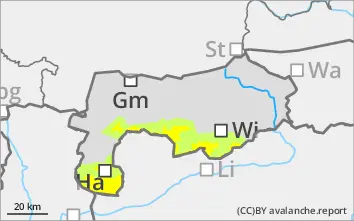
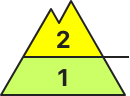
The avalanche risk is low, moderate at higher altitudes. In some areas, there are mostly small-scale avalanches in the eastern sector and on the south side, which can be triggered as small slab avalanches in filled steep slopes as well as in steep bowls and gullies even with low additional loads. It is difficult to recognise individual avalanche prone locations due to the persistent weak layer problem in northern to eastern steep slopes. Here, snow slabs can also be triggered by individuals.
Snowpack
There are only a few centimetres of snow in places during the day. At higher elevations, the snowpack contains thin melt-freeze crusts and faceted crystals near the ground on the north and shady slopes, some of which are floating snow. The snowpack is still very unevenly distributed, with only a little snow even at higher altitudes.
Tendency
Due to new fallen snow in the night from Thursday to Friday and wind, there is fresh wind slab.
Danger level
1800m
Avalanche Problem
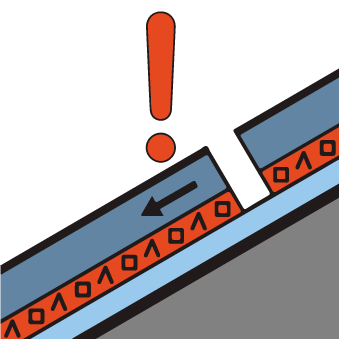
Persistent weak layer
1800m
Wind slab
Treeline
Local persistent weak layer problem!
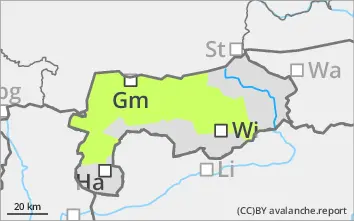
The avalanche danger remains low. Mostly small slab avalanches can be triggered in steep terrain in places by even a small additional load. Attention should be paid to steep slopes adjacent to ridgelines, transitions from little to more snow and steep gullies, mainly in the northern sector, partly on the east side.
Snowpack
There are only a few centimetres of snow in places during the day. At higher elevations, the snowpack contains thin melt-freeze crusts and faceted crystals near the ground on the north and shady slopes, some of which are floating snow. The snowpack is still very unevenly distributed, with only a little snow even at higher altitudes.
Tendency
Due to new fallen snow in the night from Thursday to Friday and wind, there is fresh wind slab.