The current snowpack pattern is uncommon and requires special attention and caution!
New fallen snow in the high alpine regions, weak layers persist.
In particular, even a small additional load can trigger a small avalanche on snowdrift accumulations. A triggered avalanche or an otherwise large Additional load may exceed the load-bearing capacity of the deep hard layers, triggering a deep and widespread (large) avalanche. Such weak layers are particularly abundant in the axis above the forest, but are not excluded elsewhere. Gliding avalanches also occur on steep smooth slopes.
Snowpack
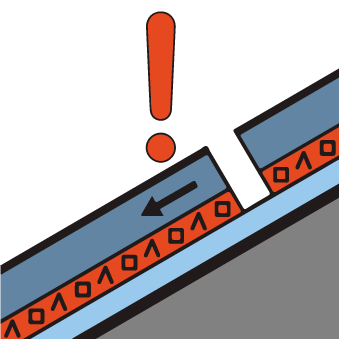
dp.1: deep persistent weak layer dp.4: cold following warm / warm following cold
At slightly warmer air temperatures, the snowpack transforms and collapses more quickly. Snow has melted on the highest peaks on sunny slopes, while only the high alpine regions have remained dry.
The snowpack is made up of layers of bonded snow that are already somewhat compacted. The coherence of the layers of blown snow in snowdrift accumulations built up by the southerly wind during the snowfall is weaker.
In the old snow cover, there are several weak layers of faceted snow crystals and sheared grains deep below the surface.
Tendency
The danger of avalanches will remain similar.
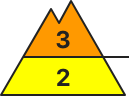
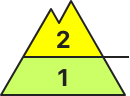
Danger level
1200m
Avalanche Problem
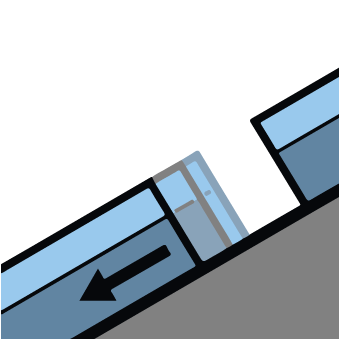
Gliding snow
1200m
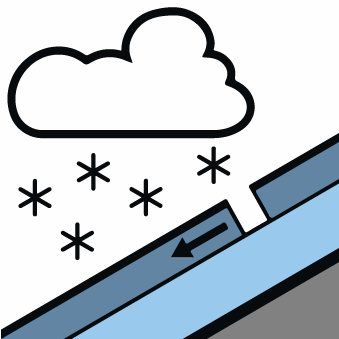
New snow
Treeline
Increased amount of new snow in the highest parts of the mid-mountains, snowdrift accumulations
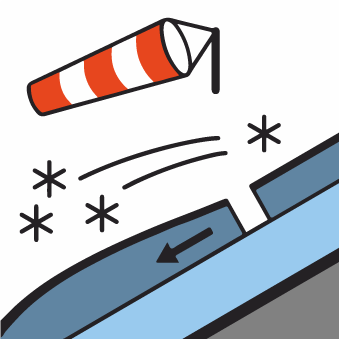
Blowing snow, gliding avalanches.
In particular, even a small additional load can trigger a small avalanche on snowdrift accumulations. Gliding avalanches also occur on steep, smooth slopes.
Snowpack
At slightly warmer air temperatures, the snowpack transforms and collapses more quickly. The snow has melted to the highest peaks - including on the wasps.
The snowpack is made up of layers of bonded snow that are already somewhat compacted and mostly well connected. The layers of blown snow are less well connected in snowdrift accumulations built up by the southerly wind during the snowfall.
A depth hoar has formed at the interface between the snowpack and the ground.
Tendency
The danger of avalanches will remain similar.
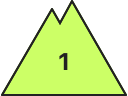
Danger level
treeline
Avalanche Problem
New snow
Treeline
Increased amount of new snow in the highest parts of the mid-mountains, snowdrift accumulations
Blown snow
In particular, the additional load of snowdrifts built up by the SE wind may trigger a small, cumulonimbus avalanche.
Snowpack
The snowpack is moist throughout its entire thickness and is already well bonded. South and south-easterly winds have built up on the leeward sides of the ridges.