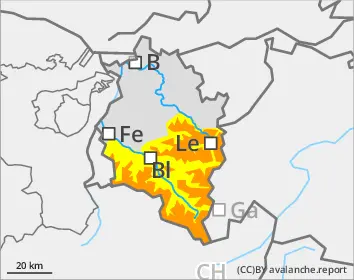
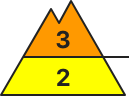
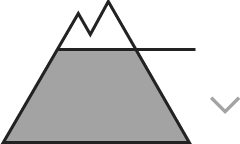
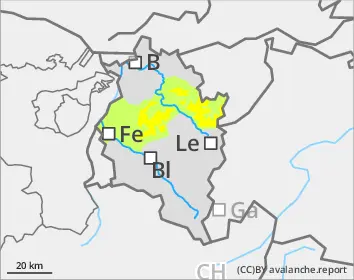
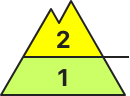
Caution: marked weak layers in old snow: activities in backcountry demand cautious evaluation of the terrain and the dangers, as well as restraint. Avalanches which release can fracture to deeper layers in the old snowpack and grow to medium size. Such danger zones occur especially on steep shady slopes and are impossible to spot. Also remote triggerings are possible. Whumpf noises and fractures when treading on the surface are alarm signals. On sunny slopes, generally small loose-snow avalanches can trigger naturally during the course of the day. In addition, trigger-sensitive snowdrift accumulations will be generated during the day in foehn-exposed regions.
Snowpack
Older snowdrift accumulations from last week often lie deposited atop loose old snow at high altitudes, and a weak old snowpack, particularly on steep shady slopes. The snowdrift accumulations are often blanketed, making them impossible to recognize. Avalanches triggered by winter sports enthusiasts and fractures on the surface confirm how prone to triggering the snowpack is. During recent nights, surface hoar has formed in many places. The melt-freeze crust which has formed at lower altitudes softens up on sunny slopes during the daytime hours.
Tendency
As a result of strong-to-stormy SW winds, avalanche danger will increase again at high altitudes.
Danger level
1800m
Avalanche Problem
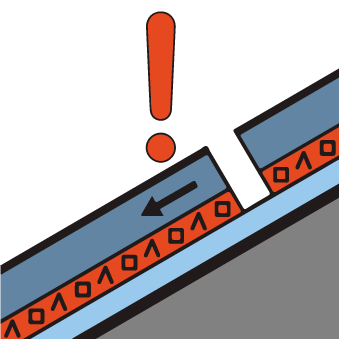
Persistent weak layer
1800m
Caution: weak old snowpack layers at higher altitudes
A single winter sports enthusiast can trigger small slab avalanches in some places. If releases then sweep away deeper weak layers of the snowpack, the avalanche can in isolated cases grow to medium size. Danger zones are difficult to spot, they occur particularly in transitions from shallow to deep snow, for example, at entry points into gullies and bowls. Apart from the risks of being buried in snow masses, the danger of being swept along and forced to take a fall require caution. On sunny slopes, generally small loose-snow avalanches can trigger naturally during the course of the day.
Snowpack
Older snowdrift accumulations from last week often lie deposited atop loose old snow at high altitudes, and a weak old snowpack, particularly on steep shady slopes. The snowdrift accumulations are often blanketed, making them impossible to recognize. Avalanches triggered by winter sports enthusiasts and fractures on the surface confirm how prone to triggering the snowpack is. During recent nights, surface hoar has formed in many places. The melt-freeze crust which has formed at lower altitudes softens up on sunny slopes during the daytime hours.
Tendency
As a result of strong-to-stormy SW winds, avalanche danger will increase again at high altitudes.
Danger level
1400m
Avalanche Problem
Persistent weak layer
1400m
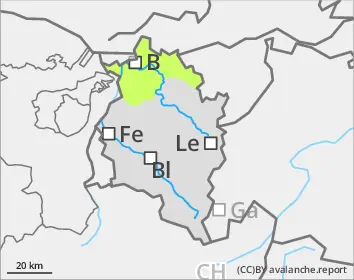
Isolated danger zones in extremely steep shady terrain
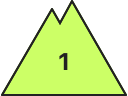
Avalanche danger is low. Isolated avalanche prone locations occur on extremely steep shady slopes. The risks of being swept along and forced to take a fall require caution.
Snowpack
Particularly on steep shady slopes, unfavorable intermediate layers inside the old snowpack have often persisted. During recent nights, surface hoar has often been generated. The melt-freeze crust which formed overnight will soften up on sunny slopes during daytime hours. At lower altitudes there is little snow on the ground. South-facing slopes are increasingly becoming bare of snow.