The current snowpack pattern is uncommon and requires special attention and caution!
New fallen snow has hidden old traps.
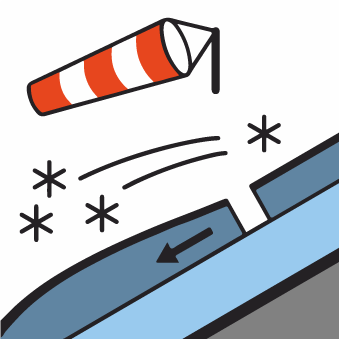
Even a small additional load can trigger a medium-sized avalanche near ridges and other typical leeward locations with blowing snow. Chain avalanches are also possible, where the triggering of a small clast of freshly blown snow causes the collapse of old Weak layers in the snowpack!
In some places, the additional load (blowing snow) will naturally trigger cluster avalanches.
Snowpack
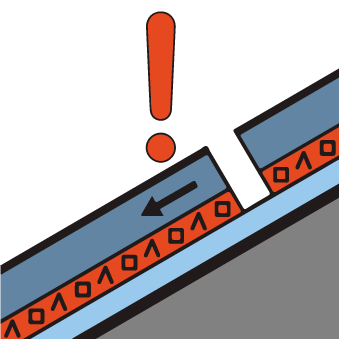
dp.1: deep persistent weak layer dp.5: snowfall after a long period of cold
The old snow cover was thin and variable in places. In some places, a crust had formed on the surface, most of which bore the weight of sand. In the osoles, the snowpack was mostly dry, compacted and hard at the surface, and completely cut at depth. Ridges and peaks were in many places blown down to a crusted or icy base. Particularly near the ridges, areas of blown snow had formed, under which the snowpack was thinned.
Snow has been falling on such a surface above about 1000 m since Friday evening with a strong SW-SW wind. Up to 50 cm of new fallen snow has fallen, which has covered the old snow cover and has not bonded well with it. New snowdrift accumulations have formed, which naturally put additional stress on the old snowpack, which has persistent weak layers. Today, the fresh snowpack will become slightly thinner due to the influence of the sun, especially in the mid-mountains.
Tendency
Tuesday morning will be sunny, but as the SW wind strengthens, it will first turn cloudy on the coastal side of the Julian Alps and the Dinaric Mountains. Elsewhere, it will become cloudy by the evening, with showers on Wednesday night. The avalanche danger will remain unchanged until Wednesday.
Danger level
treeline
Avalanche Problem
Wind slab
Treeline
Persistent weak layer
Little wind slab, but avoid it!
The avalanche risk is moderate above the tree line and low below it. The main problem is fresh wind slab. Small slab avalanches can be triggered by small additional loads in steep terrain adjacent to ridgelines in the north-west to north to south-east aspect as well as in gullies and bowls. Occasionally, deeper weak layers in the persistent weak layer can be disturbed and avalanches can reach medium size.
Snowpack
Above the tree line, fresh wind slab snow is deposited on variously crusted can forms, partly on soft snow. Angular snow crystals have formed widely below the layers of hard snow. The snowpack base often consists of gritty floating snow. On the south side, some new fallen snow covers the snow-covered ground.
Tendency
No change in the avalanche risk is expected for the time being.
Danger level
1800m
Avalanche Problem
Persistent weak layer
1800m
Be aware of persistent weak layer problems due to poor stability!
The avalanche risk is still moderate, especially at higher altitudes. There are a few avalanche prone locations in the steep terrain adjacent to ridgelines, at terrain transitions and in steep bowls and gullies, mainly in the northern and eastern sectors of the high altitudes. Triggering of slab avalanches is possible in some places even under slight additional load. In some cases, attention must be paid to small-scale displacements.
Snowpack
Depending on the aspect and hardness of the surface, the snowpack varies in hardness and is partly icy. Despite strong winds, there is hardly any new drifting and, if at all, only traces of new fallen snow. The snowpack contains faceted crystals and/or floating snow, especially in the higher elevations. This means that slab avalanches can easily be triggered here. Mostly at higher altitudes, there may be small-scale, sometimes disturbing drifts. In general, there is very little snow and it is distributed very differently. In addition to completely blown away areas, there are also well-filled areas.
Tendency
No significant changes.
Danger level
1800m
Avalanche Problem
Persistent weak layer
1800m
Wind slab
Treeline
Persistent weak layer problem and some wind slab!
The avalanche risk is assessed as moderate above 1,800 metres and low below that. Slab avalanches can be triggered in some places even with little additional load and can reach medium size when breaking through the persistent weak layer. The danger areas are still located in the north to east aspects behind ridgelines and terrain edges as well as in the entrance areas to steep gullies and bowls. In the Niedere Tauern and in the Eisenerz Alps there is also fresh wind slab snow, which can be triggered as a snow slab in the northern sector (adjacent to ridgelines).
Snowpack
In the southern Niedere Tauern and in the Eisenerz Alps, a few centimetres of new fallen snow or wind slab have been added. This covers surface hoar and older wind slab in the higher elevations. In the northern and eastern exposures, the snowpack is still weakened with faceted crystals and floating snow (persistent weak layer problem!).
Tendency
Very sunny again on Tuesday with an increasingly southerly flow. No significant change in the avalanche risk is expected.
Danger level
2000m
Avalanche Problem
Persistent weak layer
2000m
Wind slab
2000m
Persistent weak layer
2000m
Main danger: weak old snowpack layers. Fresh snowdrifts require caution.
Particularly in high-altitude ridgeline and pass areas, as well as behind drops in the terrain, fresh snowdrift accumulations are easy to trigger. It is possible to trigger slab avalanches in the old snow particularly by large additional loading. If a release sweeps away the entire snowpack the avalanche can grow to medium size. Danger zones are located especially on steep shady slopes, but also in wind-loaded gullies and bowls in all aspects. Whumpf noises and fractures on the surface are alarm signals. Activities in outlying terrain away from secured ski runs require experience in evaluating the terrain and assessment of avalanche dangers.
Snowpack
There has been 5-10cm of fresh snow, locally up to 15cm, registered widespread. Particularly in ridgeline and pass areas, fresh, usually small drifted masses occur. Especially where fresh snow and drifts are deposited on top of surface hoar or on loosely-packed old snowpack layers, the bonding is poor. The old snowpack is overall unfavorably structured. Intermediate layers inside the snow cover continue to be only moderately bonded to each other.
Tendency
At high altitudes, the unfavorably structured snowpack is the main danger. Freshly generated snowdrift accumulations remain prone to triggering.
Danger level
1900m
Avalanche Problem
Persistent weak layer
1900m
Some new fallen snow covers stones and avalanche prone locations.
The avalanche risk is moderate above 1900 metres and low below. In skiable terrain, small to medium-sized slab avalanches can be triggered in a few places, especially in the northern sector, by low additional loads. Avalanche prone locations increase rapidly from the tree line upwards, at higher altitudes increasingly also in eastern aspects.
Snowpack
There is about 10 cm of new fallen snow on an otherwise very variable surface. There are areas with little snow next to snowdrift accumulations. These have been transformed in places to build up and are soft, in places hard as a board. The old snowpack consists of crusts with faceted crystals in between and deep rime. A break usually occurs around the uppermost crust. The total snow depth is well below average.
Tendency
Slow decline in avalanche danger.
Danger level
2000m
Avalanche Problem
Persistent weak layer
2000m
Wind slab on weak old snowpack. Lots of stones.
The avalanche risk is moderate above 2000 metres and low below. Slab avalanches can be triggered in a few places by low additional loads and can reach medium size. Both fresh and older drift snowpacks as well as the weakly built-up old snowpack can be disturbed, fractures can tear through. Avalanche prone locations increase rapidly from the tree line upwards. They are concentrated from west to north to east, in some places in the southern sector in the high Alps, and generally next to blown-off areas. Drift snow areas should be avoided. Whumpfing collapsing sounds when stepping on the snowpack can indicate danger. The avalanche prone locations are difficult to recognise.
Snowpack
There is 5 to 10 cm of new/wind slab snow on a locally very varied snow surface. There are areas with little snow next to considerable snowdrift accumulations. In places, these have been transformed and are soft, in places hard as a board. The old snowpack consists of crusts with faceted crystals in between and deep rime. A break usually occurs around the uppermost crust. The total snow depth is well below average.
Tendency
Slow decline in avalanche danger.
Danger level
treeline
Avalanche Problem
Wind slab
Treeline
Persistent weak layer
Treeline
Fresh wind slab in the northern sector!
The avalanche danger is rated as moderate above the tree line and low below. The main problem is wind slab. The avalanche prone locations are in the terrain adjacent to ridgelines and in the entrance areas of gullies and bowls. The north and east sectors are particularly affected. Triggering of a snow slab is possible with low additional load. The slab can slide to the ground, so medium avalanches cannot be ruled out.
Snowpack
Between 10 and 20 cm of new fallen snow has been added in the last 24 hours. The strong southerly wind has transported the snow to the northern sector. The connection between the wind slab and the old snowpack is not sufficient. The snow base, fundament is weakened by angular shapes on shady slopes (persistent weak layer problem!).
Tendency
Very sunny again on Tuesday with an increasingly southerly flow. No significant change in the avalanche danger is expected.
Danger level
treeline
Avalanche Problem
Persistent weak layer
Treeline
Wind slab
Treeline
New fallen snow, slush
Snowpack stability is poor, especially in new snowdrift accumulations at typical locations - along ridges, in ravines, etc. Here, a small additional load can trigger a medium-sized avalanche.
Snowpack
dp.5: snowfall after a long period of cold
The old snow cover has been transformed - frosted in the washes, cut on the washes. In some places, there was a hard crust on the surface.
More than 100 litres of precipitation had fallen on such a surface since Friday night, most of it as snow above 1500 m. It is likely that more than 50 cm of snow fell. Where snow has fallen on hard, frozen ground, it has not bonded well with it. In the osoyas, the snow fell on a snowpack that was almost completely cut. It snowed with a strong SW-SE wind, especially near the ridges, which caused snowdrift accumulations. The snowpack is expected to thin out somewhat today.
Tendency
Tuesday morning will be sunny, with clouds starting in the morning. South-westerly winds will blow. Snow is likely on Wednesday. The avalanche danger will remain similar until Wednesday.
Danger level
1300m
Avalanche Problem
Wind slab
1300m
Even a small additional load can trigger a small avalanche, especially in typical leeward areas with freshly blown snow.
Snowpack
dp.5: snowfall after a long period of cold
Up to 40 cm of new fallen snow has fallen on bare ground above 1300 m since Friday. Snowdrift accumulations have formed due to the strong SW wind.
If the weather is sunny, the snowpack will clear.
Tendency
Tuesday morning will be sunny, but as the SW wind strengthens, it will first turn cloudy on the coastal side of the Julian Alps and the Dinaric Mountains. Elsewhere, it will become cloudy by the evening, with showers on Wednesday night. The avalanche danger will remain unchanged until Wednesday.
Danger level
Avalanche Problem
Persistent weak layer
Local persistent weak layer problem - little snow!
The avalanche risk is low. However, there are local avalanche prone locations to be aware of. In the north and east sectors, individual slab avalanches can be triggered in places in steep terrain adjacent to ridgelines, at terrain transitions and in steep bowls and gullies with low additional loads. Localised small-scale displacements must be taken into account.
Snowpack
Depending on the aspect and hardness of the surface, the snowpack varies in hardness and is partly icy. Despite strong winds, there is hardly any new drifting and, if at all, only traces of new fallen snow. The snowpack contains faceted crystals and/or floating snow, especially in high alpine areas. This means that slab avalanches can easily be triggered here. Mostly at higher altitudes, there may be small-scale, sometimes disturbing drifts. In general, there is very little snow and it is distributed very differently. In addition to many apery and completely blown-off areas, there are also well-filled areas.
Tendency
No significant changes.
Danger level
Avalanche Problem
Wind slab
Fresh wind slabs in the north and east aspects!
The avalanche risk is low. Small slab avalanches can occur in a few places, especially on shady slopes due to fresh pillows of wind drifted snow. In extremely steep gullies in northern and eastern exposures, there is a poor connection to the old snowpack. The thin layer of fresh snow can also cover icy areas at higher altitudes. Beware of the danger of falling!
Snowpack
There is still significantly less snow than average. Pillows of wind drifted snow have formed due to the new fallen snow and the stormy wind from the south. These are mainly in the north and east sectors on shady slopes on a thin, crusted old snowpack. The connection between wind slab and persistent weak layer is poor. In extremely steep gullies on shady slopes, angular shapes can weaken the snow base, fundament. The wind slab also covers icy spots in steep terrain.
Tendency
The avalanche danger remains the same.
Intermediate highs will prevail on Tuesday with sunny and precipitation-free conditions. It will be warmer again. Clouds will move in from the south on Wednesday. A cold front could lead to some new fallen snow on Thursday.
Fresh snowdrift accumulations in ridgeline terrain and behind protruberances in the landscape can easily be disturbed. Other isolated danger zones are located in extremely steep, predominantly shady terrain. In isolated cases, small avalanches can be triggered in these places in the old snow. Such danger zones are located particularly in transitions from shallow to deep snow, for example, at entry points into gullies and bowls. Apart from the risks of being buried in snow masses, the danger of being swept along and forced to take a fall also require caution.
Snowpack
About 5-10cm of fresh snow will be deposited on top of a generally well consolidated, predominantly melt-freeze encrusted old snowpack surface. In some places, surface hoar will be blanketed by the fresh snowfall. At higher altitudes, small-sized freshly generated snowdrift accumulations occur. Particularly on steep shady slopes, weak layers in the old snow still persist in places. Overall there is little snow on the ground.
Tendency
Avalanche danger levels are not immediately expected to change significantly.
Danger level
Avalanche Problem
Persistent weak layer
Weak old snowpack with little snow.
The avalanche risk is low.
At high altitudes in the northern and eastern sectors, a snow slab can still be triggered in a few places, especially with a large additional load. In extremely steep terrain, the transition from little to more snow and wind slab should be assessed critically.
Snowpack
Little snow, south-facing many apere surfaces, broad ridge and ridges often completely blown off. The snow surface is variable. The old snowpack is weak, with faceted crystals between crusts.
Tendency
No significant change in avalanche danger.
Danger level
Hardly any snow and low avalanche danger.
The avalanche risk is low. The risk of stones and slipping on icy surfaces is higher than the risk of burial.
Snowpack
Little snow, lots of patches of loose snow. Snow surface often hard to icy. Edgy persistent weak layer weakens the snow base, fundament if present.
Tendency
No significant change in avalanche danger.
Danger level
Avalanche Problem
Persistent weak layer
Obstacles and avalanche prone locations are covered in snow and difficult to recognise.
The avalanche risk is low. Small avalanches can be triggered in persistent weak layers, especially with large additional loads. The few avalanche prone locations are found on extremely steep slopes in the northern and eastern aspects, especially when entering gullies and bowls.
Snowpack
Up to high altitudes, the snowpack has crusted can form on the surface and is covered by a few centimetres of new fallen snow. At higher altitudes, bonded snow lies on angular snow layers in places. Crack propagation over larger areas is not expected. Overall, there is little snow and ground contact is to be expected everywhere.
Tendency
The avalanche danger remains low for the time being.
Danger level
Danger of falling in partly icy terrain!
The avalanche risk is low. There are only very few avalanche prone locations, which are limited to the extremely steep slopes of the northern exposures. At higher altitudes, the snowpack is often hard and icy. Beware of the danger of falling!
Snowpack
The snowpack is well below average for the time of year. The thin snow surface is often crusted can form and hard, sometimes icy, due to the rain and the subsequent sub-zero temperatures. In windward locations, it is mostly blown off, only in areas sheltered from the wind is there a little more snow. In extremely steep gullies on shady slopes, angular shapes can weaken the snow base, fundament.
Tendency
The avalanche danger remains the same.
Intermediate highs will prevail on Tuesday with sunny and precipitation-free conditions. It will be warmer again. Clouds will move in from the south on Wednesday. A cold front could lead to some new fallen snow on Thursday.
Danger level
treeline
Avalanche Problem
Wind slab
Treeline
Low avalanche danger, isolated avalanche prone locations on shady slopes!
The avalanche risk is low. In extremely steep gullies and on shady slopes above the tree line, the triggering of small slab avalanches cannot be completely ruled out. Fresh pillows of wind drifted snow can be triggered as small avalanches behind ridges.
Snowpack
In the last 24 hours, fresh wind slab snow (approx. 10 to 15 cm) has been deposited on a crusted can form old snowpack. Angular shapes weaken the snow layering.
Tendency
Very sunny again on Tuesday with an increasingly southerly flow. No significant change in the avalanche danger is expected.