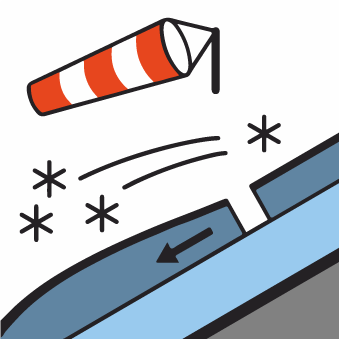
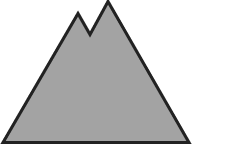
Avoid easily recognisable wind slabs at all costs, they are still easy to trigger.
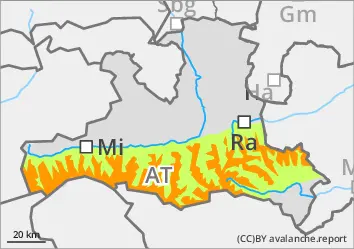
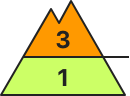
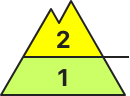
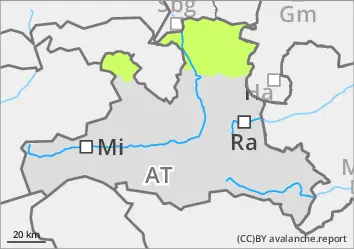
The avalanche danger is considerable above 2000 m and low below.
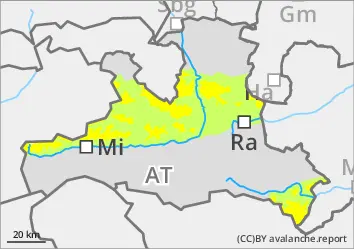
Slab avalanches can still be triggered in some places by small additional loads (individual winter sports enthusiasts). Avalanches can reach medium size. Avalanche prone locations can be found in all areas adjacent to the ridgeline or summit, behind terrain edges and in gullies and bowls. They increase in size and frequency with altitude. The wind slab is easily recognisable and should be avoided at all costs; the transition from a little to a lot of snow is particularly critical. Cracks in the snow cover, snowpack also indicate danger. In addition to the risk of burial, the danger of being swept away and falling must be taken into account. There are also many rocks lurking around.
Snowpack
On Tuesday, the snow cover, snowpack was able to settle and has become cardboardy up to around 2000 metres and has a melt-freeze crust in the morning, which softens during the day. Above this, the wind slab from the weekend is still prone to triggering. The transition to the old snowpack (faceted crystals on/under the crust) usually serves as a weak layer. The old snowpack consists of layers of faceted crystals, deep rime and melt-freeze crusts; avalanches triggered on the surface can tear through to the ground.
The total snow depth is still well below average. Ridges and ridges are often completely blown off.
Tendency
The settlement continues to progress in mild weather.
Danger level
2000m
Avalanche Problem
Wind slab
2000m
Avoid easily recognisable wind slabs
The avalanche danger is moderate above 2000 metres and low below.
Slab avalanches can still be triggered in very to extremely steep terrain by low additional loads and can reach medium size. Most avalanche prone locations are on west to north to south-east facing slopes, behind ridges and in gullies and bowls. The wind slab is easily recognisable and should be avoided. Cracks in the snow cover, snowpack also indicate danger. In addition to the risk of burial, the danger of being swept away and falling must be taken into account. There are also many rocks lurking around.
Snowpack
The snow cover was able to settle on Tuesday and has become cardboardy up to around 2000 metres and has a melt-freeze crust in the morning, which softens during the day. Above this, the wind slab snow from the weekend is still prone to triggering, and the transition to the old snowpack (faceted crystals on/under the crust) usually serves as a weak layer. The old snowpack consists of layers of faceted crystals, deep rime and melt-freeze crusts. Surface-triggered avalanches can tear through to the ground. The total snow depth is still well below average. Ridges and ridges are often completely blown off.
Tendency
The settlement continues to progress in mild weather.
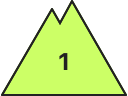
Danger level
Avalanche Problem
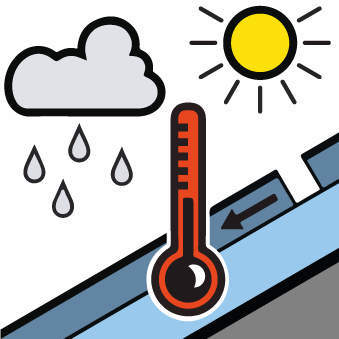
Wet snow
Rainy ice crust spoils the skiing fun
The avalanche danger is low. Individual wet avalanches may trigger spontaneously with the sunlight. The wind slab from the weekend is hardly triggerable.
Snowpack
The snow cover, snowpack is moist to wet and closes with a melt-freeze crust / rain ice crust, which can rise during the day.