Lots of new fallen snow and wind require restraint
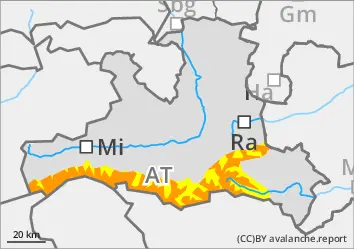
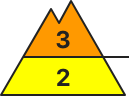
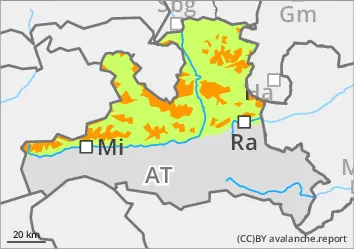
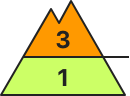
The avalanche risk is considerable above the tree line and moderate below.
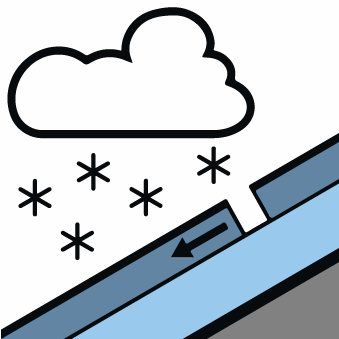
Slab avalanches can be triggered in drift and new fallen snow in some places by even a small additional load and can also slide spontaneously in places. Avalanches reach medium size. Avalanche prone locations can be found in all aspects, adjacent to the ridgeline and distant from ridgelines, behind terrain edges, in gullies and bowls. They increase in size and frequency with altitude.
Older snowdrift accumulations can be covered with snow and difficult to recognise. Cracks when walking on the snow cover, snowpack indicate the danger.
Snowpack
A total of 60 to 80 cm of new fallen snow has fallen in the last few days. Wind and snowfall are constantly forming fresh wind slab at altitude and the snow can also bind well on the surface due to the warming. Both soft snow, surface hoar and faceted crystals above/below the top crust can serve as a weak layer. The rest of the old snowpack is made up of layers of faceted crystals, deep rime and melt-freeze crusts, where it has little tendency to break up.
The total snow depth is still well below average.
Tendency
The wind slab gradually settles as the weather warms up.
Danger level
treeline
Avalanche Problem
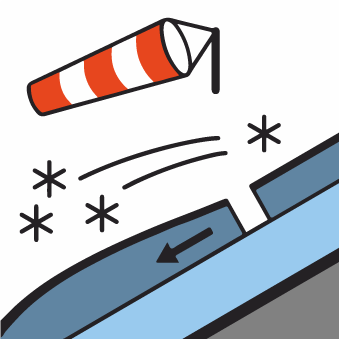
Wind slab
Treeline
Fresh wind slab prone to triggering
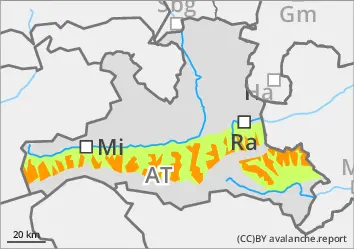
The avalanche risk is considerable above the tree line and low below.
Slab avalanches can be triggered in some places by even a small additional load and can reach medium size. Occasionally, avalanches can also slide off spontaneously. Most avalanche prone locations are located on west to north to south-east facing slopes, behind terrain edges, in gullies and bowls and also in the forest boundary area. They increase in size and frequency with altitude. Cracks when walking on the snow cover, snowpack indicate the danger. In addition to the risk of burial, the danger of being swept away and falling must be taken into account. There are also many rocks lurking around.
Snowpack
A total of 50 to 60 cm of new fallen snow has fallen in the last few days. Wind and snowfall are constantly forming fresh wind slab at altitude and the snow can also bind well on the surface due to the warming. Both soft snow, surface hoar and faceted crystals above/below the top crust can serve as a weak layer for snowdrift accumulations. The rest of the old snowpack consists of layers of faceted crystals, deep rime and melt-freeze crusts and has little tendency to break up.
Below 1400 metres, rainfall moistened the snow cover on Friday, and a melt-freeze crust has formed within the new snowpack.
The total snow depth is still well below average.
Tendency
The wind slab gradually settles as the weather warms up.
Danger level
treeline
Avalanche Problem
Wind slab
Treeline
Fresh and older snowdrift accumulations are prone to disruption
The avalanche risk is considerable above the tree line and low below.
Slab avalanches can be triggered in some places by even a small additional load and occasionally slide off spontaneously. Avalanches can reach medium size. Avalanche prone locations can be found in all areas adjacent to the ridgeline and area distant from ridgelines, behind terrain edges, in gullies and bowls and also in the forest boundary area. They increase in size and frequency with altitude. Cracks when walking on the snow cover, snowpack indicate the danger. In addition to the risk of burial, the danger of being swept away and falling must be taken into account. There are also many rocks lurking around.
Snowpack
A total of around 60 cm of new fallen snow has fallen in the last few days. Wind and snowfall are constantly forming fresh wind slabs at altitude and the snow can also bind well on the surface due to the warming. Still soft snow, surface hoar as well as faceted crystals above/below the top crust can serve as a weak layer. The rest of the old snowpack is made up of layers of faceted crystals, deep rime and melt-freeze crusts, where it has little tendency to break up.
The total snow depth is still well below average.
Tendency
The wind slab gradually settles as the weather warms up.
Danger level
treeline
Avalanche Problem
Wind slab
Treeline
Note small snowdrift accumulations adjacent to the ridgeline, crest or summit
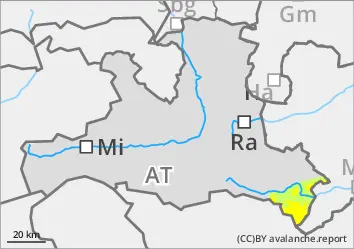
The avalanche risk is moderate above the tree line and low below. In some places, wind slab adjacent to the ridgeline can be triggered as a mostly small slab avalanche by even a small additional load. Most avalanche prone locations are in the north and east sector behind terrain edges, in gullies and bowls. The risk of falling outweighs the risk of burial away from terrain traps. Also beware of stones that are only slightly covered by snow.
Snowpack
In the last few days, 10 to 20 cm of new fallen snow has fallen. Soft new fallen snow overlaid by wind slabs can form a weak layer near the surface. Overall, there is little snow and there are no pronounced weak layers within the old snowpack.
Tendency
The wind slab gradually settles as the weather warms up.