Avalanche Service Upper Austria

Monday 12 January 2026

Published 12 Jan 2026, 08:00:00


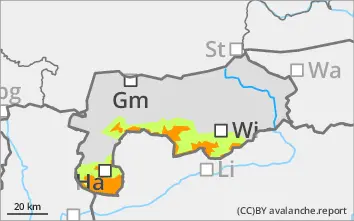
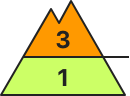
Danger level

treeline
Avalanche Problem
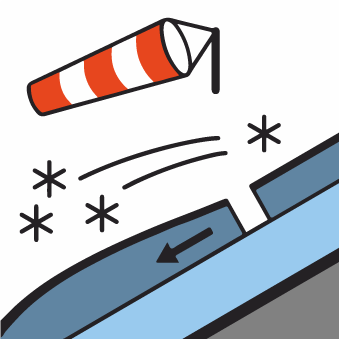
Wind slab
Treeline


Beware of prone to triggering wind slab!

The avalanche risk is classified as considerable, mainly at higher altitudes, and in some cases above the tree line. Strong, sometimes stormy winds in the higher elevations have formed prone-to-triggering wind slabs that are easy to trigger. Note the drifts in the eastern sector, on the south side, but also in other aspects. Medium slab avalanches can be triggered in filled steep slopes as well as in steep bowls and gullies by even a small additional load. These avalanche prone locations should be avoided. With the significant warming, small loose snow avalanches are possible in steep terrain during the daytime changes. Wet snow avalanches are also possible in rain up to 1500 metres above sea level.

Snowpack

The recent, sometimes abundant, new fallen snow has been transported by predominantly strong winds from the west to northwest and is still poorly bonded to the old snowpack or older layers. The more extensive snowdrift accumulations, especially at higher elevations, are easy to disturb. Crystals that have been transformed by building up generally weaken the snow base, fundament. The snow cover, snowpack is distributed very differently, with well-filled areas in addition to blown-off areas.

Tendency

Significant warming leads to settlement of the snow cover, snowpack. The risk of slipping snow decreases.
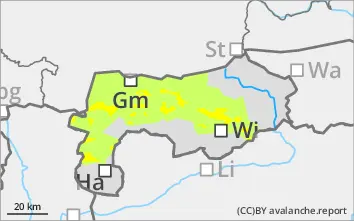
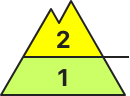
Danger level

treeline
Avalanche Problem
Wind slab
Treeline


Watch out for wind slab!

The avalanche danger is classified as moderate from the tree line upwards. Strong winds have formed prone-to-triggering wind slabs that are easily triggered. Beware of drifting snow in the eastern sector, on the south side and partly also in other aspects. Medium slab avalanches can be triggered in filled steep slopes as well as in steep bowls and gullies by even a small additional load. These avalanche prone locations should be avoided. With the significant warming, small loose snow avalanches in steep terrain are possible during the daytime changes. Wet snow avalanches are also possible in rain up to 1500 metres above sea level.

Snowpack

The recent, sometimes abundant new fallen snow has been transported by predominantly strong winds from the west to northwest and is still poorly bonded to the old snowpack or older layers. The snowdrift accumulations, some of which are more extensive, are easy to disturb. Crystals that have been transformed and built up generally weaken the snow base, fundament. The snow cover, snowpack is distributed very differently, with well-filled areas in addition to blown-off areas.

Tendency

Significant warming leads to settlement of the snow cover, snowpack. The risk of slipping snow decreases.