Weak old snow and fresh snowdrifts prone to triggering
Fresh fallen snow and freshly generated snowdrifts are poorly bonded with the weak old snowpack. One single person can trigger slab avalanches in the drifts and old snow. If the fracture sweeps away the entire snowpack, the release can grow to medium size. Danger zones are located in all aspects, but especially on shady slopes and in wind-loaded gullies and bowls. Frequency and spread of avalanche prone locations increase with ascending altitude. Activities in backcountry demand defensive conduct.
Snowpack
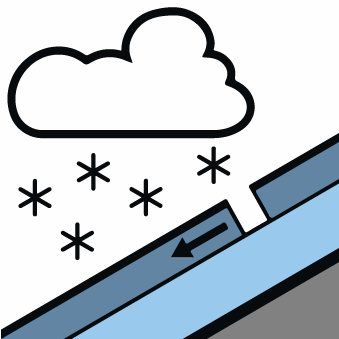
Fresh snowfall is anticipated: up to 15cm, 20cm from region to region. This and the loosely-packed old snow will be transported by the intermittently strong-to storm velocity winds. Fresh snow and drifts will be deposited frequently on top of a faceted, loosely-packed old snowpack surface or atop surface hoar and bond poorly with it. The old snowpack is unfavorably metamorphosed.
Tendency
Very cold plus strong-to-storm velocity winds and, starting on Saturday, increasingly frequent snowfall. Avalanche danger expected to increase inside the respective danger level.
Danger level
treeline
Avalanche Problem
Wind slab
Treeline
Increase in avalanche danger due to fresh wind slab!
The avalanche danger increases to moderate above the tree line. Fresh snowdrift accumulations, mainly in the north, east and south sectors, can be triggered as medium slab avalanches in some places behind ridgelines, terrain edges and in gullies and bowls due to low additional loads.
Snowpack
Up to 20 cm of new fallen snow, sometimes interspersed with graupel, is being transported to the eastern sectors by strong westerly winds, especially in the northern Alps, where it forms bound wind slab. In regions and terrain with little wind, the new fallen snow remains soft and powdery. The fresh wind slab is often covered by a weak layer of faceted crystals or surface hoar. In the foundation of the snow cover, kinetic metamorphism (floating snow) weakens the stability.
Tendency
The weather will calm down briefly on Saturday morning before snowfall starts again with the influx of cold polar air.
The risk of avalanches increases slightly.
Danger level
2000m
Avalanche Problem
New snow
2000m
New fallen snow covers old avalanche prone locations such as drifting snow clods and stones.
The avalanche danger is moderate above 2000 metres and low below.
At high altitudes, avalanches can be triggered by individual winter sports enthusiasts in areas adjacent to the ridgeline, crest or summit. Most of the avalanche prone locations are in the north and east sectors. The risk of falling outweighs the risk of burial away from terrain traps and there is usually more danger from stones than from snow. The avalanche prone locations are often covered in snow and therefore not always recognisable.
Snowpack
New fallen snow covers older drift snow and stones
The old snowpack consists of layers of faceted crystals, deep rime and melt-freeze crusts and has little tendency to spread.
Overall, there is little snow.
Tendency
Fresh wind slab forms at the weekend. The avalanche risk increases slightly.
Danger level
treeline
Avalanche Problem
Wind slab
Treeline
There is still little snow away from the snow-covered pistes.
The avalanche risk is moderate above the tree line and low below it. Wind slabs can be triggered as small or medium slab avalanches by a small additional load. Avalanche prone locations are located adjacent to the ridgeline, crest or summit and distant from ridgelines in steep terrain with aspects from north to east to south as well as in gullies and bowls. In addition to the risk of burial, the risk of being swept away and falling must be taken into account.
Snowpack
Fresh snowdrift accumulations develop with stormy westerly winds. Some fresh and older wind slab lies prone to triggering on soft layers or surface hoar. Below a melt-freeze crust close to the surface, faceted crystals can often be found right down to the ground, especially at higher altitudes. Overall, there is little snow, especially in windward and south-facing areas.
Tendency
The avalanche risk continues to increase with stormy winds and new fallen snow.
Danger level
1800m
Avalanche Problem
Wind slab
1800m
Fresh wind slab is particularly important at higher altitudes.
The avalanche danger is predominantly low, sometimes moderate at higher altitudes. Attention should be paid to high, freshly blown-in steep slopes adjacent to the ridgeline as well as steep bowls and gullies filled with new loads. Small slab avalanches can usually be triggered here by a small additional load. These avalanche prone locations should be avoided.
Snowpack
The recently fallen new snow was transported locally by strong, sometimes even stormy winds from the west to north-west and binds poorly with the cold, either soft or icy old snowpack on the surface or older windslab snow. Older snowdrift accumulations can contain thin intermediate layers such as angular forms and are still prone to triggering. The thin snow base, fundament is weakened by the kinetic metamorphism. The snow depths remain very below average and low right up to the high altitudes.
Tendency
Due to further light to moderate snowfall and partly strong winds from the west, the risk of slipping snow remains moderate.
Danger level
2000m
Avalanche Problem
Wind slab
2000m
New snow
2000m
South foehn and north-westerly winds formed prone to triggering wind slab.
The avalanche danger is moderate above 2000 metres and low below.
Small (occasionally medium) snow slabs can be triggered by individual winter sports enthusiasts in some places, adjacent to the ridgeline and distant from ridgelines behind terrain edges in the north-west, over east to south-facing terrain. Wind slabs have also accumulated in gullies and bowls. Some of the windslab snow will be covered with snow during the daytime changes, making it difficult to recognise. In addition to the risk of burial, attention must be paid to the risk of being swept away and falling. There are also still many rocks lurking.
Snowpack
Wind and snowfall form(ed) wind slabs. The weak layer for a snow slab can be the last snow to fall, surface hoar as well as faceted crystals above/below the uppermost crust.
The old snowpack consists of layers of faceted crystals, deep rime and melt-freeze crusts and has little tendency to break up.
The amount of snow is well below average.
Tendency
Wind and new fallen snow will form fresh wind slabs at the weekend. The avalanche risk increases slightly.
Danger level
treeline
Avalanche Problem
Wind slab
Treeline
Persistent weak layer
2000m
Places with blowing snow are more dangerous
Places with blowing snow are particularly dangerous, as even a heavy load can trigger a small to medium-sized avalanche.
Snowpack
dp.4: cold following warm / warm following cold
There is relatively little snow. The snow base is uneven due to the influence of the wind. There is some light snow in the lee, but the snow base is mostly hard and Crust. More caution is needed, especially in places where the wind has created new snow layers.
Tendency
Relatively strong winds will carry small amounts of snow, especially in the High alpine regions. On Friday, there will be occasional snow. Around 5 cm of snow is expected.
Danger level
2000m
Avalanche Problem
Wind slab
2000m
Fresh wind slab
The avalanche danger is moderate above 2000 metres and low below.
Small (occasionally medium) snow slabs can be triggered by individual winter sports enthusiasts in some places, area adjacent to the ridgeline and distant from ridgelines behind terrain edges in the extended northern sector. Fresh, prone-to-triggering wind slabs can also accumulate in gullies and bowls. In addition to the risk of burial, attention must be paid to the risk of being swept away and falling. There are also still many rocks lurking.
Snowpack
Wind and snowfall form fresh wind slabs. The weak layer for a snow slab can be the last snow to fall, surface hoar as well as faceted crystals above/below the uppermost crust.
The old snowpack is made up of layers of faceted crystals, deep rime and melt-freeze crusts and has little tendency to break up.
The amount of snow is well below average.
Tendency
Wind and new fallen snow will form fresh wind slabs at the weekend. The avalanche risk increases slightly.
Danger level
1500m
Avalanche Problem
Wind slab
1500m
Slightly increasing avalanche danger at high altitudes
Freshly generated snowdrift accumulations and weak layers in the old snow are prone to triggering. One single winter sports enthusiast can trigger small-sized slab avalanches. Danger zones occur especially near ridgelines and in wind-loaded gullies and bowls, as well as in extremely steep terrain. Apart from the risks of being buried in snow, the danger of being swept along and forced to take a fall require caution.
Snowpack
Fresh snowfall is anticipated: up to 15cm, 20cm from region to region. This and the loosely-packed old snow will be transported by the intermittently strong-to storm velocity winds. Fresh snow and drifts will be deposited frequently on top of a faceted, loosely-packed old snowpack surface or atop surface hoar and bond poorly with it. The old snowpack is unfavorably metamorphosed.
Tendency
Very cold plus strong-to-storm velocity winds and, starting on Saturday, increasingly frequent snowfall. Avalanche danger expected to increase further.
Danger level
treeline
Avalanche Problem
Wind slab
Treeline
Low avalanche danger, but watch out for fresh wind slab!
The avalanche danger is low. However, fresh snowdrift accumulations in gullies and bowls that have been blown in as well as behind ridges and ridgelines above the tree line are prone to disruption and can be triggered by a single person as a small slab avalanche.
Snowpack
Fresh snowdrift accumulations often lie on faceted crystals or surface hoar, which can act as a weak layer. Apart from this, the old snow surface is only covered by a few centimetres of new fallen snow. In general, kinetic metamorphism weakens the thin snow base, fundament. Windward terrain is usually blown off and almost snow-free.
Tendency
The weather will calm down briefly on Saturday morning before moderate snowfall sets in again with an influx of cold polar air.
The risk of avalanches increases slightly.
Danger level
treeline
Avalanche Problem
Wind slab
Treeline
Older and fresh snowdrift accumulations are still prone to failure!
The avalanche risk is low. Nevertheless, older snowdrift accumulations at higher altitudes and those freshly formed by the westerly wind are prone to triggering. The avalanche prone locations are located in particular in the steep terrain adjacent to the ridgeline, as well as in gullies and bowls. In places, they can be triggered as a small snow slab by even a small additional load. Due to the limited visibility, the avalanche prone locations are difficult to recognise. Furthermore, the risk of being swept away and falling is greater than the risk of burial.
Snowpack
The snow cover, snowpack is very variable and has been strongly influenced by the wind in recent weeks. Hardness, blown-off areas alternate with snowdrift accumulations in a confined space. With strong winds and some new fallen snow, fresh drift snow areas are occasionally created. The snow cover is often interspersed with graupel. There are weak layers, especially at the transition to the crusted old snowpack. The snow depth remains well below average.
Tendency
The mountain weather will be cloudy throughout the weekend. Temperatures will drop sharply again on Saturday and there may be some snow on and off. The snowfall will intensify in the night to Sunday. The avalanche risk will only increase slightly until Saturday. On Sunday, depending on the amount of new snow, an increase in avalanche danger is expected, especially in the western regions.
Danger level
Low avalanche danger
The avalanche danger is low, isolated danger areas due to fresh snowdrift accumulations can be found behind the edges of the terrain adjacent to the ridgeline, crest or summit.
Snowpack
Little snow and rain in the morning up to around 1400 metres. There are often only a few centimetres of snow / wind slab on the meadows or on a thin crust of harsh snow.
Tendency
No change in avalanche danger.
Danger level
Avalanche Problem
New snow
New fallen snow without significant wind
The avalanche danger is low. However, small avalanches (soft and loose) or slabs may be triggered, especially in the area adjacent to the ridgeline, crest or summit.
Snowpack
Little snow. There are often only a few centimetres of snow / wind slab on the meadows or on a thin crust of harsh snow.
Tendency
Fresh wind slab forms at the weekend. The avalanche risk increases slightly.