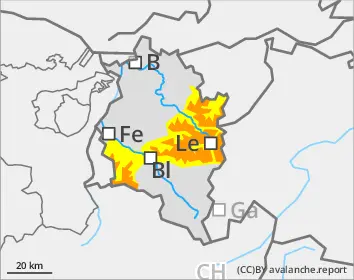
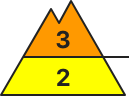
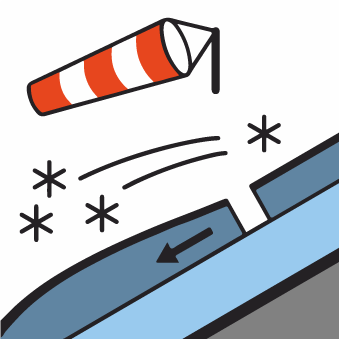
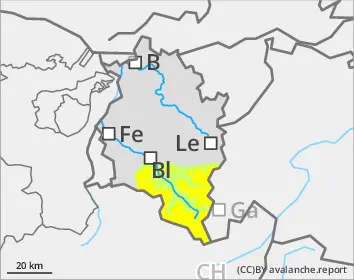
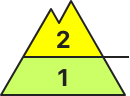
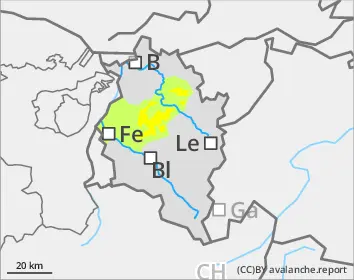
Strong-velocity westerly winds are transporting the most recent snowfall, generating fresh and trigger-sensitive snowdrift accumulations. Avalanches can be triggered even by minimum additional loading and then grow to medium size. Danger zones are located primarily on shady W-N-E facing slopes above 2000m, particularly in ridgeline terrain and in wind-loaded gullies and bowls. Apart from the danger of being buried in snow masses, the risks of being swept along and forced to take a fall require caution. Activities in open terrain demand experience in assessing avalanche dangers.
Snowpack
Strong westerly winds will transport about 20cm of snow which has fallen since Friday. The snowdrifts will be deposited primarily on shady slopes on top of an unfavorable old snowpack surface, they are prone to triggering. In those locations the snowpack is often expansively metamorphosed and, therefore, weak. Snow depths continue to be significantly below-average at all altitudes. Only limited information from outlying terrain is currently available to the Avalanche Warning Services.
Tendency
Brittle, delicate snowdrifts will remain trigger sensitive.
Danger level
treeline
Avalanche Problem
Wind slab
Treeline
Snowdrifts easily triggerable in places
Strong-velocity westerly winds are transporting the most recent snowfall, generating fresh and trigger-sensitive snowdrift accumulations. Avalanches can be triggered even by minimum additional loading and then grow to medium size. Danger zones are located primarily on shady W-N-E facing slopes above 2000m, particularly in ridgeline terrain and in wind-loaded gullies and bowls. Apart from the danger of being buried in snow masses, the risks of being swept along and forced to take a fall require caution. Activities in open terrain demand experience in assessing avalanche dangers and defensive conduct in backcountry.
Snowpack
Strong westerly winds will transport about 20cm of snow which has fallen since Friday. The snowdrifts will be deposited primarily on shady slopes on top of an unfavorable old snowpack surface, they are prone to triggering. In those locations the snowpack is often expansively metamorphosed and, therefore, weak. Snow depths continue to be significantly below-average at all altitudes. Only limited information from outlying terrain is currently available to the Avalanche Warning Services.
Tendency
Brittle, delicate snowdrifts will remain trigger sensitive
Danger level
treeline
Avalanche Problem
Wind slab
Treeline
Snowdrifts easily triggerable in places
Strong-velocity westerly winds are transporting the most recent snowfall, generating fresh and trigger-sensitive snowdrift accumulations. Avalanches can be triggered even by minimum additional loading and then grow to medium size. Danger zones are located primarily on shady W-N-E facing slopes above 2000m, particularly in ridgeline terrain and in wind-loaded gullies and bowls. Apart from the danger of being buried in snow masses, the risks of being swept along and forced to take a fall require caution. Activities in open terrain demand experience in assessing avalanche dangers and defensive conduct in backcountry.
Snowpack
Strong westerly winds will transport about 20cm of snow which has fallen since Friday. The snowdrifts will be deposited primarily on shady slopes on top of an unfavorable old snowpack surface, they are prone to triggering. In those locations the snowpack is often expansively metamorphosed and, therefore, weak. Snow depths continue to be significantly below-average at all altitudes. Only limited information from outlying terrain is currently available to the Avalanche Warning Services.
Tendency
Brittle, delicate snowdrifts will remain trigger sensitive