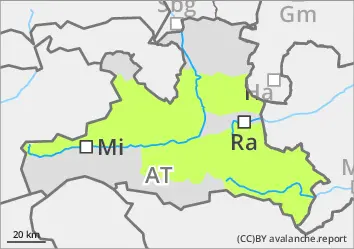
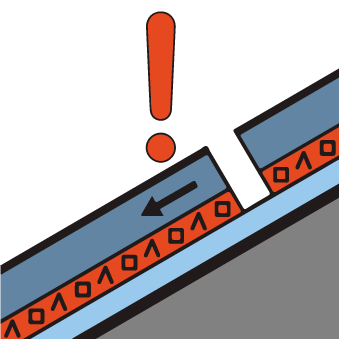
Injury from stones and falling are the main dangers.
The avalanche danger is low. In gullies and bowls adjacent to the ridgeline, crests or summits in shady slopes, there are very isolated trigger points in persistent weak layers that are difficult to disturb. Only very rarely can drift snow packs be triggered there by individuals. Avalanches remain small.
Snowpack
The snow depth is well below average for the time of year. The surface is crusted can form, on sunny slopes it softens during the daytime changes. In shady slopes, weak layers of faceted crystals have been preserved in the snow cover, mostly in the vicinity of crusts. The fracture propagation potential is generally low due to the overall heavily built-up transformed snow cover.
Tendency
The avalanche danger remains low.
Danger level
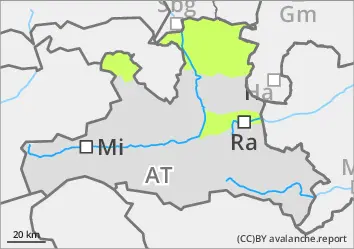
Lack of snow and stones are the main dangers.
The avalanche danger is low. There is usually not enough snow for snow sports and avalanches can hardly be triggered.
Snowpack
There is no closed snow cover, snowpack and the terrain is mostly bare.
Tendency
The avalanche danger remains low.
Danger level
2600m
Avalanche Problem
Persistent weak layer
2600m
Rare avalanche prone locations in the persistent weak layer covered by a little wind slab
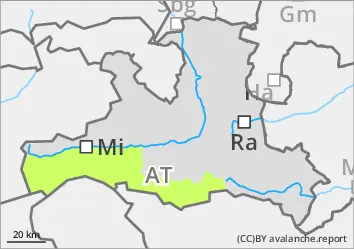
The avalanche danger is low. Small avalanches in particular can occasionally be triggered by one person in shady slope high alpine regions above 2600 metres. On the one hand, where older wind slab snow has formed a suitable board over a weak layer in the persistent weak layer. On the other hand, close to the surface in the wind slab of the last few days, which is still prone to triggering. In addition to the risk of burial, particular attention should be paid to the risk of entrainment.
Snowpack
The surface is crusted can form, on sunny slopes it softens during the daytime changes. In high, shady slopes, the melt-freeze crust is usually covered by edged snow with no binding, which can serve as a weak layer in exceptional cases. The potential for fracture propagation is generally low due to the overall highly built-up, transformed snow cover, snowpack. Fractures within the snow cover are most possible in the thin wind slab or over the hard old snow foundation from early winter. The snow depth is well below average at all altitudes.