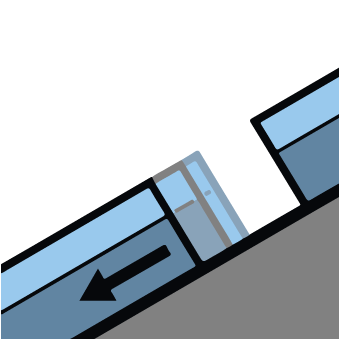
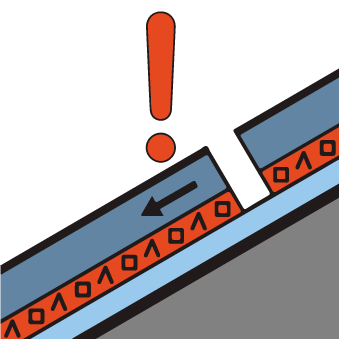
As a result of daytime warming and solar radiation, isolated small-sized glide-snow avalanches are still possible on steep, smooth slopes which have not yet discharged. Glide cracks are signals of potential imminent danger.
Snowpack
During a night of star-studded skies, a breakable-to-capable of bearing loads crust can be generated. During the course of the day, it softens up particularly on sunny slopes and at lower altitudes. South-facing slopes are becoming bare of snow up to high altitudes.
Tendency
Little change is expected, avalanche danger remains low
Danger level
2400m
Avalanche Problem
Persistent weak layer
2400m
Gliding snow
2200m
Isolated glide-snow avalanches. Isolated danger zones in persistent weak layers
Avalanches can be triggered in the persistent weak layer in isolated cases above about 2400m on very steep shady slopes. These releases usually are small-sized. The risks of injuries from being forced to take a fall outweigh those of being buried in snow masses. As a result of daytime warming and solar radiation, isolated, generally small-sized glide-snow avalanches are still possible on steep slopes which have not yet discharged. Glide cracks are signals of possibly imminent danger.
Snowpack
During a night of star-studded skies, a breakable-to-capable of bearing loads crust can be generated. During the course of the day, it softens up particularly on sunny slopes and at lower altitudes. South-facing slopes are becoming bare of snow up to high altitudes. On shady high-altitude slopes above 2400m, isolated weak layers occur inside the snowpack.