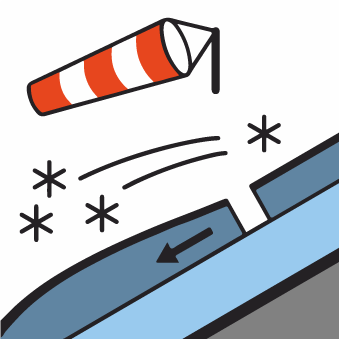
Careful on blowing snow! Above 2400 m there are weak layers in the old snow cover.
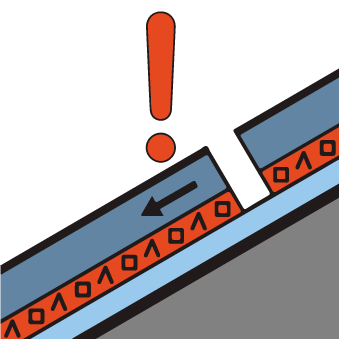
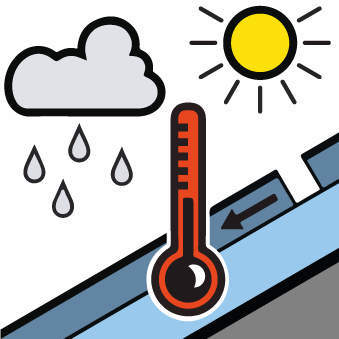
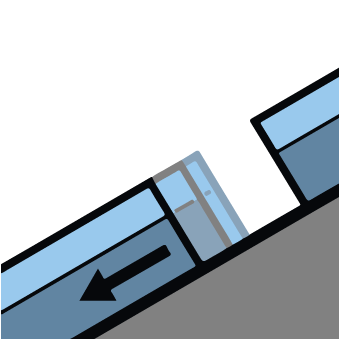
A small additional load can trigger a small to medium avalanche, especially near ridges where there are fresh snow drifts, especially above 1800 m. At altitudes above 2400 m, a small load can trigger a small to medium avalanche of packed snow. During the day, if the weather is sunny, the snow on the slopes will become thinner and in many places will creep down. On steep grassy slopes, the whole snow cover may creep down.
Snowpack
dp.6: cold, loose snow and wind
The last snow fell on uneven ground - in some places on dry ground, especially on the southern slopes on drifts of blown snow.
The north-easterly wind has moved snow above the tree line and built up drifts - especially above 1800 m where there is more dry snow.
There are weak layers in the old snow cover above 2400 m.
Tendency
Tuesday will see slightly less wind, but the weather and snow cover stability will remain the same as on Monday.
Danger level
1800m
Avalanche Problem
Wind slab
1800m
Wet snow
800m
Careful on blowing snow!
A small additional load can trigger a small to medium avalanche, especially near ridges where there are fresh snow drifts, especially above 1800 m.
Snowpack
dp.6: cold, loose snow and wind
The last snow fell on uneven ground - in some places on dry ground, especially on the southern slopes on drifts of blown snow.
The north-easterly wind has moved snow above the tree line and built up drifts - especially above 1800 m where there is more dry snow.
Tendency
Tuesday will see slightly less wind, but the weather and snow cover stability will remain the same as on Monday.
Danger level
2200m
Avalanche Problem
Persistent weak layer
2200m
Gliding snow
Caution urged on steep, shady high-altitude slopes
Slab avalanches can be triggered in the old snow in some places with large additional loading. Caution is urged on very steep, shady high altitude slopes. Small-sized snowdrift accumulations can be triggered with increasing frequency at ascending altitudes. Small-to-medium sized slab avalanches can be triggerred by winter sports enthusiasts. Especially on steep grass-covered slopes, small-sized glide-snow avalanches continue to be possible. Be careful beneath glide cracks.
Snowpack
Only small amounts of snowfall are being registered. As a result of the mild temperatures and influence of rainfall, the snowpack is moist up to high altitudes. The fresh fallen snow and small-sized snowdrift accumulations from the last few days are settling increasingly and firming up. At heightened altitudes they were often deposited on top of faceted layers of old snow from late autumn. The bonding is poor in places.
Tendency
Avalanche danger is expected to recede further.
Danger level
2400m
Avalanche Problem
Persistent weak layer
2400m
Wind slab
2200m
Weak layers in old snow are the main danger
The avalanche danger is moderate above 2400 metres and low below.
The main problem is old snow. In the sectors from west to north to east, slab avalanches can be triggered in some places by even a small additional load. Avalanches can tear through to deeper weak layers and become medium sized if the snow is thick enough.
Small slab avalanches can also be triggered in fresh drift snow, especially in west, north and east exposures above 2200 metres. The few danger spots are located close to the main ridge. Below 2800 m, mainly small sliding snow avalanches can occur spontaneously.
Snowpack
The snow surface is often loose on the shaded side. In the upper part of the snowpack, fresh snow that has blown over close to the ridge can form a weak layer. In the middle part of the snowpack, weak layers of angular crystals have formed between the fresh snow packs of the past week. At high altitudes, angular crystals can also be found at the transition to the compact old snow foundation and occasionally near the ground.
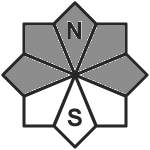
On the sunny side, the snow cover has settled far up and may have hardened in the morning.
Tendency
The problem of old snow remains at altitude.
Danger level
Avalanche Problem
Gliding snow
Avoid terrain under sliding snow cracks
The avalanche danger is low. The main problem is the sliding snow on slopes with exposures from east to south to west. Small sliding snow avalanches can occur spontaneously up to the summits.
Slab avalanches in old snow can only be triggered very rarely on very steep north-facing slopes above 2400 metres.
Snowpack
The snow surface is often loose and angular on the shaded side. Edgy, weak layers within the snowpack can only be seen at altitude.
On the sunny side, the snow cover has settled a long way up and may have hardened in the morning.
Tendency
Little change.
Danger level
2200m
Avalanche Problem
Wind slab
2200m
Little snow, small drift snow problem
The avalanche danger is low, the main danger is drift snow.
Above 2200 m, small slab avalanches can be triggered in a few places in west, north and east exposures.
Snowpack
The snow surface is wind-treated. In the upper part of the snow cover, overblown fresh snow can form a weak layer. Overall, there is still little snow.
Tendency
Little change.
Danger level
Avalanche Problem
Gliding snow
Predominantly low avalanche danger
Avalanche danger is low. In extremely steep terrain, small avalanches can be triggered by winter sports enthusiasts. Apart from being buried in snow masses, the risks of being swept along and forced to fall also require caution. Only naturally triggered slides and small-to-medium sized glide-snow avalanches are possible.
Snowpack
A few centimetres of fresh fallen snow are expected, to be deposited up to high altitudes on top of a thoroughly wet, well settled old snowpack surface. The most recent small snowdrift accumulations in ridgeline terrain have stabilized. On steep, grass-covered slopes, glide cracks and small glide-snowslides continue to be observed.
Tendency
Tuesday is expected to be quite sunny and mild. No significant change in the avalanche situation is anticipated.
Danger level
2000m
Avalanche Problem
Gliding snow
2000m
Persistent weak layer
2000m
Some of the obstacles are only lightly covered with snow, note the risk of falling and injury!
The avalanche risk is low. At medium altitudes, sliding snow is the main problem. On very steep, smooth ground, for example on meadows, in forest aisles and on rock slabs, individual small sliding snow avalanches can detach themselves. There is a particular danger where sliding snow cracks have already opened and the slopes have not yet unloaded.
At higher altitudes, isolated weak layers in old snow can be problematic. Slab avalanches can be triggered in particular with large additional loads, especially on very steep, shady slopes at the transition from little to much snow. Avalanches usually remain small, but the risk of falling must be taken into account.
Snowpack
With colder temperatures, the moist snow cover freezes and solidifies at medium altitudes. Some fresh snow covers a compact layer of old snow there. At higher altitudes, well-set powder snow dominates. Here, layers of angular crystals have been preserved in places, especially on shady slopes and in hollows. The ground is not frozen and the snowpack base is often wet.
Tendency
The avalanche danger is expected to remain low for the next few days.