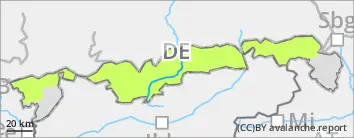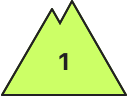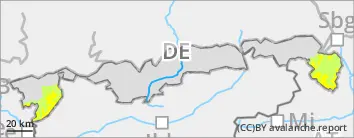
Danger level
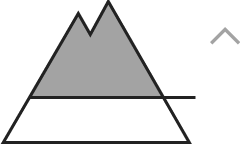
 | 2000m |
|  |
|  |
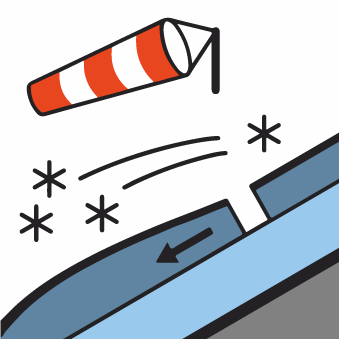

In particular at high altitudes limited-scope snowdrifts prone to triggering.
Avalanche danger above 2000m is moderate, below that altitude danger is low. Snowdrifts are the main problem which can be triggered as slab avalanches by minimum additional loading. Avalanches tend to be small, medium-sized releases are possible in areas with large quantities of new snow. Avalanche prone locations are found in steep N/E-facing ridgeline terrain as well as in wind-loaded gullies and bowls. Frequency and size increase with ascending altitude. On very steep slopes with sufficient snow over smooth ground small glide-snow avalanches are possible, primarily in the Allgäu.
Snowpack
5cm to 15cm of new fallen snow -- at high altitudes in the Berchtesgaden Alps in places up to about 20 cm - and wind have generated small-scale snowdrifts. In some places layers are embedded in the snowdrifts that are prone to triggering. On shady side slopes above 2000m the snowdrifts were in addition deposited atop faceted (expansively metamorphosed) crystals and are prone to triggering. Whereas at intermediate altitudes the snowdrifts have bonded well with the moist old snowpack surface. Here, the snowpack is moist down to deeply embedded layers and wet at the ground.
Tendency
Avalanche danger decreases slowly.