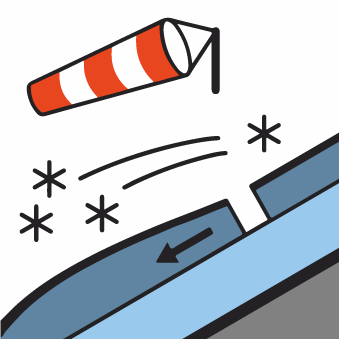
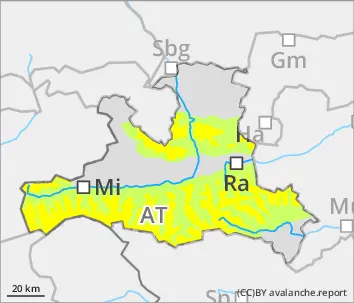
Small danger zones due to freshly generated snowdrift accumulations
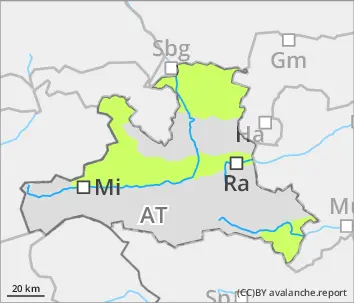
Avalanche danger is low. During the course of the day, fresh snowdrift accumulations will accumulate, these can be triggered even by one sole skier and release a small avalanche. Danger zones occur near ridgelines, esp. in steep shady terrain. Caution: danger of taking a fall.
Snowpack
On steep shady slopes above 2000m up to 15cm of fresh fallen snow lies deposited atop an expansively metamorphosed snowpack. In transitions from old to fresh fallen snow and inside the snowdrift masses, weak layers can form, the drifts form the slab. On sunny slopes and at lower altitudes the bonding of fresh snow to old snow is generally good, weak layers occur only inside the drifted masses. Weak layer in the lowermost part of the snowpack are no longer likely to trigger.
Tendency
Snowdrift accumulations will remain prone to triggering
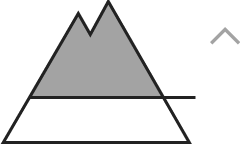
Avalanche danger above 2000m is moderate, below that altitude danger is low. Fresh snowdrift accumulations are already triggerable even by minimum additional loading, if there is sufficient snowfall medium-sized avalanches are possible. Danger zones will increase in frequency as the day progresses, occur esp. in very shady gullies and bowls distant from ridgelines on NW/N/E facing slopes. Avalanches in the old snow above 2200m are isolated, possible only in extremely steep terrain on north-facing slopes. In isolated cases small to medium sized glide-snow avalanches are possible.
Snowpack
Steep shady slopes above 2000m: up to 30 cm of fresh snow lies deposited on a metamorphosed surface. In transitions from old to fresh fallen snow and inside the snowdrift accumulations, weak layers can be generated. On sunny slopes and at lower altitudes, the bonding of fresh fallen snow to the old snowpack is generally good, weak layers are found only inside the newly generated drifts. Weak layers in the lowermost part of the snowpack are no longer likely to trigger.
Tendency
Snowdrift accumulations remain prone to triggering