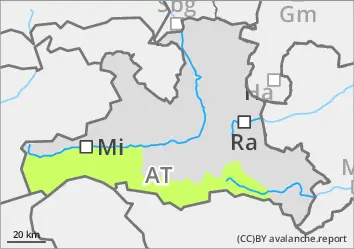
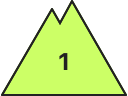
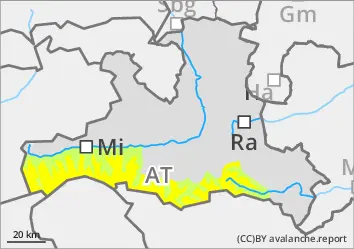
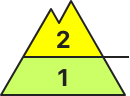
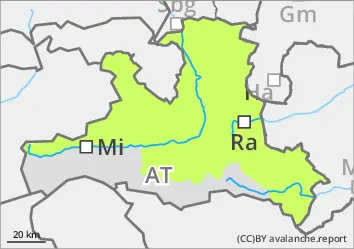
The avalanche danger increases from low to moderate during the daytime changes above 2500 metres.
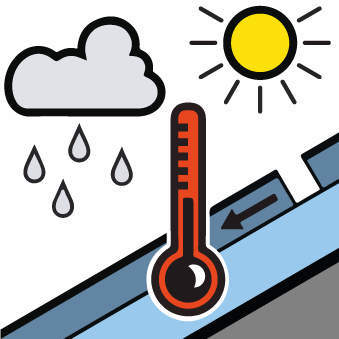
In a few places in the terrain, wet avalanches can occur spontaneously or be triggered by winter sports. Avalanches usually remain small, but can occasionally tear through the wet snow to the ground and reach medium size.
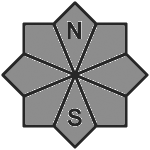
Above around 2500 m, there are isolated avalanche prone locations in the extended northern sector where medium-sized slab avalanches can be triggered in persistent weak layers. Take care on the steep transitions from little to more snow.
Snowpack
The snowpack can outgoing longwave radiation overnight. A melt-freeze crust forms, which softens during the day. A few centimetres of new fallen snow can be found above around 2800 metres. The snowpack below consists of compact snow that is characterised by rain up to high altitudes. On shady slopes above around 2500 metres, there are still weak layers of angular shapes and deep rime in the old snowpack close to the ground.
Tendency
Slight daytime changes after a clear, relatively cold night.
Danger level
Only a little snow left.
The avalanche risk is low. As the sun shines, the propensity to trigger wet avalanches increases slightly. This is particularly the case where there is still a lot of snow, i.e. mainly on very steep shady slopes at high altitudes and in some cases on eastern and western slopes. The avalanches usually remain small, but can tear through to the ground in wet snow and occasionally reach medium size.
Snowpack
The snowpack can radiate well overnight, only in Lungau is outgoing longwave radiation limited by clouds for longer. A stable melt-freeze crust forms over a wide area, which softens during the day. The snowpack underneath consists of compact snow characterised by rain. On shady slopes from around 2500 metres, there are weak layers of deep rime in the old snowpack close to the ground. The snowpack, if still present at all, is moist to wet up to high altitudes.
Tendency
The risk of avalanches continues to decrease as the glacier thins out.