The avalanche danger increases from low to moderate during the daytime changes below 2800 metres.
In a few places in the terrain, wet avalanches can be triggered by winter sports. This is particularly the case in very steep terrain below around 2800 m, where there is still a lot of snow. In wet snow, avalanches can tear through to the ground, reach medium size and, if the terrain is unfavourable, advance into the green.
Above around 2400 m, there are isolated avalanche prone locations in the extended northern sector where slab avalanches can be triggered in persistent weak layers. Take care at the steep transitions from little to more snow.
Snowpack
The melt-freeze crust in the morning slowly softens during the day. The snowpack underneath consists of compact snow characterised by rain up to high altitudes. On shady slopes above around 2400 metres, there are still weak layers of angular forms and deep rime in the old snowpack close to the ground. Low altitudes and sunny slopes at medium altitudes are snowed out.
Tendency
More clouds in the following two nights - wet snow problem sets in earlier. Clear nights again towards the end of the week.
Danger level
Avalanche Problem
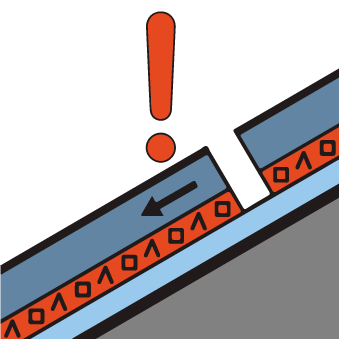
Gliding snow
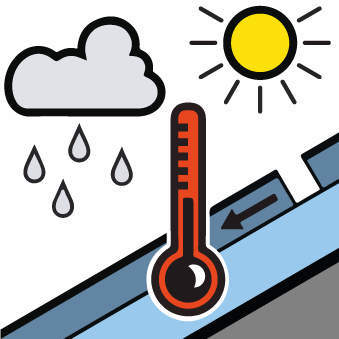
Wet snow
There will be low danger of avalanches
The old snow cover is mostly well transformed, cohesive and stable. The danger of wet snow avalanches will be relatively low. Some Avalanches may occur as the weather warms up during the day.
Snowpack
dp.10: springtime scenario
There will be some cloud overnight, so the snowpack may be wetter in the morning. During the day, the snow will become even heavier and melt. The zero isotherm will be around 2800 m above altitudes.
The snow is already quite dry in the high alpine regions. Snow is relatively scarce for this time of year.
Tendency
On Tuesday, the chance of local precipitation will increase, with a high snowfall level initially.
Danger level
Avalanche Problem
Wet snow
Low avalanche danger, watch out for wet snow.
The avalanche risk is low and increases slightly as the day warms up. Wet avalanches can only occasionally be triggered by winter sports. This is in particular where there is still a lot of snow, i.e. mainly on very steep shady slopes at high altitudes and in some cases on eastern and western slopes. The avalanches usually remain small, but can tear through to the ground in wet snow, occasionally reach medium size and, if the terrain is unfavourable, advance into the green.
Snowpack
The morning melt-freeze crust slowly softens during the day. The snowpack underneath consists of compact snow characterised by rain. On shady slopes from around 2400 metres, there are weak layers of deep rime in the old snowpack close to the ground. The snowpack is moist to wet up to high altitudes. Low altitudes and sunny slopes at medium altitudes are covered in snow.
Tendency
More clouds in the following two nights - wet snow problem sets in earlier. Clear nights again towards the end of the week.
Danger level
1500m
Avalanche Problem
Wet snow
1500m
The snow surface remains hard in the shade: be aware of the risk of falling!
The avalanche risk is low. It increases slightly during the daytime changes. Where there is still snow, wet snow can become problematic as the day warms up, especially in the sun. On steep slopes with a smooth surface, such as on meadow slopes or rock slabs, wet gliding avalanches can occasionally occur. In extremely steep terrain, wet loose snow avalanches can detach themselves. Avalanches usually remain small.
Snowpack
Overnight outgoing longwave radiation causes the snow surface to freeze solid. During the day, it softens again quickly in the sun and remains hard in the shade at higher altitudes. Up to high altitudes, the snowpack consists mainly of snowmelt. On north-facing slopes at higher altitudes, there are still dry layers of faceted crystals deep in the snowpack in snow-rich areas. There is little snow below 1500 metres. The south-facing slopes are bare right up to the higher altitudes.
Tendency
Avalanche danger remains low.
Danger level
2000m
Avalanche Problem
Wet snow
2000m
Slight increase in avalanche danger during the daytime changes.
The avalanche danger is assessed as low. Small wet slides cannot be ruled out from extremely steep terrain that has not yet been unloaded. These can detach themselves or be triggered by a small additional load from people and are usually small.
Snowpack
In higher areas, there are large crystals in the lower snow layering in some places, which act as a possible weak layer. Otherwise, the snowpack is settled and, depending on altitudes and aspect, soft to hard. The snow cover is rapidly thinning out.
Tendency
The avalanche warning service ends the 2025/26 season and wishes you an accident-free summer!