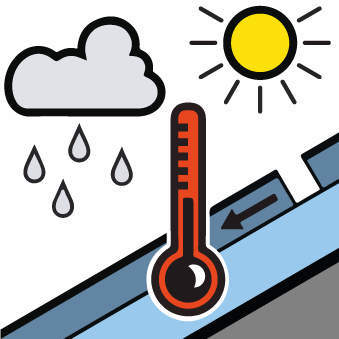
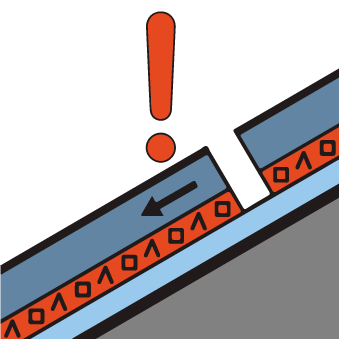
The avalanche danger is subject to daytime changes. Below 2400 m, it is initially low and increases to moderate in the morning. Wet loose snow avalanches can occur spontaneously with strong incoming radiation or be triggered by winter sports and reach medium size. Wet slab avalanches are possible where there is still a lot of snow, i.e. mainly on shady slopes at high altitudes and partly on eastern and western slopes. If the terrain is unfavourable, avalanches can also penetrate into green areas.
Snowpack
After a clear night, the melt-freeze crust is widespread and softens and loses firmness in the morning. The snowpack underneath consists of compact snow characterised by rain. On shady slopes from around 2400 metres, there are weak layers of deep rime in the old snowpack near the ground. The snowpack is moist to wet up to high altitudes. Low altitudes and sunny slopes at medium altitudes are mostly covered in snow.
Tendency
No significant change on Friday. Note the daytime changes in avalanche danger.
EARLIER Danger level
2400m
Avalanche Problem
Persistent weak layer
2400m
LATER Danger level
2800m
Avalanche Problem
Wet snow
2800m
Persistent weak layer
2400m
Daytime decreasing firmness with solar radiation
The avalanche risk is initially low below around 2400 m and increases to moderate in the morning. Spontaneous or artificially triggered wet loose snow avalanches are possible in a few places, in particular from very steep terrain below around 2800 m where there is still a lot of snow. In wet snow, avalanches can tear through to the ground, reach medium size and, if the terrain is unfavourable, advance into the green.
Above around 2400 m, there are still individual avalanche prone locations in the west, north and east aspects, as well as in the southern sector in the high Alps, where slab avalanches can be triggered in persistent weak layers. Take care on the steep transitions from little to lots of snow.
Snowpack
After a clear night, the melt-freeze crust is widespread and, depending on the exposure, softens in the morning and then loses firmness. In shady high altitudes, the 5 to 15 cm of new fallen snow from the beginning of the week is well settled and often still soft. The snowpack below consists of compact snow characterised by rain up to high altitudes. On shady slopes from around 2400 metres, there are still weak layers of angular forms and deep rime in the old snowpack close to the ground. Low altitudes and sunny slopes at medium altitudes are mostly covered in snow.
Tendency
No significant change on Friday. Note the daytime changes in avalanche danger.
EARLIER Danger level
LATER Danger level
Avalanche Problem
Wet snow
Wet snow
Increase in avalanche danger during the day changes
The avalanche risk is low in the morning hours and increases to moderate during the daytime changes. There is a danger of wet loose snow and slab avalanches from undischarged terrain as incoming radiation and warming increase. These can release themselves or be triggered by a small additional load from people and are usually small to medium-sized. Avalanches can reach areas that are already snowed out.
Snowpack
The snowpack can consolidate on a clear night. A surface crust forms on the surface. However, it quickly softens again with sunlight and warming. In shady, higher areas, there are large crystals in the lower snow layering in some places, which act as a possible weak layer. The deglaciation is progressing rapidly.
Tendency
High pressure will lead to bright and sunny mountain weather on Friday and Saturday. Temperatures at an altitude of 2000 metres will rise from -1 degrees on Friday morning to +6 degrees on Saturday afternoon. With the increasing warming and sunshine, the activity of wet snow avalanches will increase again.
EARLIER Danger level
Avalanche Problem
Gliding snow
LATER Danger level
1600m
Avalanche Problem
Wet snow
1600m
Wet snow
1600m
Danger of falling on hard frozen snow surfaces in the morning and all day in the shade.
The avalanche risk rises to moderate during the day changes above 1600 m, otherwise it is low. Wet snow is the problem. On a few steep slopes with smooth ground, such as meadow slopes or rock slabs, gliding avalanches can occur. In addition, as the snowpack softens, wet loose snow or slab avalanches can release themselves in extremely steep terrain or be triggered by individuals in very steep terrain. The avalanches reach medium size. The focus of avalanche activity is at midday and in the afternoon.
Snowpack
With outgoing longwave radiation overnight, a stable melt-freeze crust forms, which softens again during the day with warming and sunshine. Otherwise, the snowpack is soaked through to the higher elevations and consists mainly of snowmelt. Only on north-facing slopes at high altitudes can there still be isolated layers of faceted crystals deep in the snowpack. There is hardly any snow left on the north side below 1600 metres and on the entire south side.
Tendency
No change.
Danger level
Avalanche Problem
Wet snow
Small, spontaneous wet snow avalanches during the daytime changes
The avalanche risk is low. In very few places in the terrain, small wet slab avalanches or loose snow avalanches are possible due to additional load or spontaneously. This increases the risk of avalanches in the fall terrain.
Snowpack
There is still snow in shady locations or at high altitudes, but sunny steep terrain often no longer has a large area of continuous snowpack up to at least medium altitudes or has already tapped out. The snow surface is usually crusted in the morning and softens in the morning depending on the exposure. In the Nockberge mountains, however, the strong wind slows down the snowmaking process.
Tendency
No significant change on Friday. Note the daytime changes in avalanche danger.
Danger level
Avalanche Problem
Gliding snow
Wet snow
As the weather cools, the danger of Avalanches will be low
The old snow cover is mostly well transformed, cohesive and stable. The danger of wet snow avalanches has been reduced. Only a few avalanches will be possible.
A small amount of new snow has fallen in recent days, especially in the high alpine regions. Smaller snow accumulations have formed and may be potentially unstable.
Snowpack
dp.10: springtime scenario
If the weather clears, the snowpack will freeze more markedly at night. During the day, the snow will refreeze. During the day, the zero isotherm will rise to an altitude of around 2400 m above sea level.
In recent days, 5 to 10 cm of New fallen snow has fallen above about 2000 m. Precipitation has been patchy with showers.
Even in the high alpine regions, showers have been quite heavy.
The layers of snow are mostly well connected in the old snow cover. Individual weak layers of faceted snow crystals and abrasive grains occur more or less deep below the surface, and are more frequent on arable slopes above 1800 m.
Tendency
At the end of the week it will be quite clear and warmer every day.
The snowpack will be hard and frosty in the morning. It will become a little heavier again during the day. Avalanches of packed snow will be possible, especially in the high alpine regions where there is still some unprocessed snow.
Danger level
Avalanche Problem
Wet snow
The snow remains are hard and icy in the morning and all day in the shade. Beware of the risk of falling!
The avalanche risk is low. Wet snow can be problematic in rare cases and most likely from late morning. Occasionally, on very steep slopes with sufficient snow, wet loose snow avalanches or wet gliding avalanches on slippery ground can release themselves. Avalanches usually remain small.
Snowpack
At night, a stable melt-freeze crust forms, which softens again during the day in the sun. Otherwise, the remaining snowpack is patchy, soaked and consists entirely of snowmelt. The southern sides are largely free of snow except for individual snow fields in areas adjacent to the ridgeline, crest or summit.