Increasing danger of wet-snow avalanches as day unfolds
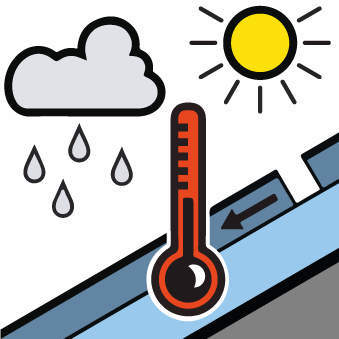
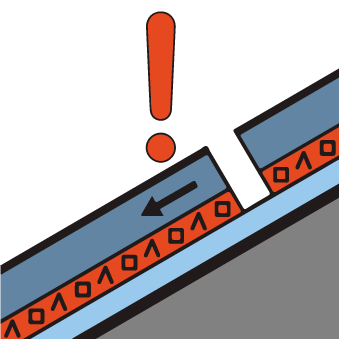
As a result of little fresh snowfall and wind, small snowdrift accumulations were generated locally at high altitudes. During the daytime hours, wet-snow avalanche danger will increase somewhat. Winter sports enthusiasts can trigger isolated wet-snow slab avalanches in very steep terrain, the danger spots are impossible to recognize.Due to daytime warming and solar radiation, danger of wet-snow avalanches increasees during daytime hours. Wet slab avalanches can in isolated cases be triggered by persons. Also some naturally triggered wet-snow avalanches can fracture and, in isolated cases, grow to large size. Whumpf noises and glide cracks in the old snow are indicators of danger. Backcountry tours and ascents to refuges should be launched early in the day and brought early to a close. Glide-snow avalanches can trigger in steep snowy terrain which has not yet discharged over smooth underground in all aspects.
Snowpack
In evening hours, outgoing radiation will be limited but become better during nocturnal house. Due to mild temperatures, the snowpack continues to become thoroughly wet. The snowpack is thoroughly wet, on north-facing slopes it is thoroughly wet below 2500m, in other aspects below 2800m. Lower altitudes are bare of snow. Sunny slopes are becoming bare of snow up to high altitudes. On shady high-altitude steep slopes there are unfavorable intermediate layers in the uppermost layer of the snowpack which in places can be triggered. A thick mid-level section of compact layers blankets a fundament of buried hoar and faceted crystals.
Tendency
Over the next few days, conditions will improve due to good nighttime outgoing longwave radiation beneath clear skies. During daytime hours, danger of wet-snow avalanches will increase.
Danger level
Avalanche Problem
Wet snow
Wet snow remains the main danger
The avalanche risk is moderate. Spontaneous wet snow avalanches are possible where there is still a lot of snow, i.e. on shady slopes at higher altitudes and partly on east and west-facing slopes. Avalanches can occur spontaneously or be triggered by winter sports. They remain medium-sized. Uncharacteristically long run-out lengths threaten bare terrain.
Fresh snowdrift accumulations have formed above 2200 metres. Mostly small avalanches can be triggered there in places by small additional loads; be aware of the risk of falling.
Snowpack
Reduced outgoing longwave radiation at night prevents the formation of a stable melt-freeze crust. The snowpack consists of compact snow characterised by rain, but on shady slopes from around 2200 metres there are still weak layers of deep frost in the old snowpack close to the ground. The snowpack is moist to wet up to high altitudes. Low and sunny slopes are snowed out.
Tendency
The outgoing longwave radiation at night is still limited and it remains cool. The danger of wet avalanches remains.
Danger level
Avalanche Problem
Wet snow
Wet-snow danger in very steep terrain where there is still lots of snow
As a result of little fresh snowfall and wind, small snowdrift accumulations were generated locally at high altitudes. During the daytime hours, wet-snow avalanche danger will increase somewhat. Winter sports enthusiasts can trigger isolated wet-snow slab avalanches in very steep terrain. Danger zones occur mostly in summit zones. Avalanches remain mostly medium-sized. Glide-snow avalanches can trigger in steep snowy terrain which has not yet discharged over smooth underground in all aspects.
Snowpack
In evening hours, outgoing radiation will be limited but become better during nocturnal house. Due to mild temperatures, the snowpack continues to become thoroughly wet. The snowpack is thoroughly wet up to summit zones in all aspects. Lower altitudes are bare of snow. Sunny slopes are becoming bare of snow up to high altitudes.
Tendency
Over the next few days, conditions will improve due to good nighttime outgoing longwave radiation beneath clear skies. During daytime hours, danger of wet-snow avalanches will increase.
Danger level
2600m
Avalanche Problem
Wet snow
2600m
Persistent weak layer
2400m
Naturally triggered avalanches are still possible
The avalanche risk is moderate. Spontaneous wet snow avalanches are possible in places. Steep areas between 2200 m and 2600 m, where there is still a lot of snow, are particularly at risk. Avalanches usually remain medium in size, they can tear through the wet snow to the ground, run uncharacteristically wide and reach into the green.
Above around 2400 m, in the steep terrain from west to north to east, there are individual avalanche prone locations in the dry persistent weak layer, high alpine also in the southern sector. Take care in the transitions from little to lots of snow. Fresh snowdrift accumulations have formed above 2200 metres. Mostly small avalanches can be triggered there in places by slight additional load, be aware of the risk of falling.
Snowpack
Reduced outgoing longwave radiation at night often prevents the formation of a load-bearing melt-freeze crust. The snowpack consists of compact snow that is characterised by rain up to high altitudes. However, softer layers are embedded, especially at higher altitudes, which allow fractures near the surface. On shady slopes from around 2400 metres, there are still weak layers of angular forms and deep rime in the old snowpack close to the ground. The snowpack is moist to wet up to high altitudes. Low and sunny slopes are snowed out.
Tendency
The outgoing longwave radiation at night is still limited and it remains cool. The danger of wet avalanches remains.
Danger level
1800m
Avalanche Problem
Wet snow
1800m
Gliding snow
Persistent weak layer
1800m
Rain thaw, possibility of triggering gliding avalanches.
The Old snow cover is mostly well connected and stable, with the exception of some shady areas above 1800 m.
In the event of a thaw with rain below 1800 m, there will be a slight increase in the probability of loose snow avalanches and gliding avalanches.
Snowpack
dp.10: springtime scenario
On a cloudy night, the surface of the snowpack will not freeze. Rain will make the snow wet.
Snow is already quite heavy in the high alpine regions.
In an old snow cover, the snow layers are mostly well connected. More or less deep below the surface, there are several weak layers of slush and discontinuous grains, which are more frequent on the axis slopes above 1800 m.
Tendency
Tuesday will be mostly cloudy, with only occasional sunshine. Showers or thunderstorms may develop in the afternoon.
Danger level
1600m
Avalanche Problem
Wet snow
1600m
Wet snow
1600m
There is still a lot of snow on the northern sides in some places.
The avalanche risk is moderate above 1600 metres. Wet snow is the problem. Gliding avalanches can occur on a few steep slopes with a smooth surface, such as meadow slopes or rock slabs. In addition, loose snow or slab avalanches can release themselves on extremely steep terrain or be triggered by individuals on very steep terrain. The avalanches are wet and reach medium size.
Snowpack
It may snow a little at higher altitudes. Occasionally, smaller snowdrift accumulations in areas adjacent to the ridgeline, crest or summit may be prone to triggering. The old snowpack is generally very moist to wet up to the higher elevations and consists mainly of snowmelt. Only on north-facing slopes can layers of faceted crystals still be present deep in the snowpack. The new fallen snow melts quickly on the apery ground on the southern slopes.
Tendency
No change in avalanche danger
Danger level
Avalanche Problem
Wet snow
Low avalanche danger!
The avalanche danger remains low. Only on steep slopes at higher altitudes with a sufficiently thick snowpack are individual, mostly small, rarely medium wet snow avalanches possible in all aspects.
Snowpack
The snowpack may firm somewhat on the surface as it cools. Otherwise it will be soaked or soaked through to the higher elevations and generally not very firm. There will be a few snow showers in the afternoon. Low and middle elevations will often be icy.
Tendency
No significant change in the avalanche situation in the coming days.
The publication of avalanche reports will be cancelled for the 2025/26 season.
Danger level
Avalanche Problem
Wet snow
Individual avalanche prone locations
The avalanche risk is low. Wet snow can be problematic in rare cases. Occasionally, on very to extremely steep slopes with sufficient snow, wet loose snow avalanches or wet gliding avalanches on slippery ground can release themselves. Avalanches usually remain small.
Snowpack
The remaining snowpack is widely patchy and completely soaked. The southern sides are largely free of snow except for individual snow fields in areas adjacent to the ridgeline, crest or summit.
Tendency
No change
Danger level
Generally low avalanche danger
The avalanche risk is low. There is generally very little snow left. Only isolated wet snow slides are to be expected. The risk of entrainment in the fall terrain outweighs the risk of burial.
Snowpack
The thin, consistently moist snowpack may consolidate a little due to the cooling. A thin layer of fresh snow is forming on the surface in places at high altitudes. There is only a little snow left and the sunny slopes are usually already snowed out.
Tendency
The changeable, slightly cooler mountain weather will continue on Tuesday. The avalanche risk remains low.
Danger level
Avalanche Problem
Wet snow
Low avalanche danger, but still some wet snow problems!
The avalanche risk is low. Nevertheless, spontaneous wet snow avalanches triggered by people can occur in a few places, in particular after being soaked by intermittent sunlight or rain showers. The avalanches usually remain small to medium-sized. Gliding avalanches are also possible in isolated cases.
Snowpack
The snowpack can consolidate a little as it cools down. However, it can become soaked and unstable again in places due to intermittent sunshine or rain showers. A thin layer of fresh snow will form on the surface in places at high altitudes. The snow can begin to glide on a smooth surface.
Tendency
The changeable, slightly cooler mountain weather will continue on Tuesday. The avalanche risk remains low.
Danger level
Avalanche Problem
Wet snow
Small, spontaneous wet snow avalanches are possible in snowy places
The avalanche risk is low. The last remnants of snow can spontaneously descend as small wet snow slides. This increases the risk of avalanches in the fall terrain.
Snowpack
There is still a little snow in places at altitude, but most of the terrain is already snowed out. The snow surface is soft from early in the morning.
Tendency
Slow reduction in avalanche danger due to melting of the remaining snow.
Danger level
Avalanche Problem
Wet snow
Small wet-snow slides possible
On extremely steep slopes, persons can in isolated cases trigger wet loose-snow slides where there is still sufficient snow on the ground. On steep snowy slopes of smooth ground which have not yet discharged, glide-snow avalanches can trigger in all aspects.
Snowpack
Low altitudes are bare of snow. On sunny slopes the ground is increasingly become bare of snow. Where there is a snowpack, it is thoroughly wet.
Tendency
Over the next few days, conditions will improve due to good nighttime outgoing longwave radiation beneath clear skies. During daytime hours, danger of wet-snow avalanches will increase.
As the weather cools down, the danger of wet snow avalanches generally decreases. The avalanche risk is predominantly low, sometimes moderate locally depending on the snow conditions. In the event of intermittent sunshine or rain showers at higher altitudes, individual spontaneous or person-triggered small to medium-sized wet snow avalanches are still possible from steep terrain that has not been discharged.
Snowpack
The snowpack may firm somewhat as it cools down. Otherwise it will be soaked or soaked through to the higher elevations and generally not very firm. There will be a few snow showers in the afternoon. Only on shady slopes at high altitudes can there still be isolated weak layers in the old snowpack. Low and middle elevations are often already bare.
Tendency
No significant change in the avalanche situation in the coming days.
The publication of avalanche reports will be cancelled for the 2025/26 season.