Naturally triggered avalanches possible from early in the morning
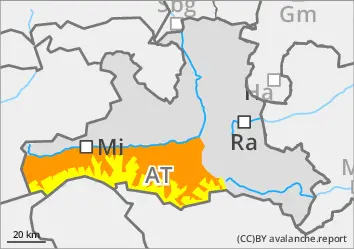
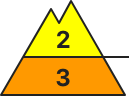
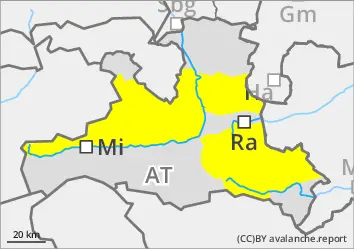
The avalanche risk is considerable below 3000 metres and moderate above that. Large spontaneous wet snow avalanches are possible. Particularly at risk are steep areas in the extended northern sector between 2200 m and 2600 m, terrain that has not yet been discharged on high east, west and south-facing slopes, and generally those aspects where there is still a lot of snow. In wet snow, avalanches can tear through to the ground, run untypically far and penetrate into the green.
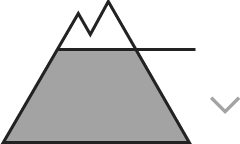
Above around 2400 m, in the steep terrain from west to north to east, there are individual avalanche prone locations in the dry persistent weak layer, high alpine also in the southern sector. Take care in the transitions from little to lots of snow. Above 2200m, fresh wind slab forms with the snowfall. Mostly small avalanches can be triggered there in places by slight additional load, be aware of the risk of falling.
Snowpack
Reduced outgoing longwave radiation at night prevents the formation of a stable melt-freeze crust. The snowpack consists of compact snow that is characterised by rain up to high altitudes, but softer layers are embedded, especially at higher altitudes, which enable near-surface fractures. On shady slopes from around 2400 metres, there are still weak layers of angular forms and deep rime in the old snowpack close to the ground. The snowpack is moist to wet up to high altitudes. Low and sunny slopes are snowed out.
Tendency
The outgoing longwave radiation at night is limited and it is slightly cooler. The danger of wet avalanches remains.
Danger level
Avalanche Problem
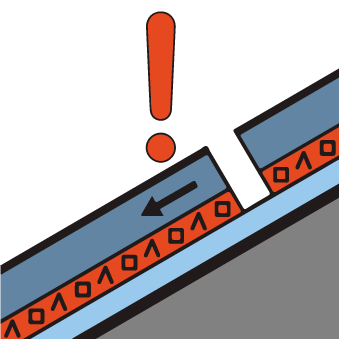
Wet snow
Persistent weak layer
2200m
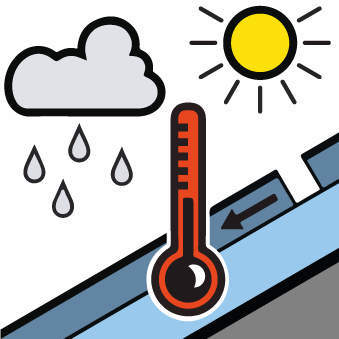
Reduced outgoing longwave radiation at night, soaking through rain during the day
The avalanche risk is moderate. Spontaneous wet snow avalanches are possible where there is still a lot of snow, i.e. on shady slopes at higher altitudes and on the remaining eastern and western slopes. Avalanches can occur spontaneously or be triggered by winter sports. They usually remain medium in size, but with the accumulation of wet snow and tearing through to weak layers close to the ground, large avalanches are conceivable in exceptional cases. Uncharacteristically long run-out lengths threaten open terrain.
Trigger points for dry old snow avalanches are only present in a few high-altitude locations in the extended northern sector. Above 2200m, fresh wind slab forms with the snowfall. Mostly small avalanches can be triggered there in places by slight additional load, be aware of the risk of falling.
Snowpack
Reduced outgoing longwave radiation at night prevents the formation of a stable melt-freeze crust. The snowpack consists of compact snow characterised by rain, but on shady slopes from around 2200 metres there are still weak layers of deep frost in the old snowpack close to the ground. The snowpack is moist to wet up to high altitudes. Low and sunny slopes are snowed out.
Tendency
The outgoing longwave radiation at night is limited and it is slightly cooler. The danger of wet avalanches remains.
Danger level
Avalanche Problem
Wet snow
Small, spontaneous wet snow avalanches are possible in snowy places
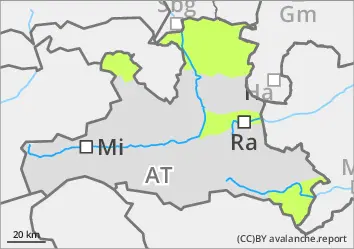
The avalanche risk is low. The last remnants of snow can spontaneously descend as small wet snow slides. This increases the risk of avalanches in the fall terrain.
Snowpack
There is still a little snow in places at altitude, but most of the terrain is already snowed out. The snow surface is soft from early in the morning.
Tendency
Slow reduction in avalanche danger due to melting of the remaining snow.