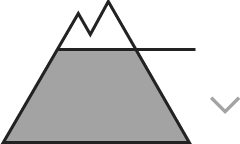
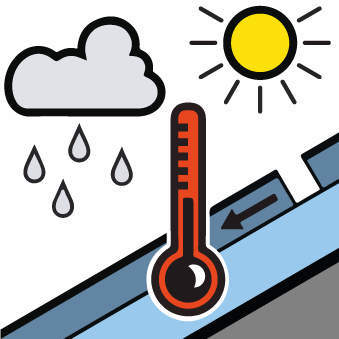
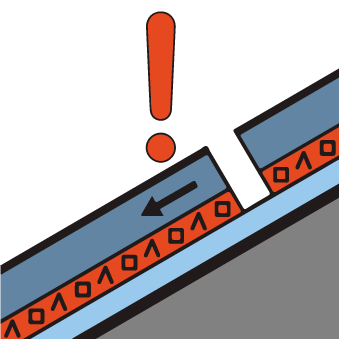
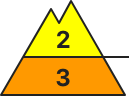
The avalanche risk is moderate in the morning and rises rapidly to level 3 "considerable" as the snowpack softens below around 2800 metres. Wet slab avalanches and loose snow avalanches are possible on slopes that have not yet been discharged in all aspects. The avalanches can occur spontaneously or be triggered by individuals. They usually remain medium in size, but can also become large in some places as wet snow accumulates and tears through the persistent weak layer.
In a few places above 2200 m, weak layers can also be disturbed directly in the old snow, especially on west, north and east-facing slopes, as well as south-facing slopes in the high Alps. Snow slabs in the persistent weak layer can be medium in size, and large if they break through into the floating snow near the ground. The avalanche prone locations are difficult to recognise.
Small, fresh pillows of wind drifted snow can be disturbed in high, blown-in gullies and generally at the transition from little to much snow, especially adjacent to ridgelines.
Snowpack
The outgoing longwave radiation at night is poor, only a thin melt cover forms locally, which softens quickly. Beneath a few centimetres of wind-treated new fallen snow lies well-settled snow from the last periods of precipitation, but softer layers are embedded, especially at altitude, which allow fractures near the surface. On shady slopes from around 2200 metres, there are still prone to triggering weak layers of angular shapes and deep rime in the old snowpack close to the ground. At medium altitudes, rain has soaked the snowpack and the moisture remains inside overnight. Low altitudes are often already snowed out.
Tendency
The wet snow problem remains.
EARLIER Danger level
2400m
Avalanche Problem
Wet snow
2400m
Persistent weak layer
2400m
LATER Danger level
2800m
Avalanche Problem
Wet snow
2800m
Persistent weak layer
2400m
Heightened wet-snow danger from early morning, at high altitudes old snow and small drifts
Danger of wet-snow avalanches is heightened even as of early morning, particularly on very steep north-facing slopes at 1800-2200m. As a result of daytime warming and solar radiation, avalanche danger quickly increases, in all aspects below 2400m, on on very steep sunny slopes up to high altitudes. Naturally triggered avalanches can be expected, avalanches can also be triggered by persons and grow to large size, also sweep along great amounts of wet snow in their plummet path and then extend to very long runout zones. In high alpine regions, small ridgeline snowdrift accumulations are still prone to triggering. In addition, winter sports enthusiasts can in places on high-altitude shady slopes trigger near-surface weak layers. Such danger zones are impossible to recognize. Atop the hardened snowpack surface, there is danger of being forced to take a fall on steep slopes.
Snowpack
Following reduced outgoing radiation and mild temperatures, the snowpack is hardly freezing at night. At altitudes of 1800-2200m the snowpack, even on north-facing slopes, is thoroughly wet and ground-level layers of rotten snow are prone to triggering already in early morning. In high-altitude, steep and shady terrain, there are unfavorable intermediate layers in the uppermost metre of the snowpack which in places are prone to triggering. A thick mid-section of compact layers blankets the deep hoar and faceted crystals at the base of the snowpack.
Tendency
As a result of light foehn conditions and instable air, little change is anticipated.
EARLIER Danger level
2200m
Avalanche Problem
Wet snow
2200m
Persistent weak layer
2200m
LATER Danger level
Avalanche Problem
Wet snow
Persistent weak layer
2200m
Wet snow activates the persistent weak layer problem
The avalanche risk is moderate. Wet loose snow and slab avalanches are possible quickly on slopes that have not yet been discharged in all aspects and altitudes. The avalanches can occur spontaneously or be triggered by winter sports. They usually remain medium in size, but with the accumulation of wet snow and tearing through to weak layers close to the ground, large avalanches are conceivable in exceptional cases.
In a few places above 2200 m in the extended northern sector, weak layers can still be disturbed directly in the persistent weak layer by individuals, and the snow slabs can reach medium size.
Small, fresh pillows of wind drifted snow can be disturbed in high, blown-in gullies and generally at the transition from little to much snow, especially adjacent to ridgelines.
Snowpack
The outgoing longwave radiation at night is poor, only a thin melt cover forms locally, which softens quickly. There is well-settled snow from the last periods of precipitation underneath some new or wind slab snow, but softer layers are embedded, especially at higher altitudes, which enable near-surface fractures. On shady slopes from around 2200 metres, there are still prone to triggering weak layers of angular forms and deep rime in the old snowpack close to the ground. At medium altitudes, rain has soaked the snowpack and the moisture remains inside overnight. Low altitudes are often already snowed out.
Tendency
The wet snow problem remains.
Danger level
Avalanche Problem
Wet snow
Wind slab
2200m
Small-scale wind slab prone to triggering at the highest elevations
The avalanche risk is moderate. Wet snow is the main problem. Wet loose snow avalanches detach themselves from the extremely steep terrain. The centre of gravity of loose snow avalanches is increasingly shifting to the northern exposures and high altitudes. Wet gliding avalanches descend at medium altitudes on steep slopes with smooth ground. Wet avalanches reach medium size.
Above 2200 m, fresh wind slabs can be a problem. Dry slab avalanches can be triggered by small additional loads on steep slopes with aspects from north to east to south as well as in gullies and bowls. Dry avalanches usually remain small and the risk of falling must be taken into account.
Snowpack
Rain and an overcast sky and sun at night ensure that the remaining snowpack continues to soak. It is increasingly losing its stratification at medium altitudes. A few centimetres of new fallen snow have fallen at high altitudes. The new fallen snow was transported by winds from the west. Fresh snowdrift accumulations prone to triggering have formed on a small scale. In places, layers of faceted crystals have been preserved deeper in the snowpack at high altitudes exposed to the north.
Tendency
The avalanche danger hardly changes.
Danger level
Avalanche Problem
Wet snow
Rainfall will increase danger of wet-snow avalanches
Following the rainfall yesterday and a night of partially cloudy skies, the snowpack can hardly freeze. The danger of wet-snow avalanches is heightened already in early morning and rises further due to daytime warming and solar radiation within the specified danger level over the course of the morning. Naturally triggered avalanches can be expected, most remain medium-sized. On steep, smooth-ground slopes with lots of snow which have not yet discharged, glide-snow avalanches can trigger in all aspects.
Snowpack
Due to reduced nocturnal longwave outgoing radiation and ongoing mild temperatures, the snowpack does not freeze at night. At all altitudes the snowpack is thoroughly wet.
Tendency
As a result of light foehn conditions and instable air, little change is anticipated. The slopes will continue to become bare of snow.
EARLIER Danger level
2000m
Avalanche Problem
Wind slab
2000m
Persistent weak layer
2000m
LATER Danger level
2000m
Avalanche Problem
Wet snow
2000m
Wind slab
2000m
Persistent weak layer
2000m
Fresh wind slab above 2000 m, wet snow problem at medium altitudes!
The avalanche risk is moderate at higher altitudes from early on. Fresh pillows of wind drifted snow can be triggered as small slab avalanches in some places on ridgelines and summits. In extremely steep, shady areas, avalanches can also tear through persistent weak layers and reach medium size. Below 2000 metres, the avalanche risk increases to moderate during the day as the temperature rises. Due to the rain or wet snowfall from the previous day, slopes that have not yet been discharged can sometimes spontaneously break off and reach medium size.
Snowpack
Outgoing longwave radiation at night is limited. The recent precipitation at a high snowfall level has brought additional moisture into the snowpack up to medium altitudes. The rise in temperature leads to additional moistening of the snowpack during the day. Some of the wind slab is still poorly bonded to the old snowpack in the ridgeline and summit areas. As it warms up, the snowpack settles during the day. In very shady areas above 2000 m, the snowpack still has cold reserves and some weak layers in the persistent weak layer are still prone to triggering.
Tendency
The wind slab problem will decrease, but the wet snow problem will persist on Sunday.
On Sunday, the sky will be mostly partly cloudy and it will remain very mild. From Monday, dense clouds and sunshine will alternate frequently and it will remain dry in most regions.
EARLIER Danger level
2000m
Avalanche Problem
Wet snow
2000m
Persistent weak layer
2200m
LATER Danger level
Avalanche Problem
Wet snow
Persistent weak layer
2200m
Beware of wet snow avalanches from undischarged terrain!
The avalanche risk is initially low, but soon increases to moderate. From terrain that has not yet been discharged, spontaneous or moist to wet medium loose snow or slab avalanches triggered by additional load are possible in all aspects. In the shady, very high elevations, slab avalanches can still be triggered occasionally in very steep terrain due to the old snow problem. Small fresh snowdrift accumulations can still occur in the ridgelines and summits.
Snowpack
The recent precipitation at a high snowfall level has brought additional moisture into the snowpack up to high altitudes. There may only be some fresh wind slab snow at higher elevations. Due to the lack of outgoing longwave radiation, the snow surface will only firm up very little overnight. The old snowpack is moist to wet up to high altitudes. However, weak layers may still be present in the old snowpack, which is not yet moist, at higher elevations and on shady slopes.
Tendency
No significant change in the avalanche situation.
EARLIER Danger level
2200m
Avalanche Problem
Wet snow
2200m
Persistent weak layer
2200m
LATER Danger level
Avalanche Problem
Wet snow
Persistent weak layer
2200m
Avalanche danger increases to moderate (level 2) during the day!
The avalanche risk is initially low and increases to moderate during the daytime changes. From terrain that has not yet been discharged, spontaneous or wet to moist medium loose snow or slab avalanches triggered by additional loads are possible in all aspects. In extremely steep, shady areas above 2200 m, small to medium-sized slab avalanches can still be triggered in persistent weak layers. Small fresh snowdrift accumulations can still occur in the ridgelines and summits.
Snowpack
Outgoing longwave radiation at night is limited. The recent precipitation at a high snowfall level has brought additional moisture into the snowpack up to high altitudes. The rise in temperature leads to additional moistening of the snowpack at all altitudes. The wind slab settles quickly as it warms up. In very shady areas above 2200 metres, the snowpack still has reserves of cold and in some cases persistent weak layers in the old snow that are prone to triggering.
Tendency
On Sunday, the sky will be mostly cloudy and it will remain very mild. The wet snow problem will persist. From Monday, dense clouds and sunshine will alternate frequently and it will remain dry in most regions.
EARLIER Danger level
Avalanche Problem
Wet snow
LATER Danger level
Avalanche Problem
Wet snow
Pay attention to the wet snow problem!
The avalanche risk is initially low, but soon increases to moderate. From terrain that has not yet been discharged, spontaneous or moist to wet medium loose snow or slab avalanches triggered by additional loads are possible in all aspects. Small fresh snowdrift accumulations could still occur in the highest ridgelines and summits.
Snowpack
The recent precipitation at a high snowfall level has brought additional moisture into the snowpack up to high altitudes. There may only be some fresh wind slab snow at higher elevations. Due to the lack of outgoing longwave radiation, the snow surface will only firm up very little overnight. The old snowpack is moist to wet up to high altitudes.
Tendency
No significant change in the avalanche situation.
Danger level
Avalanche Problem
Wet snow
Low avalanche danger, occasional small wet snow slides!
The avalanche risk is low. As the day warms up, small wet snow slides may occur occasionally, especially from multiple starting zones that have not yet been fully discharged. The risk of being swept away and falling should be taken into account.
Snowpack
The thin snowpack will become damp in all areas during the day changes and lose firmness. Only in very shady areas above 2000 metres does the snowpack still have small cold reserves and isolated weak layers in the persistent weak layer.
In general, there is very little snow and the depletion is progressing.
Tendency
On Sunday, the sky will be mostly cloudy and it will remain very mild. The wet snow problem will persist. From Monday, dense clouds and sunshine will alternate frequently, but it will remain dry.
Danger level
Avalanche Problem
Wet snow
Increasing deaperisation
The avalanche risk is low. Wet snow is the problem. In extremely steep terrain, occasional wet loose snow avalanches and wet gliding avalanches on steep slopes with smooth ground can release themselves. Avalanche activity is limited to terrain on shady slopes. Wet avalanches usually remain small.
Snowpack
Rain and an overcast sky at night ensure further soaking of the snowpack. The remaining snowpack increasingly loses its stratification. The southern sides are largely snowed out.
Tendency
No change in avalanche danger.
Danger level
Avalanche Problem
Wet snow
Small wet snow avalanches in snowy places
The avalanche risk is low. Small, spontaneous wet snow slides can occur from slopes that have not yet been discharged in all aspects. Wet snow slides triggered by winter sports increase the risk of entrainment in the fall terrain.
Snowpack
The outgoing longwave radiation at night is poor and the snow cover remains largely moistened to isothermal due to the warmth. In places, you can still find small pillows of wind drifted snow adjacent to ridgelines, but most of the terrain is already tapped out.
Tendency
Slow reduction in avalanche danger due to melting of the remaining snow.
Danger level
1800m
Avalanche Problem
Wet snow
1800m
Persistent weak layer
1800m
Some wet snow avalanche cannot be ruled out
The snowpack is mostly well connected and generally stable. During the day, wet snow avalanches will be possible in a few places.
Weak layers in old snow deeper in the snowpack also pose a minor danger. These weak layers are more common in the axis above the forest. In particular, a small to medium avalanche can be triggered by a large load exceeding the load-bearing capacity of these layers.
Snowpack
dp.10: springtime scenario
The snowpack will partly freeze overnight, but less than in recent days due to a cloudier night. During the day, the snow will become heavier and may become unstable in places.
In the old snow cover, the snow layers are mostly well connected. More or less deep below the surface, there are several weak layers of slush and discontinuous grains, which are more frequent on slopes at low tide.
Tendency
Sunday will be clearer and warmer again. Isolated avalanches of southern snow are possible in the mid-day and afternoon.
Danger level
Avalanche Problem
Wet snow
Small wet-snow slides possible
Due to solar radiation, wet loose-snow avalanches can trigger naturally, particularly on extremely steep slopes. Avalanches will be mostly small-sized.
Snowpack
South-facing slopes are frequently bare of snow. Where there’s a snowpack on the ground, it’s thoroughly wet.