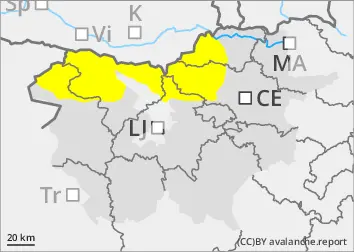
New fallen snow and blowing snow are the main dangers. The snowpack stability is reduced, especially on slopes and in ravines, where the snow thickness is greater due to snow accumulations.
In addition to new fallen snow, weak layers in the snowpack deeper in the snowpack can be a local problem. These weak layers are more common in the axis above the forest. In particular, a medium-sized avalanche can be triggered by a large load exceeding the load-bearing capacity of these layers.
Snowpack
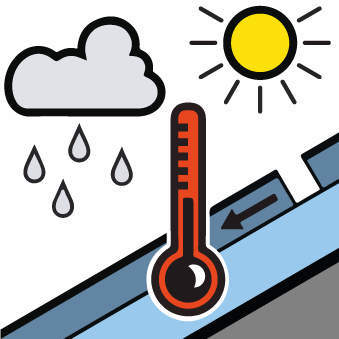
dp.4: cold following warm / warm following cold
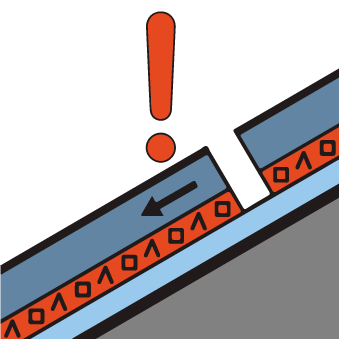
The last snowfall was accompanied by a strong northerly wind, which blew the snow down to the old base in many places and created snowdrift accumulations in the leeward areas. In some places, these are on top of a layer of Graupel, which is a potentially dangerous Weak layer. Locally, the layers of Graupel are 5-10 cm thick, possibly more.
In the old snow cover, the snow layers are mostly well interconnected. Deep below the surface, several weak layers of shreds and sheared grains occur, which are more frequent on axial slopes.
Tendency
The avalanche danger will remain similar, with a few more spontaneously triggered wet snow avalanches expected during the middle of the day and afternoon on Monday.
Tuesday will be sunny and warm.
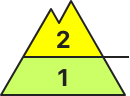
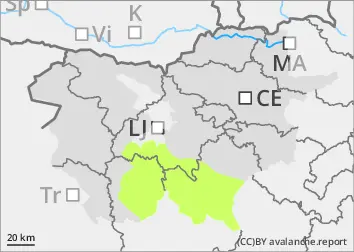
Danger level
treeline
Avalanche Problem
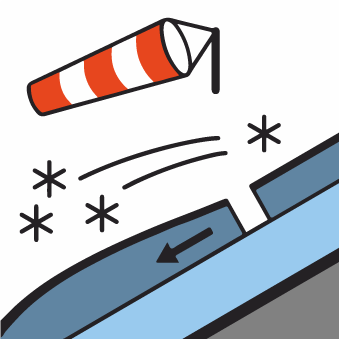
Wind slab
Treeline
Blown snow
The main danger is from blowing snow. Snowpack stability is reduced, especially on slopes and in ravines, where the snow thickness is greater due to snow drifts.
Snowpack
dp.4: cold following warm / warm following cold
The last snowfall brought strong northerly winds, which blew the snow above the snow line down to the old snow base or to the ground in many places, and built up snowdrift accumulations on the leeward slopes. In some places, these have built up on a layer of parachuted graupel, which is a potentially dangerous Weak layer. Locally, the layers of Graupel are 5-10 cm thick, possibly more.