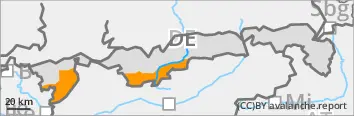
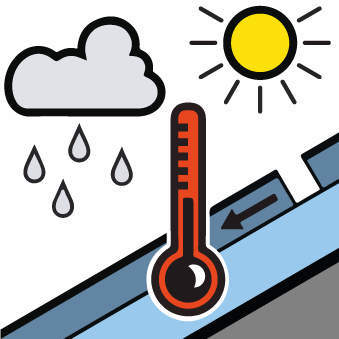
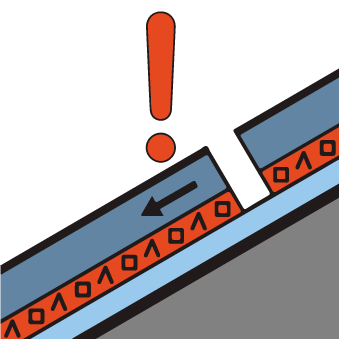
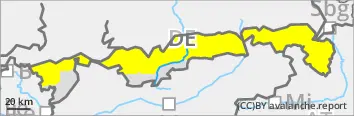
The avalanche risk is considerable. Wet snow is the main problem. In all aspects, wet loose snow and slab avalanches can detach themselves, especially on extremely steep terrain. Gliding avalanches can occur on steep slopes with smooth ground. Avalanche run-out areas must be recognised and avoided. Exposed traffic and hiking trails can be hit.
Attention must also be paid to persistent weak layers at high altitudes. On very steep slopes with aspects from north-west to north to east, dry slab avalanches can be triggered by low additional loads. They reach medium size.
Snowpack
Overnight, the soaking of the snowpack is also progressing on the north side. The new and drift snow packs of the past two weeks often contain grey peel deposits and at higher elevations, especially on shady slopes, are partly on thin weak layers in the area of crusts. The snowpack base is still dry at high altitudes and often consists of faceted crystals, further down it is usually moist or wet.
Tendency
Transition to spring conditions with a daily increase in avalanche danger.
Danger level
Avalanche Problem
Wet snow
Persistent weak layer
2000m
Avalanches reach small and medium size.
The avalanche risk is moderate. Wet snow is the main problem. In all aspects, wet loose snow and slab avalanches can detach themselves, especially on extremely steep terrain. Gliding avalanches can occur on steep slopes with smooth ground. Avalanche run-out areas must be recognised and avoided.
In addition, pay attention to persistent weak layers at high altitudes. On very steep slopes with aspects from north-west to north to east, dry slab avalanches can be triggered by low additional loads. They reach medium size.
Snowpack
Overnight, the soaking of the snowpack is also progressing on the north side. The new and drift snow packs of the past two weeks often contain grey peel deposits and at higher elevations, especially on shady slopes, are partly on thin weak layers in the area of crusts. The snowpack base is still dry at high altitudes and often consists of faceted crystals, further down it is usually moist or wet.
Tendency
Transition to spring conditions with a daily increase in avalanche danger. The south-facing slopes are thawing out again at medium altitudes.