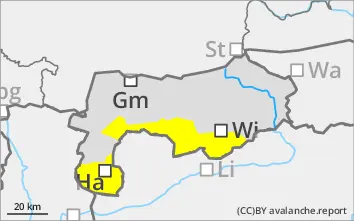
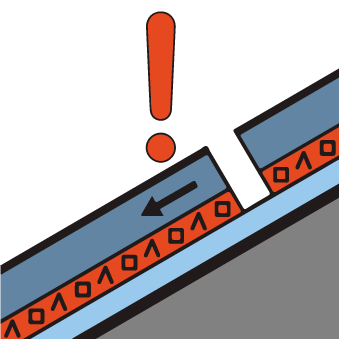
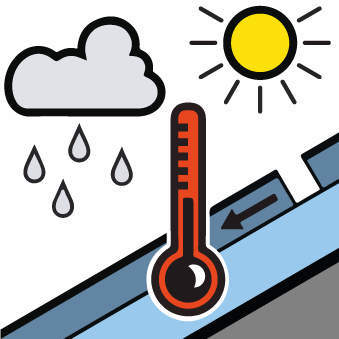
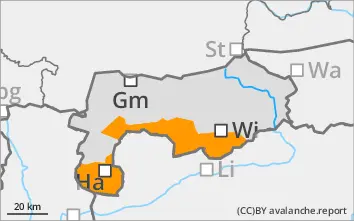
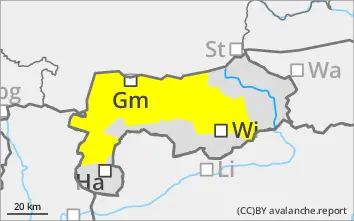
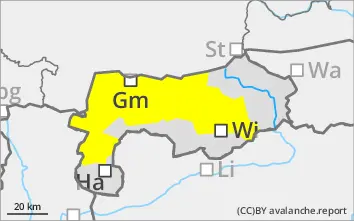
The avalanche risk is moderate and increases to considerable during the day due to rapidly rising temperatures and plenty of sunshine. Spontaneous medium-sized, sometimes large wet snow avalanches and individual gliding avalanches on steep, slippery ground are to be expected on sunny slopes.
Older snowdrift accumulations can still be triggered in isolated cases at higher elevations with large additional loads. Steep slopes, filled-in steep bowls and gullies must be taken into account in this regard.
Snowpack
The snowpack has settled, but quickly becomes moist on the surface, soft and loses firmness due to the sunshine and mild temperatures during the day. Only at higher altitudes and in isolated areas is there older, covered wind slab that is sometimes too disruptive.
In very high northern areas, the snow base, fundament is occasionally weakened (persistent weak layer problem).
Tendency
Cooling stabilises the moist snowpack. No daytime changes.
EARLIER Danger level
Avalanche Problem
Wet snow
LATER Danger level
Avalanche Problem
Wet snow
Note the daytime changes!
The avalanche risk is moderate and increases slightly during the daytime changes due to the rapidly rising temperatures and sunshine, but remains moderate. On the sunny slopes, small to medium spontaneous wet snow avalanches are to be expected in steep terrain and individual gliding avalanches on steep, smooth ground.
Older snowdrift accumulations can still be triggered in isolated cases at higher elevations with large additional loads in steep terrain.
Snowpack
The snowpack has settled, but quickly becomes moist on the surface, soft and loses firmness due to the sunshine and mild temperatures during the day. Only at higher elevations and in isolated cases is there older, covered wind slab that is sometimes too disruptive.
Tendency
Cooling stabilises the moist snowpack. No daytime changes.