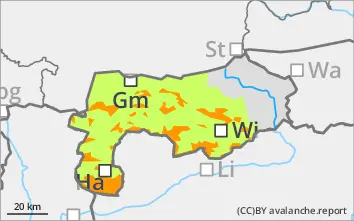
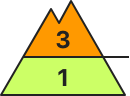
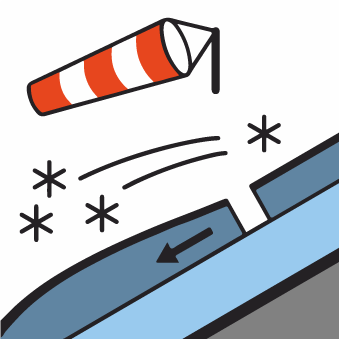
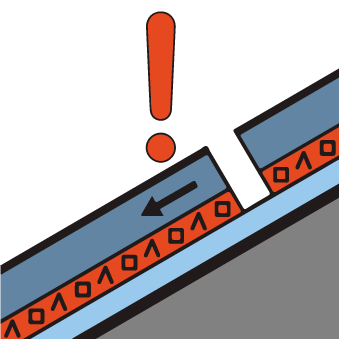
The avalanche risk is considerable from the tree line upwards. Strong winds and new fallen snow, including gale-force winds at high altitudes, have caused fresh and extensive prone-to-triggering snowdrift accumulations to form. There are avalanche prone locations in all aspects, especially adjacent to ridgelines, but also distant from ridgelines. Medium slab avalanches can be triggered by even small additional loads. If layers in the persistent weak layer are triggered by high loads, they can rarely become large. Naturally triggered avalanches are possible in isolated cases.
Snowpack
Depending on the altitude and region, there was up to around 20 - 40 cm of new fallen snow with strong, even stormy winds in exposed areas. The fresh wind slab can contain weak layers and does not bind sufficiently. Only rarely can weak layers still occur in the older wind slab at high altitudes and the foundation is weakened at very high altitudes and on shady slopes.
Tendency
The wind slab problem must be taken into account, but is slowly receding.