On Wednesday, precipitation started to fall in the north during the night. The snowfall level was initially at around 1500 m and quickly dropped. The snow weakened temporarily at midday on Thursday. After the passage of a cold front, a strong northerly wind blew, carrying New fallen snow and building up new snow layers on the southern flanks. A total of 15-30 cm of new fallen snow fell in the mountains.
New fallen snow and blown snow are the main dangers. Danger is increased especially on slopes and in gullies where the height of New fallen snow is greater due to snow accumulations. Saturday will be sunnier than the previous days and warmer. On sunny slopes, the snow will dry out during the day and freeze overnight. Minor wet snow avalanches are possible, especially on extreme terrain such as steep slopes or cliffs.
In addition to new fallen snow, weak layers in the snowpack deeper in the snowpack may be a local problem. These weak layers are more common in the axis above the forest. In particular, a large avalanche can be triggered if the load exceeds the load-bearing capacity of these layers.
Snowpack
dp.4: cold following warm / warm following cold
15-30 cm of dry and light snow fell in the mountains. A strong northerly wind blew in with the snow, blowing the snow down to the old base in many places. During the previous snowfall, there was some local fall of graupel, which is a potentially dangerous weak layer. Locally, the layers of Graupel are 5-10 cm thick, possibly more.
In old snow cover, the snow layers are mostly well connected. Deep below the surface, several weak layers of faceted snow crystals and sheared grains occur, especially on the axial sides.
Tendency
There will be more clouds in the coming days, small showers are possible early next week. The danger of avalanches will remain similar.
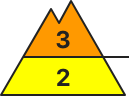
Danger level
1800m
Avalanche Problem
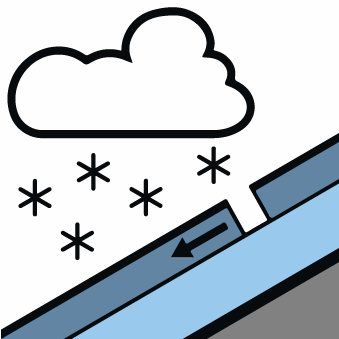
New snow
1800m
New snow
1800m
Persistent weak layer
2000m
Gliding snow
2000m
Avalanches can get big.
The avalanche risk is considerable above 1800 metres and moderate below that. The main problem is the new fallen snow of the last few days. Loose snow avalanches release themselves from the sunlit, rocky steep terrain. Slab avalanches can also be triggered with little additional load. This is particularly possible in shady steep terrain adjacent to ridgelines, behind slope discontinuities and in gullies and bowls. Avalanches can become large, in particular if they break through to deeper weak layers in the old snow pack.
On very steep, sunny meadow slopes, individual medium-sized gliding avalanches can detach themselves.
Snowpack
The new fallen snow that has fallen in the last few days (up to one metre in the higher elevations) has already settled a little and is covering some large snowdrift accumulations. Weak intermediate layers and graupel are embedded within the new snow pack. In windward areas, the new fallen snow is bound and prone to triggering. On shady slopes at high altitudes, layers of faceted crystals have been preserved in the underlying old snowpack. These are difficult to disturb. In the sun, the snow becomes moist on the surface and begins to ball up. Where the snow has fallen onto the apery ground, the base of the snowpack is moist to wet. Sliding movements on smooth ground are to be expected.
Tendency
The weather is changeable, the avalanche situation remains critical.
Avalanche danger above 1800m is considerable, below that altitude danger is moderate. Fresh snow and far-reaching snowdrift accumulations are easily triggered in all aspects in many places. Slabs can be triggered by minimum additional loading and grow to medium-to-large sized releases. Settling noises when treading the snowpack can indicate imminent danger. In particular on west, north and east-facing slopes, avalanches can fracture down to ground level layers and grow to large size. On very steep sunny grass-covered slopes, glide-snow avalanches can slide downhill and reach medium size. Due to solar radiation, loose-snow avalanches can be expected in steep rocky terrain.
Snowpack
The frequently storm-strength NW winds have transported the fresh snow, generated large-sized trigger-sensitive snowdrift accumulations in many places. The fresh fallen snow has already settled somewhat. Inside the fresh snow and drifts are weak intermediate layers and graupel. Beneath a melt-freeze crust in the upper third of the old snowpack there are often faceted crystals. The mid-section of the snowpack consists of well-settled, compact layers which on shady high-altitude slopes blanket a poorly structured old snowpack fundament.
Tendency
Avalanche danger is not expected to change significantly.
Danger level
1200m
Avalanche Problem
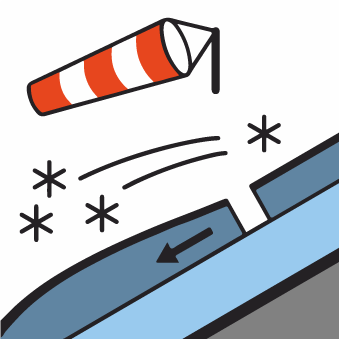
Wind slab
1200m
Wind slab
1200m
Gliding snow
1000m
Beware of prone to triggering wind slabs! Gliding sluffs are possible at low altitude.
The avalanche risk is considerable above 1200 metres (level 3!). New fallen snow and stormy winds have created fresh snowdrift accumulations in almost all aspects, which can be triggered by individual winter sports enthusiasts as medium-sized, occasionally also as large slab avalanches. The avalanche prone locations are mainly in gullies, bowls and behind terrain edges. Take particular care in the transition from a little to a lot of snow. Spontaneous slab avalanches as well as loose snow avalanches are possible from very steep slopes. Gliding sluffs are possible at low altitude.
Snowpack
30 to 70 cm of new fallen snow has fallen under the influence of strong winds. Weak layers are located within the drift snow packs or in the transition to the old snowpack. In deep layers in northern aspects, there are still faceted crystals or floating snow in the old snowpack, but these may already be interspersed with melt-freeze crusts. There is a little less snow at low altitudes, especially on sunny slopes. In the lower layers, the snow is moist due to the warm ground and may start to glide snow in places as the day warms up.
Tendency
From Sunday, the weather will once again be prone to disruption, it will be mostly cloudy and it will snow lightly from time to time. New drift snow packs form with the stormy wind. The avalanche risk remains the same.
Danger level
1800m
Avalanche Problem
New snow
1800m
New snow
1800m
Gliding snow
2000m
Caution: considerable avalanche danger widespread at high altitudes
Avalanche danger above 1800m is considerable, below that altitude danger is moderate. Fresh snow and far-reaching snowdrift accumulations are easily triggered in all aspects in many places. Slabs can be triggered by minimum additional loading and grow to medium-to-large sized releases. Settling noises when treading the snowpack can indicate imminent danger. On very steep sunny grass-covered slopes, glide-snow avalanches can slide downhill and reach medium size. Due to solar radiation, loose-snow avalanches can be expected in steep rocky terrain.
Snowpack
The often stormy NW wind transported much fresh fallen snow, generating large-sized trigger-sensitive snowdrift accumulations in many places. The fresh fallen snow has already settled somewhat. Inside the fresh snow and drifts are weak intermediate layers and graupel. The old snowpack is well consolidated and compact, by and large.
Tendency
Avalanche danger is not expected to change significantly.
Danger level
treeline
Avalanche Problem
Wind slab
Treeline
Persistent weak layer
2000m
Avalanche prone locations partially covered in wind slab snow
The avalanche risk is INCREDIBLE above the tree line. New fallen snow and extensive snowdrift accumulations are very easy to disturb in some places. All aspects are affected, both adjacent to ridgelines and far from ridgelines. Snow slabs can be medium, in the higher elevations (especially on western, northern and eastern slopes) also large. In some places, the last, calmer snowfall has covered the wind slab and makes it difficult to recognise the danger. Spontaneous loose snow avalanches are to be expected from very sunny steep terrain, at low and medium altitudes also individual gliding avalanches.
Snowpack
Under the influence of strong winds from west to north, 40 to 60 cm of new fallen snow has fallen since Wednesday evening, in some places (for example on the Hochkönig and in places in the Hohe Tauern) even around 80 cm. Breaks are possible both within the new and windslab snow as well as in the old snowpack, in which faceted crystals (sometimes on crusts) weaken the structure both near the surface and deeper inside. On shady slopes (W-N-E) and high in the Alps, avalanches triggered on the surface can also affect deep-lying weak layers.
Tendency
Poor visibility and light snow showers on Sunday. The proneness to triggering in the wind slab is only slowly decreasing.
Danger level
1200m
Avalanche Problem
Wind slab
1200m
Slab avalanches can be triggered very easily in gullies and sometimes occur spontaneously!
The avalanche danger above 1200 metres is assessed as considerable (level 3). The new fallen snow and the extensive snowdrift accumulations are prone to triggering, especially above the tree line. The main problem is wind slab. The avalanche prone locations are adjacent to ridgelines and far from ridgelines. They are mainly located in gullies, bowls and behind terrain edges. The layer of drifting snow can be triggered by individual winter sports enthusiasts as a medium-sized avalanche. Spontaneous slab avalanches as well as loose snow avalanches are possible from very steep gullies. Defensive behaviour is recommended when ski touring.
Snowpack
30 to 50 cm of new fallen snow has fallen under the influence of strong winds. Weak layers can be found within the drift snow packs or in the transition to the old snowpack. The snow was transported into gullies and bowls by the stormy north to north-westerly winds. Fresh snowdrift accumulations are deposited above the tree line on a partly still weak old snowpack. The snowdrift accumulations, some of which are thick, should not be underestimated! Weak layers are located in the bound layer or in the transition to the old snowpack.
Tendency
From Sunday, the weather will once again be prone to disruption, it will be mostly cloudy and it will snow lightly from time to time. New drift snow packs form with the stormy wind. There is little change to the avalanche risk. The wind slab problem remains.
Danger level
treeline
Avalanche Problem
New snow
Treeline
Wind slab
Treeline
Persistent weak layer
2000m
Caution! Avoid avalanche prone locations!
The avalanche risk is considerable above the tree line. The significant wind slab problem must be taken into account. Slab avalanches can be triggered by even a small additional load. There are danger spots in steep terrain adjacent to ridgelines, but also distant from ridgelines, in filled-in bowls and gullies and at terrain transitions. Medium to rarely large avalanches are possible. Spontaneous loose snow avalanches are to be expected, especially from sunny, extreme terrain. Below the tree line, individual gliding avalanches or small, wet loose snow avalanches cannot be ruled out.
Snowpack
During the last snowfall event, there was 40 to 80 cm of new fallen snow, depending on altitude and region. Due to strong to stormy winds, extensive prone to triggering snowdrift accumulations have formed, which can contain weak layers and bond poorly with the old snowpack. Inside, the persistent weak layer is usually compact, but often moist up to high altitudes. The snow base, fundament is high up and partly weakened on shady slopes. In the middle and low altitudes, the last snow often lies on bare ground.
Tendency
The wind slab problem will continue on Sunday.
Danger level
1500m
Avalanche Problem
Wind slab
1500m
Snowboards can easily be triggered!
The avalanche danger above 1500 metres is assessed as considerable (level 3). The new fallen snow and the extensive snowdrift accumulations are prone to triggering, especially above the tree line. The main problem is wind slab. The avalanche prone locations are adjacent to ridgelines and far from ridgelines. They are mainly located in gullies, bowls and behind terrain edges. The layer of drifting snow can be triggered by individual winter sports enthusiasts as a medium-sized avalanche. It cannot be ruled out that the slab will travel through to layers close to the ground. Loose snow avalanches are also possible in isolated cases. Defensive behaviour is recommended when ski touring.
Snowpack
Since the beginning of the precipitation event, 40 to 80 cm of new fallen snow has fallen in the northern part of the reservoir. The snow was transported by the strong to stormy north-westerly wind. Fresh snowdrift accumulations are deposited above the tree line on a partly still weak old snowpack. The snowdrift accumulations should not be underestimated! Weak layers are located in the bound layer or transition to the old snow, at higher altitudes in places still in the persistent weak layer (faceted crystals in the area of crusts) or occasionally in layers close to the ground in the form of floating snow. The persistent weak layer is also partially moist.
Tendency
From Sunday, the weather will again be prone to disturbances. The sky will be mostly cloudy or very cloudy. It will snow repeatedly along the northern side of the Alps, but it will remain mostly dry in the peripheral mountains.
The wind slab problem will persist.
Danger level
treeline
Avalanche Problem
Wind slab
Treeline
Beware of fresh wind slab!
The avalanche risk is moderate above the tree line. Fresh snowdrift accumulations can be triggered as small to medium-sized avalanches by individual winter sports enthusiasts in all aspects. The avalanche prone locations are mainly in gullies, bowls and behind terrain edges.
Very occasionally, avalanches can also tear through layers close to the ground.
Snowpack
5 to 10 cm of new fallen snow has fallen in the last 48 hours. This was transported by the strong to stormy north-westerly wind. Fresh snowdrift accumulations were often deposited on a sufficiently stable old snowpack above the tree line. Weak layers can be found in the bound layer or in the transition to the persistent weak layer, in some places still in the old snow at higher altitudes.
Tendency
The wind slab problem remains.
From Sunday, the weather will again be prone to disturbances. The sky will be mostly cloudy or very cloudy. It will snow repeatedly along the northern side of the Alps, but it will remain mostly dry in the peripheral mountains.
Danger level
1500m
Avalanche Problem
New snow
1500m
New snow
1500m
Gliding snow
2000m
On a small scale, there are weak layers in the fresh snow pack.
The avalanche risk is moderate above 1500 metres and low below that. The main problem is the new fallen snow of the last few days. Wet loose snow avalanches release themselves from the sunlit, rocky steep terrain. Slab avalanches can also be triggered with little additional load. This is particularly possible in shady steep terrain adjacent to ridgelines, behind slope discontinuities and in gullies and bowls. Avalanches can reach medium size.
On very steep, sunny meadow slopes, individual gliding avalanches can detach themselves. They usually remain small.
Snowpack
The approx. 50 cm of new fallen snow that has fallen in the last few days has already settled significantly and is covering snowdrift accumulations in the steep terrain adjacent to ridgelines. Weak intermediate layers and graupel are embedded within the fresh snow pack. In windward areas, the new fallen snow is bound and prone to triggering. In the sun, the snow becomes moist on the surface and begins to ball up. On slopes where the snow has fallen onto the bare ground, the base of the snowpack is moist. Sliding movements are possible.
Tendency
The avalanche danger may increase again at the beginning of the week.
Danger level
1500m
Avalanche Problem
New snow
1500m
Gliding snow
2000m
Weak intermediate layers between fresh snow and drifts
Avalanches of small-to-medium size can easily be triggered by one single winter sports enthusiast. Danger zones occur behind sharp drops in the terrain and in wind-loaded gullies and bowls. The fresh snow on south-facing slopes covers the ground which previously was bare of snow, which will now begin to glide. As a result of solar radiation, moist slides from the fresh fallen snow can be expected during the afternoon hours.
Snowpack
The often stormy NW wind transported much fresh fallen snow, generating large-sized trigger-sensitive snowdrift accumulations in many places. The fresh fallen snow has already settled somewhat. Inside the fresh snow and drifts are weak intermediate layers and graupel. Fresh snow and drifts lie generally deposited atop an old snowpack surface on shady slopes, otherwise on ground which is bare of snow.
Tendency
Avalanche danger is not expected to change significantly.
Danger level
treeline
Avalanche Problem
Wind slab
Treeline
Gliding snow
The wind slab is prone to triggering, but sometimes difficult to recognise
The avalanche risk is moderate. Above the tree line, the fresh wind slab can easily be triggered as a snow slab. Avalanches can reach medium size. There are avalanche prone locations adjacent to ridgelines as well as distant from ridgelines, in steep gullies and in forest aisles. The wind slab is partially covered with snow away from areas adjacent to the ridgeline, and the avalanche prone locations are difficult to recognise. Loose snow avalanches are to be expected spontaneously from very sunny steep terrain, and small gliding avalanches are also possible on very steep grassy slopes.
Snowpack
With intermittent strong winds from west to north, 30 cm to 50 cm of new fallen snow has fallen since Wednesday evening. On the sunny slopes, it often lies on previously apery soils, on shady slopes on an old snowpack weakened by angular forms (partly also on crusts) and near the ground (deep rime). Snow slabs break mainly within the fresh wind slab and new snow layers, occasionally also on one of the uppermost weak layers in the persistent weak layer. On very steep meadow slopes, the snow glides along the ground.
Tendency
Poor visibility and light snow showers on Sunday. No significant change.
Danger level
treeline
Avalanche Problem
Wind slab
Treeline
Persistent weak layer
2000m
Consistently avoid fresh wind slab!
The avalanche risk is moderate above the tree line. Fresh wind slabs can be triggered as small or medium-sized slabs in all aspects, even under low loads. Avalanche prone locations are mainly in gullies, bowls and behind terrain edges, also distant from ridgelines. Take particular care on very steep western, northern and eastern slopes above around 2000 metres. Transitions from little to more snow are particularly unfavourable.
Snowpack
Stormy north-westerly winds are constantly forming fresh wind slabs. The wind slab is deposited above the tree line on an unfavourable old snow surface. The old snowpack is weak, especially on western, northern and eastern slopes above around 2000 metres, faceted crystals and a floating snow foundation close to the ground weaken the structure.
Tendency
Poor visibility on Sunday, but at most unproductive snow showers. The north-westerly wind picks up again. Wind slab problem unchanged.
Danger level
treeline
Avalanche Problem
New snow
Treeline
Wind slab
Treeline
Wet snow
New and blown snow
It snowed on Thursday and Friday, with a snowfall level around 600 m. 40-60 cm of New fallen snow fell in the mountains. At the same time, strong winds blew from the north and north-east, carrying New fallen snow and building up new snow layers on the southern sides.
New fallen snow and blown snow are the main dangers. Danger is increased especially in sloping terrain and in ravines where the height of the New fallen snow is greater due to snow accumulations. On sunny slopes, snow will dry out during the day and freeze overnight. Some small wet snow avalanches are possible during the day.
Snowpack
dp.4: cold following warm / warm following cold
On Thursday and Friday, 40-60 cm of snow fell in the mountains, which was dry above about 1000 m, and wetter at lower altitudes. The snowfall was accompanied by strong northerly winds, which blew the snow above the snow line to the old snow base or ground in many places. During the previous snowfall, there may have been some localised drifting of Graupel, which is a potentially dangerous weak layer. In the old snow cover, the snow layers are well connected.
Tendency
There will be more clouds in the coming days, small showers are possible early next week. The danger of avalanches will remain similar.
Danger level
Occasional gliding sluffs cannot be ruled out.
A few centimetres of new fallen snow are added overnight, but these are usually blown away by the wind. Due to the warm ground, the snow can occasionally start to glide on steep slopes or in steep gullies. Pillows of wind drifted snow are prone to triggering at medium altitudes.
Snowpack
In the Gutenstein Alps, 10 to 40 cm of new fallen snow fell on apery, warm ground. On the Hochwechsel and in the Bucklige Welt, the amount of fresh snow was significantly less (around 5 to 20 cm). The strong wind caused drift snow packs to form at higher altitudes.
Tendency
The avalanche risk is not expected to increase.
On Sunday, it will be mostly cloudy and it will snow lightly from time to time. However, the amount of new snow is low. The wind will continue to be stormy in places.
Danger level
Fresh pillows of wind drifted snow!
The avalanche danger is assessed as low. Fresh pillows of wind drifted snow can be triggered as a slide.
Snowpack
A few centimetres of new fallen snow or wind slab were deposited on a hardness of old snowpack.
Tendency
No significant change in the avalanche danger is expected.