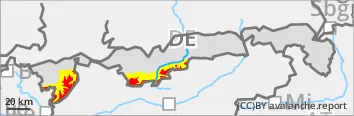
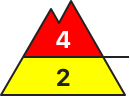
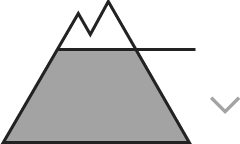
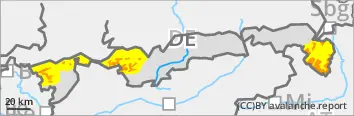
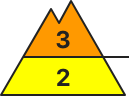
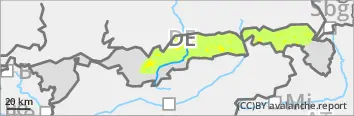
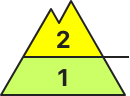
The avalanche risk is high above the tree line and moderate below it. The main problem is new fallen snow. The many avalanche prone locations are in steep terrain adjacent to ridgelines in all aspects, behind slope discontinuities and in gullies and bowls. Slab and loose snow avalanches can detach themselves and become large.
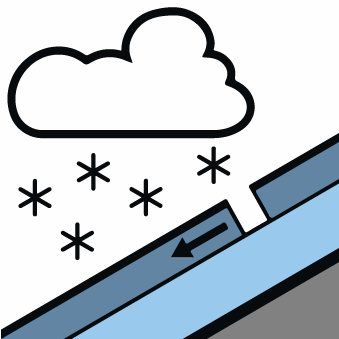
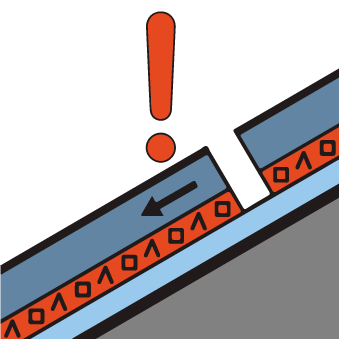
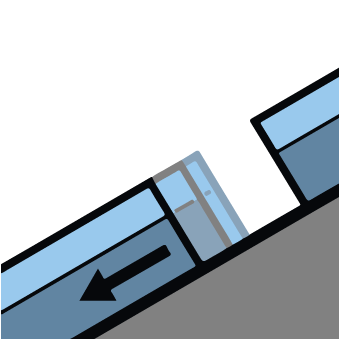
In the Allgäu in particular, gliding avalanches can detach themselves on previously apery, very steep meadow slopes. They can reach medium size.
Snowpack
Around 50 cm of new fallen snow has already fallen locally. The snowfall was accompanied in places by strong, sometimes gale-force winds from the north-west. It continues to snow. The large amount of new and drifting snow is lying on soft snow on the northern sides of higher elevations and is prone to triggering. Weak layers prone to triggering are also embedded within the wind slab. The snowdrift accumulations are large and partly covered by new fallen snow. In the higher elevations, weak layers of faceted crystals can be found near the surface. Otherwise, the underlying old snowpack is generally well stabilised. On the southern slopes, the new fallen snow covers the previously apery ground and begins to glide snow.
Tendency
The avalanche danger will decrease somewhat after the fresh snowfall.
Danger level
treeline
Avalanche Problem
New snow
Treeline
New snow
Treeline
Persistent weak layer
2000m
Gliding snow
2000m
The number and extent of avalanche prone locations increase with altitude.
The avalanche risk is considerable above the tree line and moderate below it. The main problem is new fallen snow. The avalanche prone locations are in steep terrain adjacent to ridgelines in all aspects, behind slope discontinuities and in gullies and bowls. Slab and loose snow avalanches can detach themselves and reach medium size. Occasionally, avalanches with a large additional load, for example from a superficial avalanche, can be triggered in deeper weak layers and become large.
In the Allgäu in particular, gliding avalanches can detach themselves on previously aperic, very steep meadow slopes. They can reach medium size.
Snowpack
Up to 40 cm of new fallen snow has already fallen, especially in the western regions. This was accompanied by strong, sometimes stormy winds from the north-west. It continues to snow. The new and drifting snow is lying on soft snow on the northern sides of higher elevations and is prone to triggering. Weak layers prone to triggering are also embedded within the wind slab. The snowdrift accumulations are becoming large and are partly covered by new fallen snow. In the higher elevations, weak layers of faceted crystals can be found near the surface. Otherwise, the underlying old snowpack is generally well stabilised. On the southern slopes, the new fallen snow covers the previously apery ground and begins to glide snow.
Tendency
With wind, the wind slab can become a problem.
Danger level
treeline
Avalanche Problem
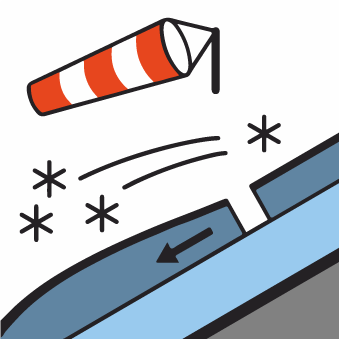
Wind slab
Treeline
Avalanche prone locations are mainly in the leeward areas.
The avalanche risk is moderate above the tree line and low below. Wind slabs are the main problem. The avalanche prone locations are in the steep terrain adjacent to ridgelines in the north to east aspects as well as in gullies and bowls. Slab avalanches can be triggered with little additional load and usually remain small.
Small gliding avalanches can release on their own on previously apery, very steep meadow slopes.
Snowpack
Around 20 to 30 cm of new fallen snow with strong, sometimes stormy winds from a north-westerly direction. Where there is still snow, the new and wind-slab snow will lie on a slightly damp surface of old snow. Only on very steep north-facing slopes at higher altitudes is it occasionally lying on soft snow. Weak layers prone to triggering may be embedded within the wind slab. The old snowpack is generally well stabilised and slightly moist. Previously bare ground is covered by new fallen snow.
Tendency
It remains windy. The wind slab problem may get a little bigger.