Fresh snowdrifts on north-facing slopes still prone to triggering
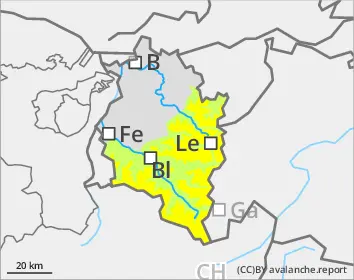
Snowdrifts generated over the last few days are frequently still prone to triggering, can be triggered as small-to-medium sized slab avalanches. Danger zones occur primarily on steep ridgeline north-facing slopes, behind steep drops in the terrain and in wind-loaded gullies and bowls. Frequency and spread of avalanche prone locations increase with ascending altitude, in high alpine regions they include west, east-facing slopes as well. If avalanches on high-altitude shady slopes fracture down to deeper weak layers, they can in isolated cases then grow to medium size. Such isolated avalanche prone locations occur in spots where the snow is shallow or in transitions from shallow to deep snow. As a result of strong solar radiation, small wet loose-snow avalanches can trigger in extremely steep terrain.
Snowpack
Fresh snowdrift accumulations from Sunday lie atop an unfavorable old snowpack surface on north-facing slopes. They are mostly small-sized and shallow, apart from high alpine regions. Somewhat deeper snowdrifsts were generated particularly at high altitudes. On steep south-facing slopes there is often a melt-freeze crust capable of bearing loads which then softens up during daytime hours. The mid-level part of the snowpack consists of well-settled, compact layers widespread which on high-altitude shady slopes cover a poorly structured old snowpack fundament.
Tendency
Avalanche danger not expected to change significantly until Wednesday, due to high-pressure weather conditions. But as the cold front hits Wednesday night, danger will increase.
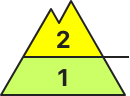
Danger level
1800m
Avalanche Problem
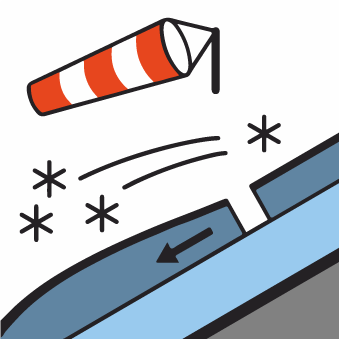
Wind slab
1800m
Beware small snowdrifts
Avalanche danger is predominantly low. Caution is urged towards older snowdrift accumulations particularly in ridgeline terrain on north-facing slopes and in wind-loaded gullies and bowls. In addition, isolated avalanches can be triggered by large additional loading in extremely steep terrain. Apart from the risks of being buried in snow masses, the danger of being swept along and forced to take a fall require attentiveness.
Snowpack
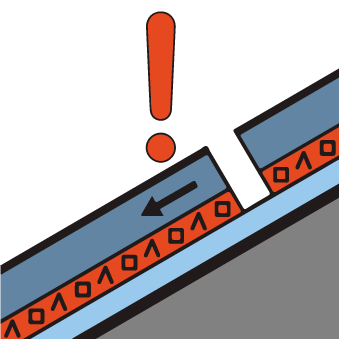
The small, shallow snowdrifts generated on steep shady slopes have bonded only poorly with the old snowpack surface. On steeper shady slopes, a melt-freeze crust capable of bearing loads is evident widespread, this softens up during daytime hours. The old snowpack is generally well-settled and compact.
Tendency
Avalanche danger not expected to change significantly until Wednesday, due to high-pressure weather conditions. But as the cold front hits Wednesday night, danger will increase.